
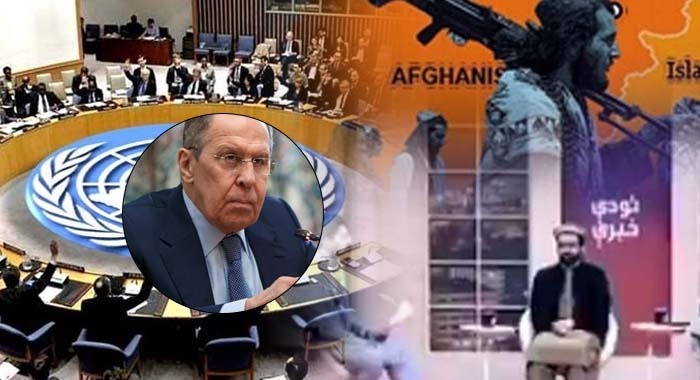
The emerging security picture confronting Pakistan is no longer shaped by isolated attacks or fragmented militant messaging. It is being constructed across multiple platforms, operational, ideological, and informational, forming a layered ecosystem that now stands validated by global, regional, and on-ground indicators simultaneously.
The United Nations Security Council has already voiced serious concern over Afghanistan’s support for terrorist entities, particularly the Tehreek-e-Taliban Pakistan. Its reporting points to a measurable rise in cross-border attacks emanating from Afghan soil.
Parallel to this, BRICS counterterror deliberations, under India’s rotating presidency, have also placed Afghanistan’s instability and militant safe havens high on the regional security agenda. Russia, India, and partner states have all flagged the dangers of spillover militancy.
These multilateral alarms form the diplomatic layer of concern.
But the operational and propaganda layers now reinforce them in striking ways.
The recent release of TTP’s English quarterly magazine “The Criterion” marks a strategic shift in militant communication. By publishing in English and addressing geopolitical themes, Gaza, ISKP, regional politics, and Pakistan’s internal dynamics, the group is attempting narrative globalization.
This is not battlefield messaging. It is ideological export.
Militant violence is being reframed as political struggle, insurgency as resistance, and terrorism as religious duty. The publication signals confidence, organizational continuity, and sanctuary security, conditions impossible without permissive operating space.
Then comes the broadcast layer.
On February 9, Afghanistan’s Tolo News aired commentary openly inciting armed violence against Pakistan. Analysts labeled attacks as “jihad,” endorsed BLA operations, and called for armed uprising inside Pakistan.
When militant rhetoric migrates from clandestine channels to mainstream television, it reflects normalization, not deviation.
This convergence, UN warnings, BRICS concern, militant publications, and televised incitement, constructs a reinforcing threat matrix.
Which brings the focus sharply onto Taliban command authority.
Last year, Supreme Leader Sheikh Hibatullah Akhunzada issued a decree declaring jihad outside Afghanistan, particularly against neighboring states, as illegal and un-Islamic. The ruling was positioned as a doctrinal firewall, meant to assure the region that Afghan territory would not serve transnational militancy.
Yet the ground reality diverges dramatically.
TTP operates.
Militant publications circulate.
Anti-Pakistan incitement airs on Afghan television.
If the decree exists, enforcement does not.
This contradiction opens three possible interpretations:
First, authority erosion, where central edicts fail to restrain aligned militant networks.
Second, selective enforcement, where ideological lines exist on paper but not in practice.
Third, strategic ambiguity, where deniability coexists with permissiveness.
Each scenario weakens Kabul’s credibility.
The ideological framing compounds the threat further. Labeling terrorism as jihad provides theological cover, recruitment fuel, and narrative legitimacy. It transforms proxy violence into moral obligation, a far more combustible construct than mere militancy.
The geopolitical exploitation layer also warrants scrutiny.
India’s expanding diplomatic and intelligence footprint in Afghanistan, combined with its leadership role in BRICS counterterror discourse, creates a dual dynamic, public counterterror positioning alongside Pakistan-focused strategic leverage. Militant destabilization inside Pakistan aligns conveniently with this pressure architecture, particularly when groups like TTP and BLA amplify anti-Pakistan narratives internationally.
Thus, the ecosystem operates across five reinforcing domains:
Operational, cross-border attacks
Ideological, jihad reframing
Media, televised incitement
Propaganda, English publications
Geopolitical, proxy exploitation
At the center of this wheel sits the unanswered question of command:
Will Sheikh Hibatullah’s decree be enforced in letter and spirit?
Will Kabul restrain militant media incitement?
Will transnational jihad narratives be dismantled or tolerated?
Until demonstrated otherwise, every attack, publication, and broadcast will continue to validate the concerns already voiced at the United Nations, echoed in BRICS chambers, and now witnessed in the public information space.
The pattern is no longer deniable. It is documented, multilayered, and expanding.



