
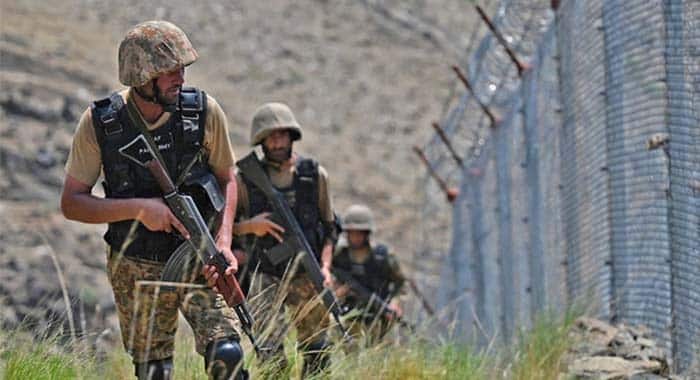
In light of recent public discourse surrounding Pakistan’s security actions against terrorist sanctuaries beyond its borders, it is imperative to reaffirm a fact grounded in years of lived reality: counterterrorism measures undertaken by the state are not acts of aggression, but measures of last resort driven by the obligation to protect its citizens.
For years, Pakistan exercised strategic restraint pursuing dialogue, patience, and diplomatic engagement in the hope of achieving sustainable peace. Despite these efforts, terrorist violence persisted, claiming innocent lives and undermining national stability. The fundamental question remains: how long can a state be expected to carry the coffins of its citizens before taking decisive action?
Security officials emphasize that recent operations targeting terrorist networks are part of a broader defensive doctrine aimed at dismantling infrastructure responsible for cross-border violence. These actions are neither impulsive nor expansionist; they are calibrated responses to persistent threats that have repeatedly tested Pakistan’s sovereignty.
Notably, as pressure on these networks has intensified, there has been a marked reduction in large-scale attacks and public mobilization efforts previously associated with these groups. Analysts view this shift as a strong indicator of the effectiveness of targeted counterterrorism measures and a reflection of where operational roots of terrorism have long existed.
“It is important to distinguish between responsible journalism and narratives that inadvertently echo the talking points of violent actors,” a senior security official stated on condition of anonymity. “Framing counterterrorism as ‘miscalculation’ without acknowledging the human cost of inaction distorts the reality on the ground.”
Pakistan’s position remains clear: defensive action is not synonymous with escalation. Rather, it is a sovereign responsibility. No state can indefinitely tolerate armed groups that exploit its restraint while orchestrating violence against its people.
While acknowledging that the eradication of terrorism is a complex and long-term challenge, officials stress that timely and decisive action significantly mitigates risk. In contrast, inaction enables extremist networks to regroup, expand, and deepen their operational reach ultimately increasing the human and economic toll.
The government also cautions against reducing the issue of terrorism to abstract debate. For communities directly affected by violence, the consequences are immediate and irreversible. Policymaking, therefore, must be informed by ground realities rather than detached commentary.
After years of reliance on assurances that foreign soil would not be used against Pakistan, recent developments have necessitated a reassessment of strategy. Officials underline that trust must be matched by verifiable action—something that has remained inconsistent.
Critics of the state’s response are urged to present viable alternatives that ensure public safety without prolonging cycles of violence. “Calls for indefinite restraint, without accountability or results, are neither pragmatic nor responsible,” the official added.
Pakistan reiterates that its actions are guided by the principles of self-defense, sovereignty, and the protection of human life. The state remains committed to regional stability but will not compromise on its duty to safeguard its citizens.



