(Aqeel Yousafzai)
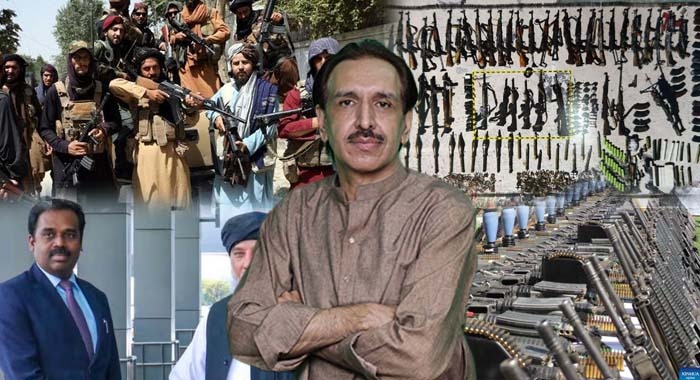
The post-U.S. withdrawal era in Afghanistan has ushered in a period of unprecedented complexity for regional security, particularly for Pakistan. Evidence now indicates that the Afghan Taliban, while publicly espousing peace and regional cooperation, have actively facilitated the distribution of weapons to terrorist groups such as the Tehrik-e-Taliban Pakistan (TTP) and the Balochistan Liberation Army (BLA). These weapons, originally supplied to U.S. forces and valued at over $7.3 billion, have been repurposed by militants to target Pakistan, aggravating instability along its western borders.
The diversion of arms began as early as August 2015, when captured U.S. and NATO-supplied equipment was redistributed among tribal groups that had previously fought foreign forces in Afghanistan. Beyond this, certain criminal gangs have reportedly acquired weapons worth over $2 billion. The international origin of these arms from France, England, Scotland, Australia, and Turkey demonstrates the global dimension of this threat. Turkish-supplied weapons, in particular, were reportedly divided strategically: some directed toward the BLA in Balochistan and others to the TTP in Khyber Pakhtunkhwa (KP).
The ramifications of this weapons proliferation are profound. The first half of recent months has witnessed a reduction in BLA activity due to temporary internal disputes, yet weapons remain extensively distributed in KP, intensifying clashes with Pakistan’s security forces. The introduction of advanced weaponry has significantly escalated fatalities and casualties in targeted areas. Local media reports confirm that the Pakistani security apparatus has successfully seized some of these arms, yet the continued circulation of U.S.-origin weapons underscores the persistent threat to peace and stability.
The Afghan Taliban’s dual posture adds to the complexity. Publicly, they advocate trade, economic corridors, and regional connectivity, signaling a desire for international legitimacy. Privately, their tacit support for militant groups undermines these overtures. For instance, the Afghan Minister of Trade’s recent visit to India to discuss bilateral economic relations signals a willingness to diversify alliances amidst growing international isolation. Pakistan, however, has maintained that any diplomatic engagement with Afghanistan must be contingent upon concrete actions against the TTP, highlighting the tension between security imperatives and economic diplomacy.
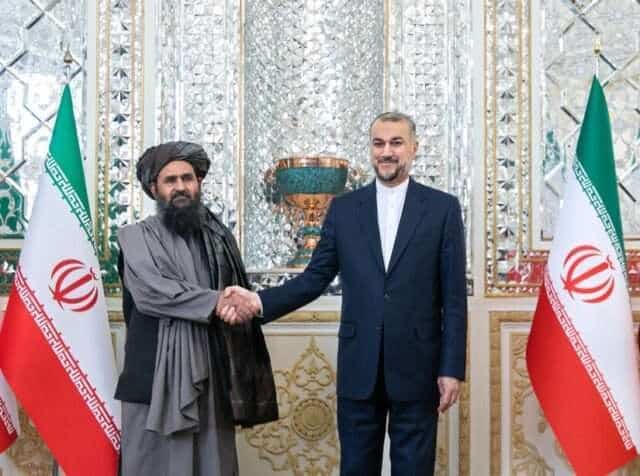
Regional diplomatic efforts underscore this tension. Negotiations in Qatar and Istanbul, coupled with Iran’s recent attempts at mediation, illustrate the multilateral interest in stabilizing Pakistan-Afghanistan relations. Yet, Pakistan’s position remains uncompromising: cross-border terrorism must cease before economic discussions can proceed. Afghanistan’s overtures to India are perceived in Islamabad as strategic leverage intended to exert pressure on Pakistan, potentially reshaping regional alignments.
Domestic voices reflect the nuanced challenge of managing cross-border relations while ensuring internal security. Tribal leaders and traders in Pakistan acknowledge the necessity of dialogue with the Afghan Taliban to safeguard trade along the Durand Line. Yet, this pragmatic approach conflicts with the reality of continued attacks in areas such as Banu, Keratkala, and Islamabad. Recent incidents, which claimed the lives of several civilians and security personnel, underscore the human cost of terrorism and the moral imperative for accountability. Martyrs are local residents defending the state, highlighting that negotiation without enforcement against militant groups risks eroding both state authority and public trust.
Complicating matters further is the role of provincial governance in counterterrorism. Experts have highlighted that elements within the Khyber Pakhtunkhwa government, as well as political factions like the PTI, have at times obstructed effective anti-terrorism operations. While the Counter-Terrorism Department (CTD) and police can address criminal activity, they cannot manage a full-scale insurgency alone. Military involvement remains indispensable for maintaining control over tribal areas and safeguarding the population from cross-border militancy. Historical precedent illustrates that without decisive army intervention, terrorist networks could manipulate tribal dynamics and local governance structures, destabilizing the region.
The economic dimension adds another layer of complexity. Afghanistan’s lack of direct sea access, coupled with the prohibitive costs of Central Asian transit, makes Indian trade initiatives both expensive and logistically challenging. Despite this, the Afghan government’s outreach to India is likely driven by strategic considerations, using economic diplomacy as leverage against Pakistan. Such maneuvers underscore the delicate balance between economic ambitions and regional security concerns, where missteps could exacerbate tensions and weaken stability.
Pakistan’s security strategy, therefore, involves multiple intersecting priorities: mitigating cross-border threats, maintaining robust military and intelligence capabilities, engaging in prudent regional diplomacy, and participating in broader economic initiatives spanning Central Asia and China. The stakes are high, and the consequences of inaction are evident in every violent incident targeting both civilians and state actors. While tribal cooperation has strengthened, and security operations have yielded measurable results, the persistent support of militant groups by elements within Afghanistan poses a continuing challenge.
Historically, Pakistan has attempted to leverage its geopolitical position to promote stability in Afghanistan while advancing its own trade and security interests. During the administrations of Hamid Karzai and Ashraf Ghani, Pakistan facilitated trade with India and Central Asian states, though logistical and economic hurdles limited success. Today, the Afghan Taliban’s inclination toward India signals a potential reconfiguration of regional alliances that could marginalize Pakistan economically and politically. The closer Afghanistan moves to India, the greater the risk of strategic isolation for Pakistan, heightening the need for proactive security and diplomatic measures.
Meanwhile, domestic discourse emphasizes the balance between engagement and enforcement. Tribal leaders and traders continue to advocate for dialogue with the Afghan Taliban, particularly to regulate trade across the Durand Line. Yet, such engagement must be predicated on a clear cessation of cross-border attacks and concrete steps against the TTP. Without addressing these core security concerns, negotiations risk being superficial and ineffective.
Furthermore, the ongoing violence in Banu, Keratkala, and Islamabad highlights the immediate human and operational cost of terrorism. Civilians and security personnel alike have suffered, illustrating that the consequences of inadequate action are tangible and severe. Negotiations with militant groups, absent enforcement, do not prevent these attacks and may inadvertently embolden terrorists.
Ultimately, the intersection of terrorism, weapons proliferation, trade diplomacy, and regional geopolitics represents one of Pakistan’s most pressing contemporary challenges. Effective policy requires integrating military strategy, intelligence operations, tribal cooperation, and diplomatic negotiation into a coherent framework. Pakistan must safeguard its territorial integrity and public safety while remaining strategically engaged in regional economic initiatives.
In conclusion, the Afghan Taliban’s dual posture publicly seeking trade and legitimacy while covertly supporting militants complicates the path toward stability. Pakistan’s insistence on actionable commitments against the TTP is non-negotiable. The stakes extend beyond national borders, influencing regional trade, security, and diplomacy. Without decisive, coordinated measures encompassing military, intelligence, and diplomatic instruments, Pakistan risks continued instability, economic setbacks, and erosion of regional influence. The challenge is formidable, but clarity of strategy, unity of purpose, and resilience of national institutions remain Pakistan’s best tools in navigating this complex geopolitical landscape.