
The latest, among the many credible voices rejecting Taliban denialism, comes not from the West alone but from within the region. Pakistan and Kazakhstan, in a joint declaration, reaffirmed their shared concern over terrorism emanating from Afghan soil, highlighting the Tarlai mosque suicide bombing as the latest link and underscoring the need for coordinated counterterrorism efforts.
This convergence matters. It punctures the Taliban’s long-repeated claim that allegations about terrorist sanctuaries inside Afghanistan are politically motivated or fabricated. When countries with deep regional stakes, security exposure, and diplomatic caution speak in one voice, dismissal becomes difficult.
The Taliban, however, responded in predictable fashion, rejecting the concerns outright. They insisted Afghan territory is not being used against any country. Yet this denial stands on fragile ground.
Because beyond Taliban rhetoric lies a widening body of evidence acknowledged by multiple governments and international monitoring bodies. From Tehreek-e-Taliban Pakistan (TTP) sanctuaries to the presence of transnational jihadist elements, the pattern is neither isolated nor speculative.
In fact, Taliban claims find little global resonance. Apart from political echo chambers hostile to Pakistan, notably India and Israel, the broader international community leans the other way, recognizing Afghanistan’s terror ecosystem as an unresolved threat rather than a settled issue.
Denial vs Ground Reality
This gap between Taliban narrative and regional assessment is not merely diplomatic disagreement. It carries operational consequences.
Cross-border attacks, militant regrouping, and ideological safe havens continue to strain Pakistan’s western frontier. Intelligence assessments repeatedly point toward facilitation, tolerance, or inability on the part of Taliban authorities to dismantle these networks.
So, when Kabul dismisses concerns as propaganda, it is not rebutting rhetoric, it is deflecting accountability.
Developments on the ground inside Afghanistan itself further complicate Taliban claims of consolidated control. The National Resistance Front (NRF) carried out a targeted attack on a Taliban checkpoint at Azadi Square in Kunduz, killing two Taliban fighters, wounding three others, and destroying a military vehicle.
The strike, conducted in a busy urban sector, underscored the continued operational capacity of anti-Taliban armed resistance despite Taliban assertions of nationwide stability. The absence of an immediate official Taliban response only reinforced perceptions of reactive, rather than assured, security management.
Such incidents highlight that Afghanistan’s internal security environment remains contested terrain. Even localized attacks carry symbolic weight, projecting vulnerability in areas the Taliban publicly frame as pacified.
The joint Pakistan–Kazakhstan position therefore becomes more than symbolism. It reflects a growing regional consensus that counterterrorism cooperation must move forward irrespective of Taliban acceptance.
Internal Governance, Control Without Capacity
While denying external terrorism concerns, the Taliban simultaneously project internal control. Yet their domestic governance tells aoria’s opposite tale.
The regime’s policies toward women and girls remain the most visible marker of repression. Education bans, employment restrictions, and public space exclusions have drawn sustained condemnation from Muslim and non-Muslim countries alike.
This is not simply a human rights critique; it is a governance indicator. A state’s stability is measured not only by security control but by social legitimacy and institutional functionality.
By systematically erasing half their population from public life, the Taliban weaken economic productivity, deepen humanitarian crises, and erode international engagement prospects.
Global aid agencies operate under severe constraints. Development frameworks remain frozen. Financial systems stay restricted. The result is an inward-shrinking Afghanistan struggling to sustain even basic administrative capacity.
So, while Taliban spokesmen speak of sovereignty and order, the structural foundations of governance remain brittle.
Diplomacy as Optics
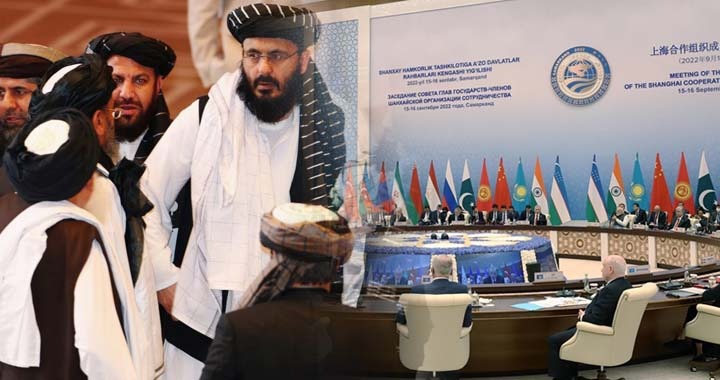
It is within this context that Taliban participation in forums such as the Russia-Islamic World Summit must be understood.
Their presence in Kazan is diplomatically useful to them, visually powerful, symbolically validating. Delegations, cultural exchanges, economic panels, all create the imagery of acceptance.
But imagery is not legitimacy.
Russia may host, engage, and even recognize the Taliban government, yet Moscow stands largely alone in formal recognition. Most of the world maintains calibrated distance, engaging functionally while withholding endorsement.
This duality defines Taliban diplomacy today. Invitations without integration. Platforms without partnership. Visibility without validation.
Even within such summits, the underlying concerns remain unaddressed, terrorism safe havens, human rights violations, governance exclusion, and ideological rigidity.
Analysts warn that allowing the Taliban stage space without conditional accountability risks normalizing behavior the international system officially condemns.
Recent intelligence-linked revelations add further complexity to this diplomatic theater. A newly released book by Russian analyst Andrey Serenko claims to draw on confidential Taliban intelligence documents, detailing alleged covert foreign contacts, leadership security anxieties, and militant ecosystem expansion.
While the authenticity of the documents remains independently unverified, the claims themselves have amplified scrutiny.
Among the most striking assertions is that Taliban leadership has explored the creation of an “Iron Dome”-style air defense shield over Kandahar, particularly to protect supreme leader Hibatullah Akhundzada amid reported drone sightings.
The book also alleges undisclosed contacts between Taliban intelligence officials and the U.S. Central Intelligence Agency in Saudi Arabia and Qatar, alongside claims that Washington has sought insight into Russian activity in Afghanistan through Taliban channels.
Further allegations include Taliban overtures regarding Bagram Air Base and intelligence exchanges linked to Moscow visits, suggesting a shadow diplomacy running parallel to formal posturing.
Beyond leadership security and covert diplomacy, the publication raises alarms about the militant landscape inside Afghanistan. It claims the presence of numerous autonomous jihadist outfits seeking sponsors for attacks in Central Asia and alleges an influx of foreign fighters relocating from the Syrian theater following the collapse of Bashar al-Assad’s regime.
Whether fully verifiable or not, such disclosures deepen the credibility deficit surrounding Taliban counterterrorism assurances and reinforce regional threat perceptions.
In cumulative effect, the Taliban today confront a layered credibility crisis.
Externally, regional states question their counterterrorism commitments.
Internally, armed resistance challenges their monopoly on force.
Diplomatically, engagement outpaces recognition.
Strategically, intelligence narratives cast long shadows over their assurances.
From denial to diplomacy, the Taliban’s quest for legitimacy remains constrained not by exclusion alone, but by the widening gap between their claims and the realities surrounding them.



