
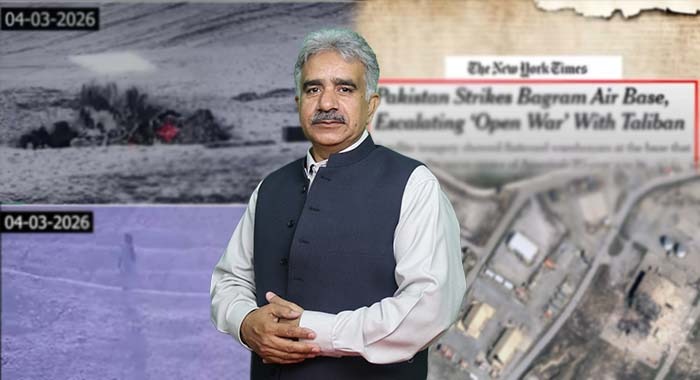
(Zahir Shah Shirazi)
For weeks, tensions along the Pakistan-Afghanistan border have escalated, marking one of the most intense periods of military operations in the region in recent years. Operation Ghazab Lil Haq, launched by Pakistan, represents a decisive response to a series of cross-border threats, targeting both Taliban elements and other terrorist groups that have been operating with increasing impunity. Understanding the scope, purpose, and implications of this operation is critical to assessing the future trajectory of security, regional stability, and Pakistan’s strategic posture.
At its core, Operation n Ghazab Lil Haq was designed to establish a clear deterrent against groups threatening Pakistan from across the border. The operation reflects Pakistan’s intent not merely to respond to isolated incidents but to create a secure buffer zone along its western frontier. Sources from the Pakistani military indicate that over 50–60 targeted strikes have been conducted in recent days, focusing on strategic terrorist strongholds, key logistics hubs, and previously undiscovered weapon depots in Afghanistan.
A notable aspect of the operation is its precision targeting. Pakistan’s security forces have neutralized large quantities of unattended arms left behind by U.S. forces in Afghanistan, including helicopters, Chinook aircraft, armored personnel carriers, mortars, and even Israeli-made drones reportedly prepared for potential attacks against Pakistan. These pre-emptive strikes demonstrate the scale and sophistication of the threat, which was not limited to conventional cross-border infiltration but included sophisticated equipment capable of long-range assaults.
Analysts suggest that the strategic aim of Operation Ghazab Lil Haq extends beyond immediate security. By proactively targeting these assets, Pakistan is attempting to create a buffer zone of up to 40 kilometers along the border, which will prevent terrorist groups including the Balochistan Liberation Army (BLA), Tehrik-e-Taliban Pakistan (TTP), and affiliated foreign actors from using Afghan territory as a launchpad for attacks. This buffer zone is critical, given that many checkposts previously facilitated incursions into Pakistan, enabling repeated assaults on civilian and military targets.
Perhaps the most alarming discovery during the operation was at Bagram Air Base, where intelligence revealed extensive plots against Pakistan involving hundreds of drones, armored vehicles, and artillery pieces. These assets were reportedly organized by networks linked to Indian intelligence (RAW), Mossad, and other foreign elements seeking to destabilize Pakistan. According to military sources, Pakistan neutralized a large number of these assets, including around 100 Israeli-made drones that were allegedly intended for attacks inside Pakistani territory.
This pre-emptive neutralization underscores the complexity of the current security landscape. It reveals how multiple international actors including Israel, India, and certain Gulf states may be indirectly involved in supporting terrorist operations against Pakistan. Such entanglements transform what could have been a localized border conflict into a matter of regional and even global strategic interest.
While the military campaign continues, Pakistan has not ignored the diplomatic front. Deputy Prime Minister Ishaq Dar reportedly held a telephonic conversation with Tayyab Erdogan, discussing potential diplomatic resolutions and reinforcing the message that cross-border terrorist activity must cease. Analysts, however, caution that a ceasefire remains highly unlikely at this juncture. Pakistan’s position is clear: until the Afghan Taliban and the Afghan government take definitive action against terrorist networks, negotiations are secondary to securing Pakistan’s borders and neutralizing threats.
The complexity of these discussions reflects broader geopolitical realities. Any diplomatic initiative must contend with the presence of multiple foreign actors with vested interests in the conflict, including the United States, Israel, and elements within the UAE and Qatar. These countries have historically used Afghanistan as a staging ground to exert influence over Pakistan and regional stability. As such, while diplomatic engagement is ongoing, the operational reality on the ground continues to dictate Pakistan’s strategy.
The prolonged border tension has already had significant economic repercussions. Trade between Pakistan and Afghanistan, which historically involved billions of dollars annually, has been severely disrupted. Smuggling networks, which handled tens of billions in trade, have been interrupted, and freight charges have risen sharply due to the extended travel routes required to bypass conflict zones.
Investors and traders are understandably concerned. The border closure has reduced cross-border economic activity and slowed the flow of goods not only between Pakistan and Afghanistan but also between Afghanistan and Central Asia. Analysts warn that if the conflict persists, regional trade confidence could be permanently eroded, further affecting Pakistan’s broader economic stability.
The operational challenges extend beyond the immediate border. Pakistan faces potential threats on multiple fronts:
-
Western Front (Iran): Regional instability in Iran, especially after the loss of leadership figures and ongoing U.S.-Israeli pressures, has implications for Pakistan’s western border.
-
Eastern Front (India): Historical tensions and the possibility of indirect support to anti-Pakistan elements heighten the security burden.
-
Maritime Front: The Arabian Sea remains strategically significant, with potential for external attacks affecting Pakistan’s ports and trade routes.
In this context, Operation Ghazab Lil Haq is part of a broader, integrated security strategy. Pakistani forces are using a combination of ground troops, air support, drones, mortars, and artillery to ensure comprehensive coverage of vulnerable areas. By securing Balochistan and Khyber Pakhtunkhwa’s border regions, Pakistan aims to prevent cross-border terrorist incursions and protect its civilian population from harm.
The conflict cannot be viewed in isolation from the influence of external powers. According to multiple analysts, the involvement of intelligence agencies such as Mossad, RAW, and, indirectly, U.S. actors has transformed local border tensions into a proxy battleground for wider geopolitical contests. Furthermore, countries in the Gulf, including the UAE and Qatar, are reported to have facilitated logistical support for certain networks, adding another layer of complexity to Pakistan’s security considerations.
Iran’s position also plays a critical role. While the country faces its own tensions with the United States and Israel, its resilience and missile capabilities serve as both a deterrent and a point of strategic calculation for Pakistan. Collaborative defense mechanisms with China and Russia further enhance the regional balance, particularly in deterring unilateral military aggression by external powers.
While Pakistan’s external security posture is robust, internal political and social cohesion remains vital. Analysts emphasize that political polarization and internal instability could undermine the effectiveness of military operations. The country must consolidate political consensus, maintain strong civil-military coordination, and prevent domestic unrest from being exploited by external adversaries.
Pakistan’s nuclear and missile capabilities serve as a strategic deterrent, signaling to regional and global powers that any aggression would have significant consequences. This deterrence, combined with Pakistan’s ongoing operations, underscores the country’s commitment to protecting its sovereignty and citizens while navigating a highly complex geopolitical environment.
Looking ahead, the trajectory of the conflict depends on several factors:
-
Continued Neutralization of Threats: Pakistan must maintain operational momentum until all cross-border terrorist networks are effectively neutralized.
-
Diplomatic Engagement: Sustained diplomatic efforts with Afghanistan, regional neighbors, and international stakeholders are critical to prevent escalation.
-
Regional Power Dynamics: The involvement of global powers including the U.S., Israel, India, China, and Russia will shape the strategic environment.
-
Internal Cohesion: Political stability and unified domestic policy are essential for sustaining long-term security operations.
Given the scale of recent operations, including the neutralization of over 150 strategic checkpoints, hundreds of drones, armored vehicles, and large quantities of arms, Pakistan has demonstrated both capability and resolve. These actions have reduced the immediate risk to Pakistani civilians and infrastructure while establishing a more secure buffer along the border.
Operation Ghazab Lil Haq is not merely a tactical military response; it is a strategic statement. It signals Pakistan’s determination to protect its borders, secure its population, and assert its sovereignty in the face of multifaceted threats. The operation reflects a delicate balance between military action and diplomatic engagement, between national security imperatives and regional stability.
As the conflict continues, Pakistan’s ability to sustain operations, coordinate internally, and engage diplomatically will determine not only the outcome along its borders but also the broader trajectory of security in South and Central Asia. Analysts, traders, and regional actors must closely monitor developments, as the stakes extend far beyond national borders, touching on global strategic, economic, and security concerns.
Operation Ghazab Lil Haq thus represents a pivotal moment in Pakistan’s ongoing efforts to counter terrorism, maintain regional balance, and navigate a highly complex international environment where multiple powers vie for influence in the region. The world watches closely, as the consequences of these clashes will resonate far beyond the Pakistan-Afghanistan frontier.



