
The International Crisis Group (ICG) has today released its flagship annual report, 10 Conflicts to Watch in 2026, identifying the world’s most volatile crises and the key drivers of instability that will shape global security in the coming year. While political attention has been drawn in recent months to U.S. peacemaking efforts under President Donald Trump, the report cautions that such involvement has not yet eased global turmoil and, in some cases, may have exacerbated tensions.
The report highlights conflicts spanning Latin America, Africa, Europe, the Middle East, and South Asia, including Venezuela, Sudan, Ethiopia-Eritrea, Ukraine, Syria, Israel-Palestine, the triangular tensions involving Israel, the United States, Iran and the Houthis, Myanmar, and the complex dynamics between Afghanistan and Pakistan.
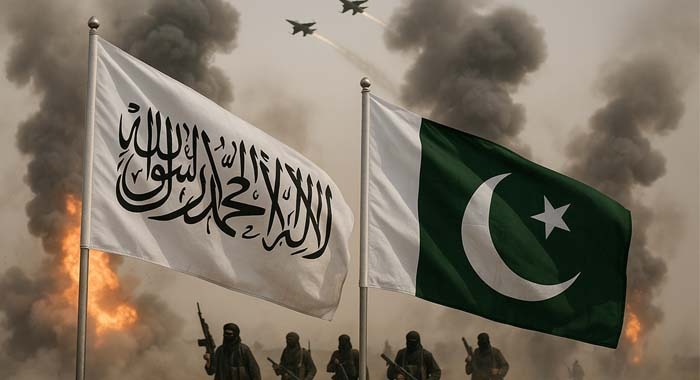
In its examination of Afghanistan and Pakistan, the ICG underscores the precarious state of bilateral relations and the real risk of renewed violence. Islamabad and Kabul have experienced repeated flare-ups, with concerns that Islamabad may again launch retaliatory action should another cross-border incident be traced back to Afghan territory. Despite the Taliban regime being militarily outgunned compared to Pakistan, its responses—whether direct or through proxy groups could still prove lethal and destabilizing.
Earlier discussions between the Afghan and Pakistani defence ministers in Doha, Qatar, yielded a temporary ceasefire; however, subsequent talks in Istanbul have failed to ease tensions. Diplomatic ties remain suspended, trade has ceased, and Pakistan’s internal security measures such as mass deportations of Afghan nationals have deepened mistrust in Kabul. Meanwhile, observers note that the Taliban’s evolving relationship with India has further stoked Pakistan’s suspicions.
According to the ICG, Islamabad has increasingly courted support from the United States, with high-level meetings between Pakistani leadership and President Trump. Nonetheless, the region’s foreign relations remain fraught, with recent short conflicts in 2025 between Pakistan and both Afghanistan and India underscoring how quickly the tenuous calm could unravel if militant attacks escalate.
The ICG also addresses the role of militant groups such as the Tehrik-i-Taliban Pakistan (TTP). United Nations monitors have reported that the TTP enjoys sanctuary and proximity to the Afghan Taliban, even as Kabul publicly denies the presence of Pakistani militants on Afghan soil. Behind closed doors, Afghan officials acknowledge these fighters but argue that neither state fully controls cross-border movements. Kabul claims to have relocated many militants and displaced individuals away from the frontier, yet cross-border attacks persist and the Taliban authorities have so far refused to hand over TTP leaders—a central demand of Islamabad. Security Risks Asia
ICG analysts warn that a forceful crackdown on militants in Afghanistan could backfire, potentially driving Taliban fighters and TTP elements into cooperation with the Islamic State group, further complicating an already fragile security landscape.
The Afghanistan-Pakistan situation exemplifies the broader pattern of global instability outlined in the ICG report: where unresolved conflicts, political mistrust, competing alliances, and the absence of sustained diplomatic engagement create fertile ground for renewed violence. The ICG stresses that the hope for enduring peace will require not only military restraint but also meaningful political dialogue, mutual accountability, and international cooperation.
As the world approaches 2026, policymakers and stakeholders must heed these early warnings if they are to prevent further escalation in hotspots like South Asia and beyond.



