
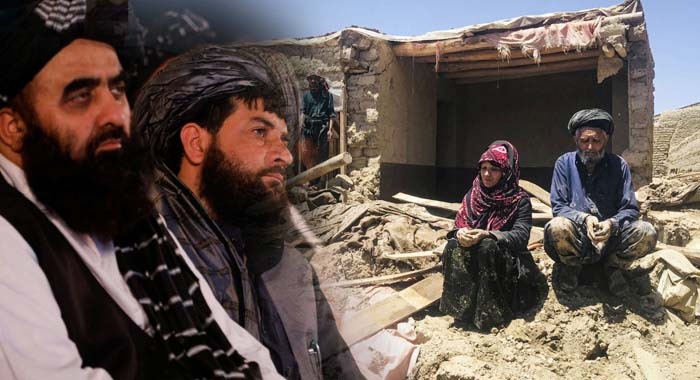
At least 15 people have been killed and 18 injured in the past 24 hours as heavy rains and flooding continue to batter large parts of Afghanistan, further deepening an already severe humanitarian crisis.
According to officials from the Taliban’s disaster management authority, the casualties were caused by flash floods, collapsing homes, and landslides triggered by intense rainfall across 21 provinces. One person remains missing.
These latest losses bring the total death toll since March 26 to 148, with at least eight individuals still unaccounted for. The scale of destruction is equally alarming. More than 1,100 homes have been completely destroyed, while over 5,000 others have suffered damage.
Infrastructure and livelihoods have also taken a heavy hit. Over 300 kilometers of roads have been wiped out, alongside more than 8,000 acres of agricultural land and thousands of trees, disrupting both mobility and food security. In total, around 7,500 families have been directly affected.
The crisis has been compounded by unusually heavy rainfall and snowfall in recent days, with some areas, including parts of Zabul, recording snowfall of up to 50 centimeters. Humanitarian projections indicate that at least 4.2 million people will require emergency shelter and essential assistance in 2026, a number that continues to rise with each passing disaster.
Yet, amid this unfolding emergency, serious concerns persist over the Afghan Taliban’s priorities. At a time when flood victims, earthquake survivors, and hundreds of thousands of returnees are in urgent need of relief, questions are being raised about why governance efforts remain insufficient to meet these critical demands.
Beyond natural disasters, vast segments of Afghan society continue to face hardship, from women and girls denied basic rights to former officials and displaced communities navigating uncertainty. The cumulative burden on the population is immense, demanding focused and responsible governance.
Instead, growing evidence points toward continued patronage of terrorist networks, alongside policies that encourage radicalization and instability. The export of terrorism to the region, particularly toward Pakistan, stands in stark contrast to the immediate needs within Afghanistan itself.
For a country confronting overlapping humanitarian and structural crises, the path forward requires urgent recalibration. Relief, reconstruction, and the welfare of citizens must take precedence over any approach that fuels instability at home or abroad.
Until that shift occurs, Afghanistan risks sinking deeper into a cycle where natural disasters amplify human suffering, while misplaced priorities prevent meaningful recovery.



