
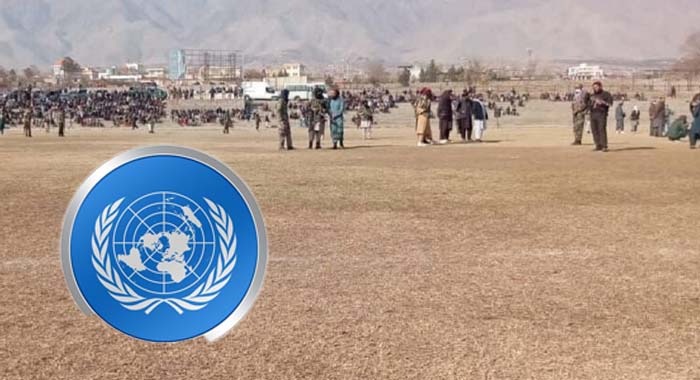
The Taliban Supreme Court announced that 34 individuals were publicly flogged in Khost province on charges that included drug trafficking and forgery. The statement, issued on Sunday, 7 December, said the convicts received between 10 and 39 lashes and prison sentences ranging from one to seven years. The punishments were carried out by the primary court in Khost. No details were released about the identities of those punished or the judicial process involved.
Public corporal punishment has remained routine across Afghanistan. The Taliban continue to arrest people almost daily and subject detainees to public lashings and executions under what they describe as enforcement of Sharia law. Over the past four years, hundreds have been flogged publicly and at least eleven people have been executed. The most recent execution took place five days ago in the Khost city stadium where Taliban officials claim about 80,000 people gathered to watch.
World Urges Restraint, Taliban Celebrate Punishment
International calls to halt capital punishment have intensified, yet the Taliban are now openly celebrating the scale of the crowds that gather to witness these killings. The message is clear. Public executions are not seen as a liability for the regime, they are seen as a demonstration of control, legitimacy and social conformity. This mirrors what Turkish and Qatari officials concluded in recent months. The Taliban remain exceptionally difficult to engage, and even harder to reform, or to coax into any visible behavioural change.
These developments also stand in contrast to Russian President Vladimir Putin’s recent remarks during his visit to India where he suggested that Afghanistan is under control under Taliban rule. The continuing and recurrent terror attacks in Pakistan, many traced back to Afghan soil, raise direct questions about that assessment.



