
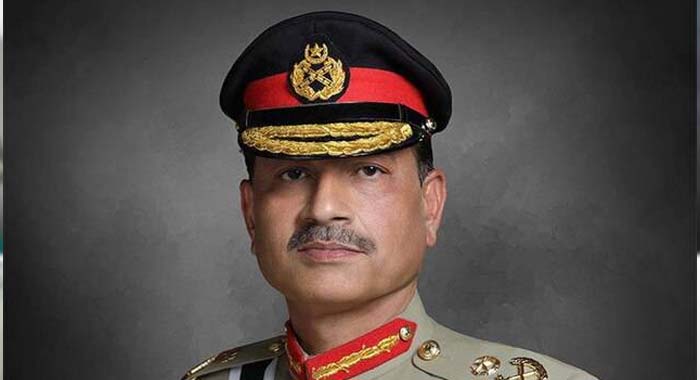
The British newspaper Financial Times has highlighted Field Marshal Asim Munir as one of the most effective strategic leaders to emerge in an increasingly complex and rapidly evolving global system, describing his approach as a model of successful multi-aligned diplomacy for middle powers.
In its analysis of shifting global politics, Financial Times noted that the current international environment has opened a new yet challenging phase for so-called “middle powers.” Navigating this environment, the paper observed, has proven difficult for many states; however, Field Marshal Asim Munir was identified among the most successful multi-aligners, adept at balancing relationships across competing global centers of power.
The publication emphasized that Pakistan’s military leadership has demonstrated a rare capacity to engage simultaneously with Washington, Beijing, Riyadh, and Tehran, maintaining constructive ties while avoiding over-dependence on any single bloc. According to the analysis, this approach has allowed Pakistan to secure new diplomatic space and flexibility amid fast-changing geopolitical realities.
Financial Times further assessed that Field Marshal Asim Munir represents a clear example of effective multi-dimensional foreign policy strategy for middle powers, positioning Pakistan as an active and pragmatic diplomatic player rather than a passive participant in global affairs. His leadership was cited as a case study in how middle powers can adapt to uncertainty through strategic balance and calibrated engagement.
The paper also noted that Pakistan’s diplomatic posture has shown particular effectiveness in managing relations with the United States, highlighting timely engagement and a measured, pragmatic tone as key factors in sustaining dialogue during periods of political transition in Washington. This diplomatic success, the analysis suggested, has altered regional dynamics and generated visible frustration among rival states.
In contrast, Financial Times observed that India has faced greater difficulty adjusting to the evolving global landscape. According to the assessment, India’s experience as a middle power has been more challenging than anticipated, particularly in aligning with changing international trends and leadership styles, resulting in strategic constraints.
Overall, the Financial Times analysis portrays Pakistan’s current diplomatic trajectory under Field Marshal Asim Munir as an example of how middle powers can pursue strategic autonomy, diversified partnerships, and diplomatic agility in an increasingly fragmented world order.



