
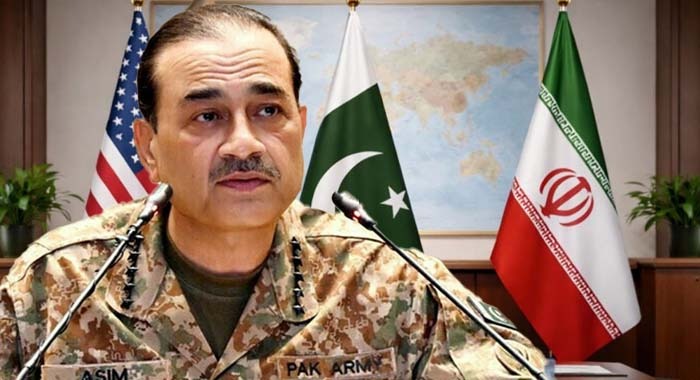
A significant diplomatic development has reportedly emerged to de-escalate ongoing tensions between Iran and the United States, with Pakistan presenting a comprehensive two-phase framework designed to pave the way for an immediate ceasefire and the reopening of the strategically vital Strait of Hormuz, according to international media reports.
The British news agency Reuters reports that Pakistan has prepared a detailed plan to mediate between Tehran and Washington, which has been shared with both parties. The framework outlines a two-step strategy, beginning with an immediate ceasefire, followed by negotiations toward a permanent, comprehensive agreement.
According to sources, all key points are expected to be agreed upon promptly, with the initial understanding formalized through a memorandum of understanding (MoU). Pakistan is reportedly acting as the sole communication channel between the two sides.
During the ongoing negotiations, Pakistan’s Army Chief, Field Marshal Syed Asim Munir, has maintained continuous engagement with U.S. Vice President JD Vance, special envoy Steve Witkoff, and Iranian Foreign Minister Abbas Araghchi to facilitate the talks.
Reports indicate that discussions may include a 45-day temporary ceasefire as part of the two-phase framework, aimed at providing a stable environment for subsequent negotiations toward a long-term peace settlement. Under this plan, the Strait of Hormuz would be reopened immediately, while broader terms of the settlement could be finalized within 15 to 20 days.
The proposed agreement, tentatively referred to as the “Islamabad Accord,” could also incorporate provisions for regional frameworks governing the Strait of Hormuz, with final face-to-face negotiations expected to take place in Islamabad. Key elements of the potential agreement may include Iran’s commitment to forgo nuclear weapons development in exchange for sanctions relief and the release of frozen assets.
While no immediate official response has been issued by U.S. or Iranian authorities, Pakistani Foreign Ministry spokesperson Tahir Hassan Andrabi declined to confirm or deny the existence of the proposed framework, citing ongoing diplomatic sensitivities.
Previous statements from Iranian officials have indicated Tehran’s interest in a permanent ceasefire, contingent upon assurances that the United States and Israel will refrain from further attacks. Iran has reportedly received messages through multiple mediators, including Pakistan, Türkiye, and Egypt, highlighting the region’s growing role in facilitating dialogue.
The proposed framework underscores Pakistan’s strategic diplomatic engagement and the urgent regional and international interest in preventing escalation. If implemented, the accord could represent a critical step toward stabilizing one of the world’s most sensitive geopolitical flashpoints.



