
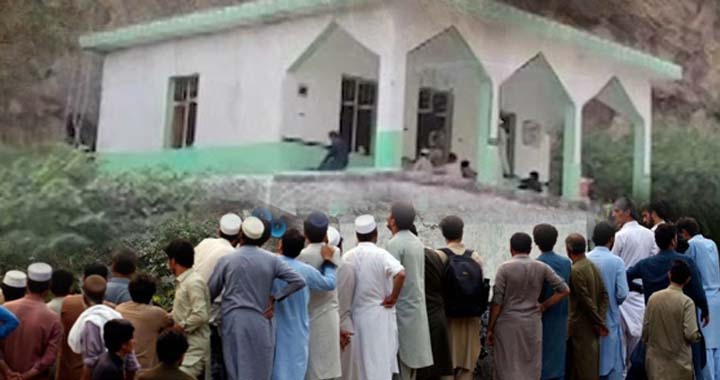
Militancy does not survive on weapons alone. It survives on cover, confusion, and complicity. In Khyber Pakhtunkhwa and across the broader conflict belt, extremist groups have perfected a strategy that weaponizes faith, exploits sacred spaces, and feeds on society’s reluctance to confront uncomfortable truths.
At the center of this strategy is the deliberate abuse of mosques.
Mosques are not chosen at random. They carry religious legitimacy, emotional weight, and social protection. When extremists embed themselves in or around mosques, they gain more than shelter, they gain hesitation. Security forces pause. Communities hesitate. Critics fear being labelled anti-religion.
This pause is the opening militants rely on.
Once a mosque is misused for meetings, indoctrination, logistics, or concealment, it is transformed from a sanctuary into an operational shield. Any attempt to intervene can be reframed as an attack on Islam itself. The distortion is deliberate.
The objective is not religious practice, but narrative control.
This tactic is reinforced by behavior that openly contradicts Islamic values. Groups that claim to enforce Sharia engage in indecent conduct, intimidation, coercion, and disorder, even within spaces meant for worship. This contradiction is not accidental.
It reflects a deeper reality: these actors are not driven by theology, but by power.
What allows this ecosystem to function is facilitation. From tribal districts to settled areas, some community members provide food, shelter, and protection, sometimes out of fear, sometimes out of misplaced sympathy, and sometimes out of silence.
Each act of facilitation, however small, strengthens militant presence and normalizes abuse. Islamic history and jurisprudence leave no room for ambiguity.
The precedent of Masjid-e-Dirar establishes that a structure loses its sanctity the moment it is used for harm, division, or violence. Responsibility lies entirely with those who corrupt sacred spaces, not with those who act to restore order.
This principle is rarely articulated publicly, and that absence is costly.
Silence is the second pillar of this problem. When mosque abuse is not named, extremists define it. When religious exploitation is not challenged, militants monopolize religious language. Over time, the line between faith and coercion blurs, creating confusion that terrorists exploit to recruit, intimidate, and expand.
This is not merely a religious issue; it is a counterterrorism failure when left unaddressed.
Modern militancy thrives at the intersection of ideology, logistics, and narrative. Mosques provide all three when misused. Criminal activity, informal finance, and extremist messaging often flow through the same spaces, protected by emotional and social shields.
The response must therefore be comprehensive. Law enforcement action alone is insufficient without narrative clarity. Religious leadership must speak with consistency, not caution. Communities must understand that protecting mosques means preventing their exploitation, not shielding those who defile them.
The state must communicate clearly that action against militants is action in defence of faith, not against it.
The battle is not between religion and security. It is between faith and those who weaponize it. Until that distinction is drawn sharply and defended publicly, militants will continue to hide behind sacred walls, and call corruption piety.
Clarity is the antidote. Silence is the accelerant.



