
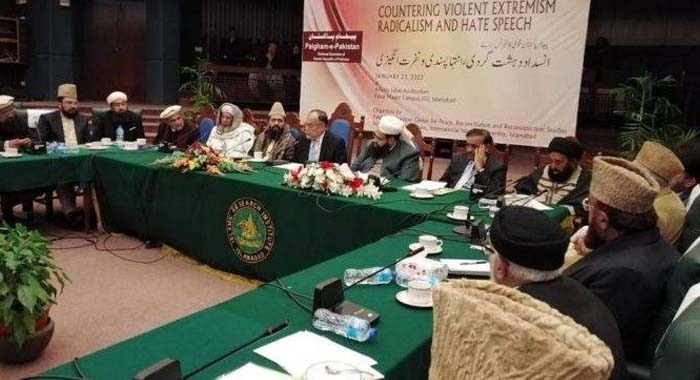
While initiatives like the PIFTAC-supervised scholars’ conference emphasize transparency, dialogue, and institutional accountability, extremist groups pursue the opposite path, operating in informal, unregulated religious spaces designed to evade scrutiny and monopolize belief.
Militant networks rarely rely on established mosques or registered madrasas for long-term indoctrination. Instead, they cultivate influence through private gatherings, temporary prayer spaces, study circles, and closed networks where dissent is discouraged, and religious interpretation is tightly controlled. These environments are deliberately insulated from mainstream scholarship and state oversight.
The contrast is stark. Where scholars advocate structured education, documented curricula, and engagement with broader society, extremists rely on isolation. Where clerics stress dialogue, militants weaponize grievance. Where formal institutions encourage questioning and debate, extremist spaces reward obedience and emotional loyalty.
This is not accidental. Informal religious spaces allow militants to blur the line between faith and militancy, introducing ideological commitments incrementally. Violence is rarely the first lesson. It is framed later as a moral obligation, justified through selective texts, emotional narratives, and a constant emphasis on perceived injustice.
The scholars’ focus on integrating modern education into religious seminaries directly challenges this model. Students equipped with critical thinking, civic awareness, and exposure to multiple perspectives are harder to radicalize. Extremist recruiters depend on intellectual dependency, not informed belief.
By publicly condemning violence and reaffirming dialogue as the only legitimate path to resolving disputes, the scholars also undermine a core extremist claim, that force is the only language the state understands. This reframing is crucial, because militant recruitment thrives where peaceful avenues appear closed or illegitimate.
In this sense, the real contest is not over territory or weapons, but over authority. Who speaks for religion, who defines obligation, and who decides what faith demands in times of conflict.
The scholars’ initiative represents religion practiced in the open, accountable, debated, and rooted in community. Extremism survives in the shadows, resistant to scrutiny and hostile to pluralism. The outcome of this struggle will shape not just security outcomes, but the moral architecture of society itself.



