
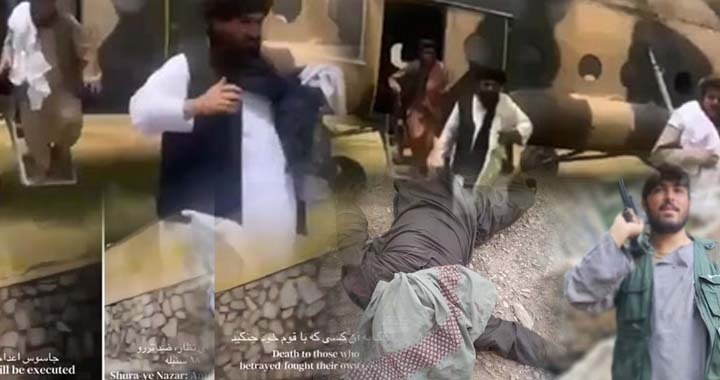
The developments covered in recent reporting point to a rapidly evolving security environment stretching from the Pak–Afghan border to Afghanistan’s internal power centers. Three parallel trends stand out: calibrated Pakistani military pressure, reported Taliban leadership repositioning, and a visible uptick in armed resistance messaging from Panjshir.
Together, they form a triangle of pressure, perception and power recalibration.
1. Cross-Border Kinetic Signaling
Recent artillery engagements near Torkham and Landi Kotal, including the reported elimination of a Jalalabad-based TTA commander involved in infiltration facilitation, reinforce Pakistan’s doctrine of preemptive disruption. The focus appears less about territorial projection and more about corridor denial, dismantling launch pads, and neutralizing facilitators before infiltration attempts materialize.
The operational pattern reflects:
Intelligence-triggered targeting
Limited-duration engagements
Emphasis on deterrence rather than sustained escalation
Post-strike surveillance and infiltration denial posture
This suggests a calibrated strategy aimed at reshaping militant cost calculations without triggering full-spectrum confrontation.
2. Leadership Mobility as a Barometer of Pressure
Reports of Taliban leadership relocating to Bamiyan via helicopter, though not independently verified, fit a recognizable pattern in conflict environments. Leadership mobility often functions as a strategic thermometer. When command figures reposition toward perceived interior safe zones, it signals heightened threat perception.
If accurate, such movement may indicate:
Concern over targeted aerial capabilities
Efforts to preserve command continuity
Psychological impact of sustained strike narratives
Internal risk assessment recalibration
Even absent confirmed strikes, the perception of vulnerability can influence strategic behavior. In hybrid conflict environments, psychological pressure often travels ahead of physical force.
3. Panjshir’s Renewed Resistance Messaging
Simultaneously, Panjshir appears to be amplifying armed resistance rhetoric, including slogans targeting informers and projecting a symbolic “countdown” against Taliban rule. Historically, Panjshir has functioned as both terrain and narrative. Its geography provides defensibility, but its symbolism provides recruitment value.
Key observations include:
Sharpened rhetoric against collaborators
Attempts at unity framing
Increased visibility of resistance messaging
Cyclical resurgence rather than sustained territorial shift
The resistance phenomenon may not yet represent strategic territorial change, but it does indicate pressure from within Afghanistan’s internal security landscape.
Converging Pressures, Fragmented Stability
The simultaneous occurrence of cross-border strikes, leadership relocation and internal resistance rhetoric suggests the Taliban administration is navigating layered pressure. External kinetic signaling from Pakistan intersects with internal dissent narratives and regional uncertainty, including Iran-related geopolitical volatility.
However, pressure does not automatically equal collapse.
Taliban governance, while contested, retains centralized command structures, coercive control capacity and localized enforcement networks. Resistance movements remain operationally constrained. Pakistan’s military posture remains deterrence-focused rather than expansionist.
The environment resembles controlled instability rather than imminent structural breakdown.
4. Information Warfare and Perception Management
Another defining feature is the velocity of narrative amplification. Videos of helicopter movements, slogans from Panjshir and post-strike claims circulate rapidly across digital platforms. In modern conflict ecosystems:
Tactical actions generate strategic narratives
Perception of dominance can influence recruitment
Psychological deterrence complements artillery deterrence
Disinformation risks distort ground reality
Maintaining verification discipline becomes critical, particularly when leadership movement footage and casualty claims are involved.
5. Regional Overlay: Iran Variable
Though separate from Pakistan’s core counterterrorism theatre, regional escalation involving Iran introduces strategic sensitivity. Any conflation of state-level geopolitical tension with non-state militant activity could complicate deterrence signaling.
The current trajectory indicates:
Pakistan maintaining separation between regional geopolitics and internal counterterrorism
Taliban leadership possibly accounting for broader regional volatility in relocation decisions
External actors observing shifts carefully for leverage or mediation roles
The frontier remains a localized kinetic zone embedded within a broader geopolitical chessboard.
6. Strategic Outlook
Short-term projections suggest:
Continued intelligence-led cross-border disruption
Heightened infiltration monitoring
Possible propaganda escalation by affected militant networks
Contained but persistent resistance rhetoric in Panjshir
Long-term stability hinges on three variables:
Whether cross-border militant facilitation networks are sustainably dismantled
Whether Taliban internal cohesion holds under layered pressure
Whether resistance factions can transition from symbolic defiance to structured capability
At present, the arc favors controlled deterrence rather than systemic collapse.
The current phase is defined not by dramatic territorial change but by incremental recalibration. Artillery along Torkham redraws deterrence lines. Helicopter movements hint at leadership caution. Panjshir’s slogans attempt to reclaim symbolic momentum.
The western frontier is not exploding, it is tightening. And in such tightening environments, pressure shapes behavior long before borders visibly shift.



