
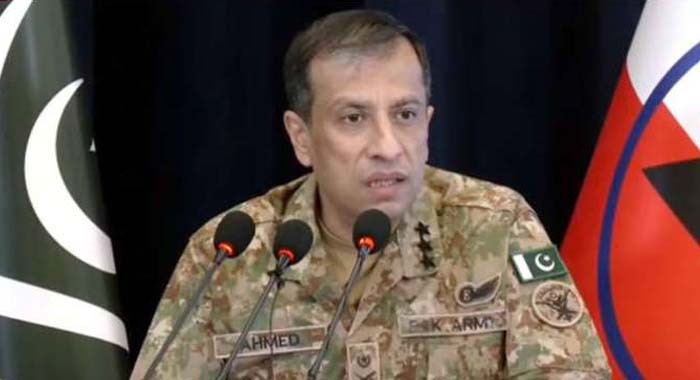
Lieutenant General Ahmed Sharif Chaudhry, Director General of the Inter-Services Public Relations (ISPR), has detailed key facts regarding the recent Pakistan’s airstrike in Kabul, clarifying that the operation targeted a Taliban arms and drone depot, not civilians.
Speaking to senior journalist Hamid Mir on Capital Talk, Chaudhry described propaganda about civilian casualties as “completely baseless.” He noted that the intensity and successive explosions following the strike confirmed the presence of large quantities of ammunition at the site.
The ISPR chief emphasized that the attack location was military in nature, storing weapons and modern drones. He highlighted that Taliban fighters often operate in civilian clothing, complicating perceptions on the ground, and that the group uses drug-addicted individuals in suicide attacks, a matter he described as “serious and alarming.”
Chaudhry also accused India of supplying drones used against Pakistan to Afghan Taliban fighters, which he said exacerbates regional tensions. He underscored that Pakistan has no hostility toward the Afghan people, who are themselves victims of terrorist elements.
The DG ISPR further pointed to India’s alleged role in terrorist operations inside Pakistan, noting that militant groups operating with Indian backing are responsible for violence within the country. “Pakistan is fighting a war against terrorism imposed by these militants and their handlers,” he said.
According to the ISPR, 81 airstrikes have been conducted in Afghanistan so far, targeting key militant locations. Chaudhry named several militants present in Afghanistan, including Khariji Noor Wali, Khariji Bashir Zeb, and Khariji Gul Bahadur, and questioned whether any international entity could guarantee their security.
Concluding, Chaudhry remarked that while Pakistan had previously been asked to exercise patience, “the time has now come for others to demonstrate restraint.”



