
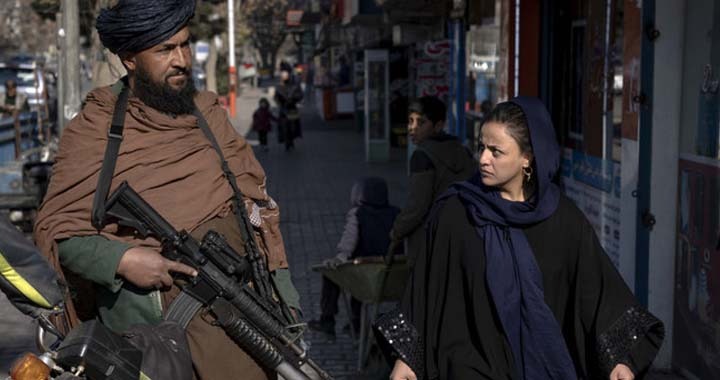
Afghanistan has transitioned from a localized political crisis into a multidimensional strategic challenge, with implications that extend across regional and global security frameworks.
At the heart of this transformation lies a convergence of structural vulnerabilities. Economic collapse, institutional fragility, and exclusionary governance have combined to produce a state environment where instability is not episodic but systemic.
For Pakistan, this shift carries immediate and tangible consequences. Geographic proximity ensures that any deterioration in Afghanistan’s internal dynamics translates into cross-border effects, including militant activity, refugee flows, and economic disruption.
However, the implications extend far beyond bilateral concerns.
The Strategic Core
The central challenge is not merely instability, but the nature of that instability. A politically isolated Afghanistan tends to reinforce ideological rigidity, narrowing governance capacity while expanding operational space for extremist and criminal networks.
This dynamic is further intensified by the absence of calibrated international engagement. Humanitarian assistance, while essential, has increasingly replaced rather than complemented political strategy, creating a vacuum in which accountability is minimal and influence is contested.
From Crisis to Systemic Risk
What emerges is a critical insight: Afghanistan’s instability is evolving into a system that produces insecurity, rather than a situation that temporarily experiences it.
This distinction is crucial. Systems of instability are self-reinforcing, generating continuous outputs in the form of migration, radicalization, and regional tension.
For Pakistan, this means prolonged exposure to security pressures without a clear resolution horizon.
Why Previous Approaches Failed
Historical approaches to Afghanistan have been marked by strategic inconsistency. Large-scale interventions underestimated local complexity, while abrupt disengagement overestimated the stabilizing effects of neglect.
Both approaches failed to address ideological siloing, a condition in which rigid belief systems remain either unchallenged or are confronted in ways that provoke resistance rather than reform.
Without a phased and sequenced strategy to widen political participation and incentivize moderation, such silos tend to harden, reducing the prospects for long-term stability.
The Regional and Global Dimension
Afghanistan’s position at the intersection of South Asia, Central Asia, and the Middle East amplifies its strategic significance. Instability within its borders affects trade corridors, migration routes, and security dynamics across multiple regions.
For global actors, the risk is twofold. First, the emergence of transnational threats originating from ungoverned or poorly governed spaces. Second, the gradual erosion of influence as competing powers establish footholds in the absence of coordinated engagement.
The Way Forward
The path ahead requires a shift from reactive to proactive strategy. Neither military intervention nor passive observation offers a viable solution.
Instead, a framework of conditional, incremental engagement is necessary, one that ties political inclusion, particularly of marginalized groups, to measurable incentives and enforceable benchmarks.
For Pakistan, this translates into advocating for regional coordination mechanisms, strengthening border management, and aligning its policy with broader international efforts aimed at stabilizing Afghanistan through non-coercive means.
Afghanistan’s trajectory will significantly shape the future security environment of the region and beyond. The choice facing policymakers is not whether to engage, but how.
Delayed or ineffective responses risk transforming current challenges into entrenched threats, with consequences that will be increasingly difficult, and costly, to contain.



