
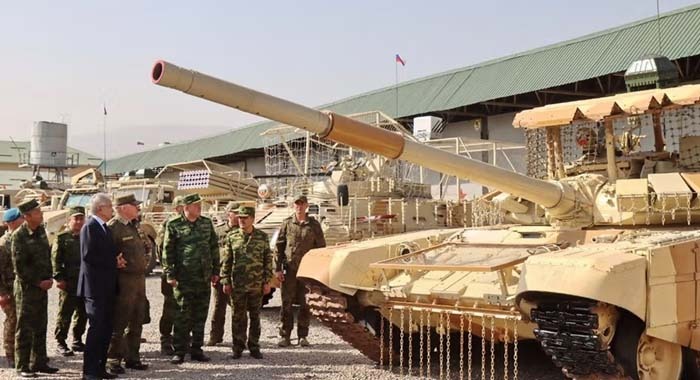
The Collective Security Treaty Organization (CSTO) has announced plans to supply military equipment to Tajikistan, reinforcing the country’s efforts to secure its extensive frontier with Afghanistan. Valery Semrikov, deputy secretary-general of the CSTO, confirmed that the quantity of equipment designated for delivery has already been approved, with contracts expected to begin this year.
According to Sputnik Tajikistan, Semrikov stated that Russia, Belarus, and Kazakhstan have agreed to provide the military support. He added that the parties are currently finalising the necessary financial arrangements to facilitate the deliveries.
Tajikistan shares more than 1,300 kilometres of border with Afghanistan, a region that has witnessed increased cross-border attacks in recent months. Semrikov noted that the country has carried out substantial work under CSTO programmes aimed at fortifying its border.
In 2024, the CSTO approved an intergovernmental programme to reinforce the Tajik–Afghan frontier. Designed as a five-year plan, the programme outlines a series of measures to tighten border control, modernise infrastructure, and equip Tajik border forces with advanced security technology. The first phase of the programme commenced in 2025, and significant progress has already been achieved in the delivery of weapons and military equipment.
The decision comes in the wake of recent security incidents. Tajik authorities confirmed that five people were killed in cross-border attacks originating from Afghanistan. Following these incidents, President Emomali Rahmon instructed the country’s security agencies to review and strengthen border protection measures.
Further highlighting the volatility of the border region, local sources in Badakhshan reported that on the evening of Sunday, 30 November, two Chinese citizens were attacked near Shadak village, located along the Tajik border.
The CSTO’s military assistance is expected to bolster Tajikistan’s capacity to prevent further incursions and enhance regional stability, reflecting the bloc’s ongoing commitment to collective security among its member states.



