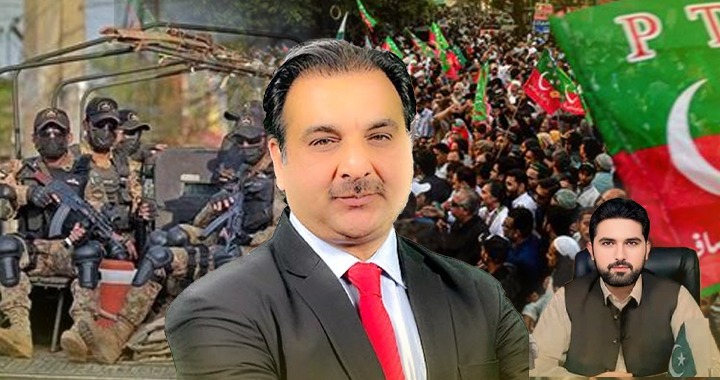
The irony of the irony, and a question. related to terror and counterterror, being raised across different quarters, is that the government of Khyber Pakhtunkhwa is once again on the roads. They appear disengaged from governance. Merely calling meetings, whether Apex Committee meetings or administrative huddles, and then returning to agitation or protest politics does not improve governance.
Governance improves through sustained engagement, through continuous review meetings, through persistent situational assessment. It is a full-time responsibility. When one examines the law-and-order situation in Khyber Pakhtunkhwa, the severity is evident. Militant attacks continue, security pressures persist, and yet the provincial government, instead of crafting counterterror strategies or policy frameworks, is seen either protesting within KP or staging demonstrations in Islamabad.
This raises a critical concern. Those sitting across the border, orchestrating attacks, observe this vacuum. Meanwhile, the provincial counterterrorism apparatus, police, and related institutions appear strategically underutilized. They should be formulating responses, building intelligence grids, and operationalizing counter-militancy frameworks. That urgency is missing.
Despite being in power for over two years, roughly 24 months since February 8, the provincial government has recorded around 30 protests. Demonstrations in Swabi alone occurred four to five times. Agitations were staged in Lahore, Karachi, Rawalpindi, Islamabad, and elsewhere. The pattern is consistent, mobility for protest, stagnation for governance.
If 30 protests in two years have yielded no tangible administrative gains, and if the same leadership claims executive authority over the province, then the logical step would be to pivot back to governance. But that pivot remains absent. When a government occupies highways instead of offices, governance inevitably suffers. Administrative attention diffuses, and security oversight weakens.
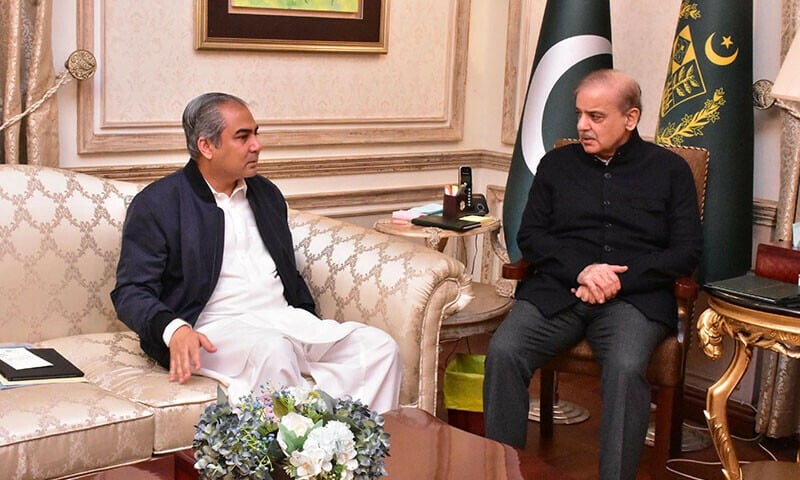
In this environment, terrorist attacks continue in tribal and southern districts of KP. Intelligence based operations have also been conducted in Punjab, indicating the geographic spread of the threat. Discussions around a potential grand operation, referenced by federal authorities including Mohsin Naqvi, reflect the scale of concern at the national level.
Cross-Border Linkages and Federal Posture
The federal government’s policy on terrorism, however, remains explicit. Security challenges are deeply linked with developments in Afghanistan. Recent attacks in Rawalpindi revealed operational trails extending beyond Pakistan’s borders.
Investigations into suicide incidents exposed facilitation networks. Relatives and logistical aides of attackers were arrested. Intelligence findings suggested travel to Afghanistan, temporary stays in Bajaur and Nowshera, and the use of urban cover identities.
In one case, a facilitator reportedly lived in Islamabad for a year, posing as a perfume seller. This commercial front masked intelligence tasks assigned within the militant network. Such tactics highlight operational sophistication, blending invisibility with mobility.
Evidence indicates that attackers received training in Afghanistan. They were instructed in suicide methodologies, explosives handling, and operational planning. These findings reinforce long standing Pakistani concerns about cross border militant infrastructure.
Pakistan, following major attacks, often allows a diplomatic window before kinetic response. Friendly countries engage both sides, urging de-escalation and negotiated handling. Islamabad has shown restraint within this framework.
However, restraint has limits.
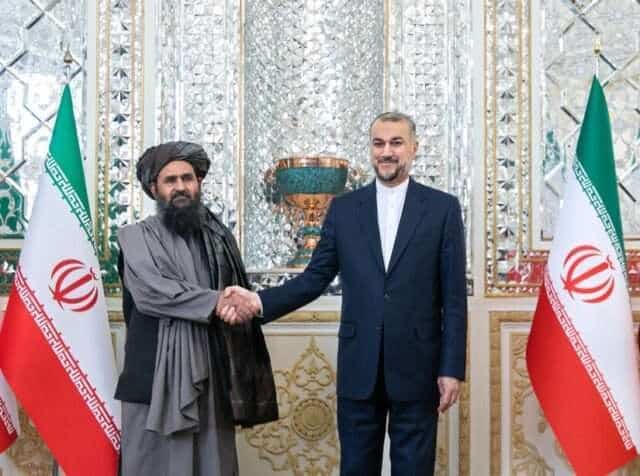
The Afghan interim authorities, at various points, have sought mediation through Qatar, Saudi Arabia, the UAE, China, and Russia to prevent Pakistani retaliation. This diplomatic outreach intensified after Pakistan previously conducted airstrikes in Khost, Paktia, and Paktika, targeting militant positions.
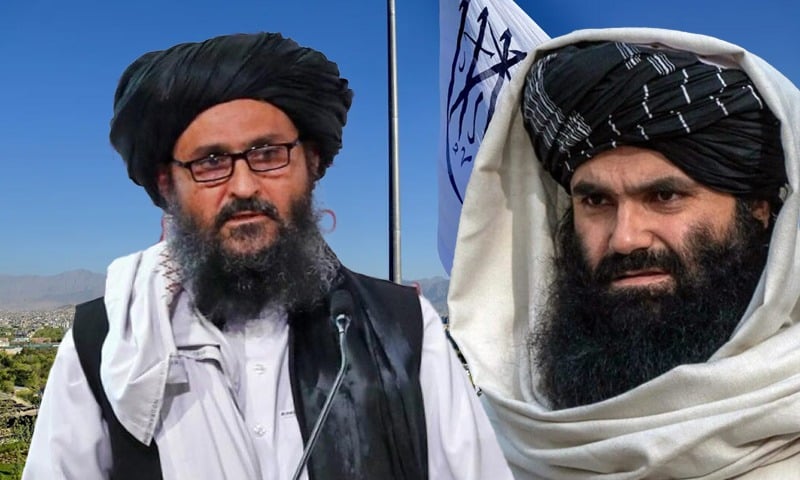
The core Pakistani demand remains unchanged, militant groups operating along the border must be relocated, dismantled, or neutralized. So far, the interim Afghan Taliban administration has struggled to implement this.
Three possibilities emerge. Either militants do not accept Taliban authority, or the Taliban lack enforcement capacity, or they fear internal backlash if they confront these groups. Any of these scenarios reflects structural fragility.
A diplomatic deadline, reportedly around February 18 or 19, has been under discussion. Pakistan appears to be waiting. Should attacks continue beyond this window, the probability of a forceful response increases significantly.
Expanding Threat Matrix
The threat landscape is not limited to one organization. Questions have emerged regarding the presence of transnational groups.
In Rawalpindi, one suicide attacker was linked to Daesh. In Lahore, counterterror raids led to arrests tied to Al-Qaeda networks. Intelligence assessments, including international security reports, warn that both Pakistan and neighboring states face elevated risk levels emanating from Afghan territory.
Regional actors are increasingly vocal. Diplomatic dialogues suggest Pakistan must remain alert regarding Afghanistan.
Negotiations continue behind closed doors. Friendly states, on Taliban’s plea, have reportedly requested Pakistan to delay military escalation while they attempt to pressure Kabul into compliance. Airstrikes, they argue, could derail fragile engagement channels.
Yet structural compulsions complicate Afghan responses. There are persistent allegations that militant groups receive external funding, including from hostile regional actors. Financial pipelines, reportedly worth billions, create incentive structures that discourage enforcement action.
Pakistan’s strategic patience is therefore tethered to diplomatic outcomes. If mediation fails, Islamabad reserves the right to respond under self-defense doctrines.
China has also raised alarms. Beijing reportedly shared a list of militants linked to the East Turkistan Islamic Movement and other networks present in Afghanistan, requesting handover. Nearly a year later, little visible progress has occurred.
Russia and Iran have echoed similar concerns. United Nations discussions and global security reports reinforce the perception that Afghanistan has become a convergence zone for multiple militant organizations.
Ideological Contradictions and Militant Economics
An ideological contradiction further complicates militant narratives.
Groups claiming religious justification for violence target Muslim states such as Pakistan and Iran yet maintain alignments or tactical understandings with non-Muslim actors when financially beneficial. This contradiction erodes their doctrinal claims.
What was once framed as ‘ideological jihad’ increasingly resembles transactional militancy. Funding flows shape targeting priorities. Organizations compete for financial patronage by escalating attacks on Pakistan’s security forces and police.
The more operations they conduct, the more financial backing they attract. Violence becomes currency. Investigations become performance metrics. Bloodshed becomes budget justification.
This evolution from ideological insurgency to monetized militancy marks a dangerous shift. It sustains conflict cycles independent of political grievances.
Governance Vacuum and Security Consequences
Against this backdrop, provincial governance gaps become even more consequential. Counterterrorism requires political focus, institutional coordination, and administrative continuity.
When provincial leadership diverts energy into protest politics, counterterror readiness weakens. Police modernization slows. Intelligence fusion lags. Response frameworks fragment.
The federation may craft strategy, but provincial execution determines ground outcomes. Without KP’s administrative alignment, national counterterror objectives face structural friction.