
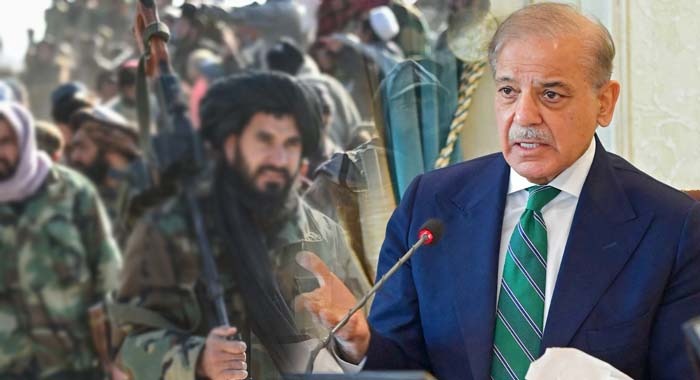
The region is beginning to resemble a chessboard where every move is answered, not always with strategy, but with force, hesitation, and unfinished sentences. What emerges from the recent stream of developments is not a single story, but an interconnected pattern, one that stretches from Mir Ali’s battered homes to the quiet meeting rooms of Urumqi, where words are being weighed against years of mistrust.
At the ground level in Khyber Pakhtunkhwa, the pattern is stark and difficult to dispute. Civilian areas are no longer incidental victims; they are increasingly central targets. Mortar fire in Mir Ali, attacks in Bannu and Lakki Marwat, and the steady drumbeat of violence across North Waziristan point toward a deliberate strategy by the banned Tehreek-e-Taliban Pakistan (TTP) to fracture public confidence. These are not isolated bursts of violence but part of a sustained campaign, one that relies on cross-border mobility, local facilitation, and psychological pressure. The battlefield is no longer just physical, it is also social, where fear travels faster than bullets.
This reality directly collides with the diplomatic theatre unfolding in Urumqi. Pakistan’s message there is unusually precise, almost surgical in its clarity: designate the TTP as a terrorist organization, dismantle its infrastructure, and prove it with verifiable evidence. These are not abstract demands; they are shaped by the very incidents unfolding inside Pakistan’s borders. Each attack in Bajaur or Bannu quietly reinforces Islamabad’s position at the negotiating table, turning security grievances into structured diplomatic demands.
Yet the response from Kabul remains caught in a familiar rhythm, acknowledgement without enforcement, engagement without visible disruption of militant networks. This is where the contradiction sharpens. On one hand, Afghan authorities’ express willingness to resolve issues through dialogue, on the other, the operational space for TTP elements appears largely intact. The gap between intent and action has become the central fault line in Pakistan-Afghan Taliban relations.
The role of China in this equation adds another layer of complexity. Beijing is not merely hosting talks, it is attempting to engineer stability in a region where instability has begun to echo into its own sensitive security concerns, particularly around Xinjiang. The choice of Urumqi is therefore not symbolic, it is strategic, a reminder that this conflict is no longer contained within bilateral boundaries. China’s quiet diplomacy suggests an understanding that without addressing militant sanctuaries, economic corridors and regional connectivity projects remain perpetually at risk.
Meanwhile, voices like Hamid Karzai introduce a different kind of tension into the discourse. His call for the United Nations to condemn Pakistan’s strikes raises questions that cannot be easily dismissed. If sovereignty is the concern, then accountability must travel in both directions. Has there been a sustained effort from Afghan leadership, past or present, to confront the use of Afghan soil for cross-border terrorism? The absence of a clear answer continues to shadow such statements. Pakistan’s position, reinforced by repeated incidents, frames its actions as retaliatory rather than offensive, a response to a threat that has remained unaddressed across the border.
The United Nations, led by António Guterres, finds itself in a familiar posture, urging restraint, expressing concern, and advocating dialogue. But the question quietly lingers, whether concern alone has any operational value in a conflict defined by action and reaction. Without mechanisms of enforcement or accountability, such appeals risk becoming diplomatic rituals rather than instruments of change.
Layered onto this is the humanitarian dimension inside Afghanistan, where restrictions imposed by the Taliban, particularly on women, have begun to erode essential systems like healthcare. The warnings raised by Richard Bennett highlight a parallel crisis, one where governance choices are deepening human suffering. This internal fragility is not disconnected from the security situation. A weakened state structure, combined with economic pressure and social restrictions, creates an environment where militant networks can survive, adapt, and in some cases, thrive.
The Gulf and broader Middle East tensions further complicate this already tangled web. As global attention shifts and regional priorities are recalibrated, there is always the risk that militant networks exploit the resulting gaps, whether through funding channels, ideological momentum, or simple lack of scrutiny. In such an environment, even distant conflicts cast long shadows over South Asia’s security landscape.
What ultimately ties all these threads together is a cycle that remains unbroken. Attacks inside Pakistan lead to retaliatory responses, which in turn fuel diplomatic protests, followed by calls for restraint that rarely address the root cause. The Urumqi talks offer a narrow opening, a chance to translate repeated demand into measurable outcomes. But that possibility hinges on one decisive factor, whether commitments made in meeting rooms are matched by actions on the ground.
Until that alignment is achieved, the region will continue to move in circles, where every new progress carries the weight of unresolved past, and every attempt at stability must first pass through the test of trust that has yet to be built.



