
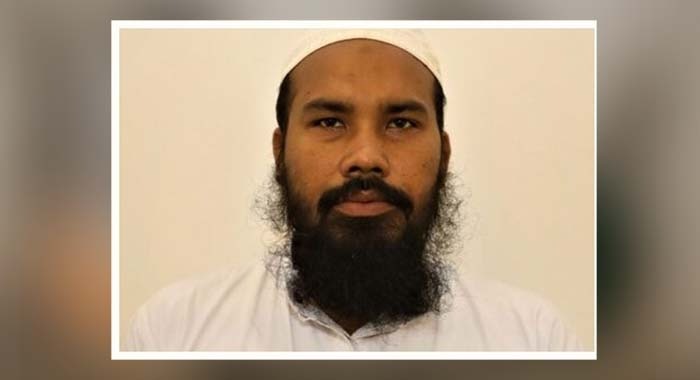
Mahmudul Hasan Gunobi has re-emerged as one of Bangladesh’s most influential Islamist figures, underscoring the resilience of al-Qaeda-linked networks in the country. Designated by Bangladeshi authorities as the spiritual leader of the al-Qaeda-affiliated Ansar al-Islam, Gunobi has played a central role in linking popular religious preaching with militant recruitment and indoctrination. His release in 2024 following a high-profile arrest in 2021 demonstrates the adaptability of extremist networks despite law enforcement interventions.
Bangladeshi authorities identify Gunobi primarily as a spiritual and ideological leader. While not directly commanding battlefield operations, he provides recruits with the theological justification and psychological conditioning required to become hardened militants or suicide operatives. Leveraging religious platforms, public sermons, and madrasa networks, Gunobi has developed sophisticated clandestine recruitment systems, enabling AAI to maintain its operational capabilities and propagate extremist ideologies.
His resurgence highlights the enduring potency of al-Qaeda-linked networks in Bangladesh. Despite a decline in operational tempo following the 2016 crackdown after the Holey Artisan Bakery attack, AAI has not been dismantled. Figures like Gunobi remain central to its organizational revival.
Born in Gunoboti, Mahmudul Hasan Gunobi received early education in mainstream schools before enrolling in a Qawmi madrasa. He completed his Dawra-e-Hadith in 2008 at Jamia Rahmaniya Arabia, Dhaka, providing him with the credentials to enter the religious teaching sphere. Gunobi worked as a teacher in multiple districts, including Cumilla, Noakhali, Khagrachari, Bandarban, and Cox’s Bazar, and engaged in the religious book trade, expanding his network and influence.
Gunobi’s radicalization accelerated after 2013 amid Bangladesh’s political turmoil and Islamist mobilization, leading him to incorporate jihadist ideologies into public sermons by 2014. His first major militant affiliation was with Harkat-ul-Jihad-al-Islami Bangladesh (HuJI-B), after which he aligned closely with Mufti Md. Jasimuddin Rahmani, the imprisoned former spiritual leader of AAI. Following Rahmani’s arrest in 2013, Gunobi rose to prominence as AAI’s key ideologue and propagandist.
Gunobi has employed highly sophisticated recruitment techniques. Bangladesh’s Rapid Action Battalion (RAB) and the Counter-Terrorism and Transnational Crime Unit (CTTCU) documented his use of layered organizations and front groups, including Dawatul Islam, to propagate extremist ideology and recruit vulnerable youth. He maintained a shadow network of “manhaji” operatives embedded in Hefazat-e-Islam and other madrasas, who helped radicalize peers under the guise of religious teaching.
Recruits were often isolated in secret camps in Bandarban and Khagrachhari districts, severed from family and society, and subjected to structured psychological conditioning. These programs reportedly produced operatives capable of carrying out suicide attacks. Gunobi’s indoctrination extended to Rohingya refugee populations in Cox’s Bazar, reflecting al-Qaeda’s regional strategy of exploiting displaced communities.
Gunobi’s ideological leadership has been directly linked to plots targeting Bangladesh’s Parliament and law enforcement personnel, according to RAB. Arrested operatives from Thakurgaon and Dinajpur confirmed that they were inspired by Gunobi’s sermons and online content to join AAI. Gunobi’s narratives promote core al-Qaeda themes, including global jihad, caliphate ideology, support for the Afghan Taliban, and the establishment of Islamic governance in Bangladesh, while denouncing Western influence and secular governance.
Since his release in 2024, Gunobi has maintained a robust online presence, with over 168,000 followers on Facebook, disseminating sermons, radical literature, and narratives framing counterterrorism operations as state conspiracies (“jangi natok”).
Gunobi’s 2021 arrest followed the exposure of an attack plot on Parliament. Despite being held for 32 months under the Anti-Terrorism Act, he was acquitted and released in 2024, reflecting the difficulties of converting intelligence and confessions into convictions in Bangladesh’s specialized counterterrorism courts. His release also coincided with political changes that saw a shift in Bangladesh’s approach to Islamist militants, including mass bails and releases.
Gunobi exemplifies how ideological leaders can survive state suppression and continue to influence militant networks through narrative reinvention and digital adaptability. His enduring prominence highlights the necessity of counter-messaging strategies that engage Bangladesh’s religious discourse, complementing law enforcement and counterterrorism operations. Without such a holistic approach, Gunobi and similar figures will remain a pivotal ideological threat, capable of recruiting and radicalizing individuals both online and offline.
Bangladesh authorities continue to monitor Gunobi’s activities closely, emphasizing that counterterrorism strategies must evolve to address ideological and operational threats simultaneously



