(Shamim Shahid)
Two crises are unfolding at once one along the mountains that divide Pakistan and Afghanistan, and another in the invisible world of code and networks. One is fought with artillery and air strikes; the other with keyboards and malware. Both, however, carry the potential to destabilise Pakistan in ways that extend far beyond the battlefield.
In recent days, reports of military escalation between Pakistan and Afghanistan have intensified. There are claims of cross-border strikes in areas including Kandahar and Nangarhar. Ground engagements along the frontier are also being discussed in official and unofficial channels. While independent verification of every claim remains difficult in a conflict environment, what is clear is that tensions have entered a dangerous phase.
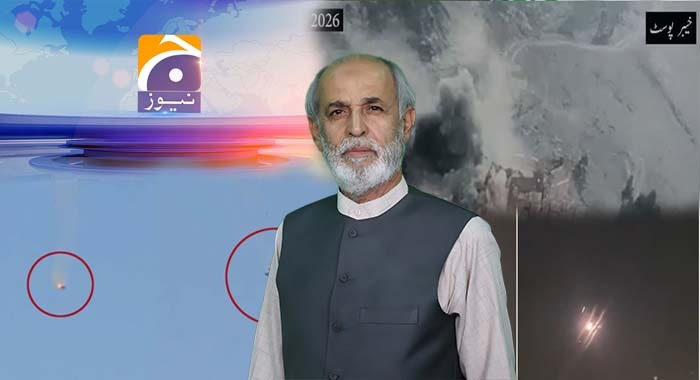
Yet, even as artillery echoes across the border, another kind of siren has begun to sound. The website of a major Pakistani broadcaster was hacked, and a message critical of the army briefly appeared online. It was not just an isolated cyber incident; it was a signal. In modern warfare, digital vulnerabilities can be as consequential as military weaknesses. Pakistan now faces the possibility of a two-front struggle: a physical confrontation with a neighbour and a digital contest with shadowy adversaries.
The political reality in Kabul remains fragile. The Taliban’s return to power followed a long insurgency and the withdrawal of US-led forces. But governance through force does not automatically translate into legitimacy. Many Afghans did not choose this government through ballots; they inherited it through bullets. Whether one agrees or disagrees with that framing, it reflects a sentiment widely discussed among Afghan intellectuals and civil society actors.
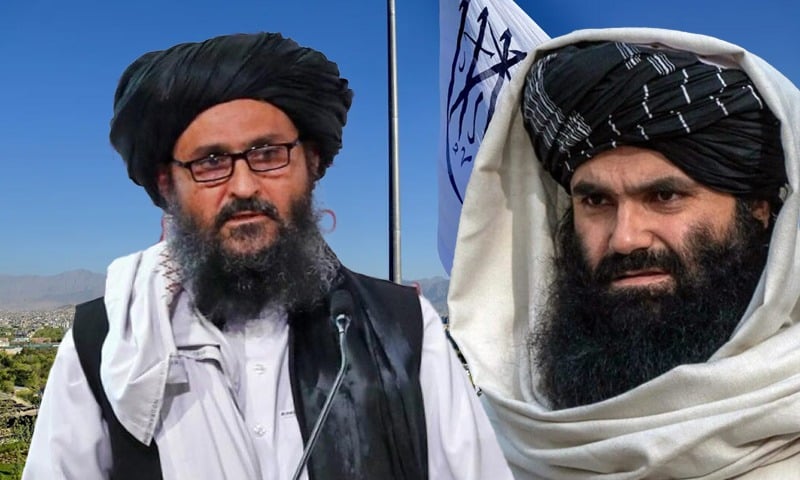
Now, amid renewed hostilities with Pakistan, there are reports that key Taliban officials are avoiding public offices and operating from secure locations. In Kandahar, senior leaders are said to have moved to undisclosed sites. In Kabul, government offices reportedly remain partially vacant. Such developments, if accurate, signal a leadership under pressure.
Yet war produces paradoxes. Historically, external conflict often strengthens domestic authority at least temporarily. A population divided over governance can unite in the face of perceived foreign aggression. If the Afghan public increasingly views Pakistan as the aggressor, sympathy for the Taliban administration may grow, regardless of previous grievances. This is one of the dangers Islamabad must calculate carefully. Tactical success does not always equal strategic gain.
There is also the broader regional picture. The Middle East is already in turmoil, with Israel and Iran engaged in open hostilities. Diplomatic energies that might otherwise focus on de-escalating tensions between Islamabad and Kabul are absorbed elsewhere. Qatar, Turkey and other regional players have attempted mediation in various theatres, but sustained diplomatic momentum is hard to maintain when multiple fires burn simultaneously.
In this climate, the Pakistan–Afghanistan confrontation risks becoming a “secondary war” not because it lacks seriousness, but because global attention is elsewhere. That vacuum can be dangerous. When fewer eyes are watching, escalation becomes easier.
Pakistan’s military superiority over Afghanistan is widely acknowledged. In conventional terms, Islamabad holds the advantage. But war is not only about firepower. It is also about perception, narrative and long-term consequences.
If conflict continues, Pakistan may find itself facing a hardened Afghan public opinion. Anti-Pakistan sentiment, once limited to certain political segments, could broaden. Afghan diaspora communities in Europe and North America numerous and increasingly vocal may amplify that narrative internationally.
Simultaneously, domestic measures inside Pakistan including crackdowns affecting Afghan refugees risk attracting international criticism. In a global environment where migration, human rights and regional stability are interconnected themes, perception can influence diplomatic leverage.
Thus, even if Pakistan does not suffer substantial military losses, it could face strategic costs in reputation and regional alignment.
While artillery and air strikes dominate headlines, cyber attacks represent a subtler but equally dangerous front.
The hacking of a major media outlet’s website and reportedly its sports channel is not merely a public relations embarrassment. It is a warning sign. If media platforms can be compromised, what about financial institutions? Power grids? Government databases? Defence communication systems?
Cyber warfare thrives in ambiguity. Attribution is notoriously difficult. State actors, proxy groups and freelance hackers often blur together. In geopolitical tensions involving South Asia and the Middle East, cyber capabilities are well-developed on multiple sides. India and Israel, frequently cited in regional security discussions, possess advanced cyber infrastructure. Other global actors do as well.
In times of physical conflict, cyber operations can serve as force multipliers. They can spread misinformation, erode public trust, disrupt services and create panic without firing a single bullet. A manipulated message on a trusted platform can be weaponised to undermine morale or provoke unrest.
Pakistan’s digital infrastructure has improved over the past decade, but vulnerabilities remain. Telecommunications networks are frequently targeted. Phishing campaigns and data breaches are common worldwide. What is new is the intersection between cyber attacks and active military tensions.
If a major government or security institution were to be compromised during wartime, the consequences could be severe not only operationally but psychologically. Public confidence is a strategic asset. Undermining it is a classic objective in hybrid warfare.
We must shed the notion that cyber attacks are secondary irritations. In many ways, they are rehearsals for deeper disruptions.
In global conflicts over the past decade, cyber operations have preceded or accompanied kinetic action. Infrastructure sabotage, disinformation campaigns and coordinated hacking have shaped battlefields before tanks rolled in. Pakistan cannot assume immunity.
The hacking of a high-profile broadcaster demonstrates that hostile actors are willing to target symbolic institutions. Media outlets shape narratives. Disrupting them creates confusion and signals vulnerability.
Government authorities must respond not only with technical patches but with structural reforms. Cyber security should be treated as national defence integrated, funded and continuously tested. Public-private partnerships are essential, as much of the country’s digital infrastructure lies outside direct government control.
Moreover, transparency in responding to cyber incidents is vital. Silence breeds speculation. Clear communication builds resilience.
If one asks what comes next, the honest answer is uncertainty.
A prolonged military confrontation would strain both Pakistan and Afghanistan. While Pakistan’s defence apparatus is stronger, conflict rarely produces clean outcomes. Afghanistan’s economy and governance structures are more fragile; it stands to suffer deeply. Yet instability next door inevitably spills across borders economically, socially and politically.
Pakistan already faces a complex regional environment. India remains a long-standing rival. Iran is embroiled in conflict. Gulf states are recalibrating alliances. In such a landscape, opening another sustained front carries risks.
International mediators are distracted. Major powers are preoccupied. That leaves regional actors to chart their own course.
In my view, the burden now falls on political, religious and technocratic leaders in both countries. Even in wartime, channels of communication must remain open. Civil society voices, often sidelined in moments of crisis, should advocate de-escalation. Military solutions alone cannot resolve what is ultimately a political problem.
Pakistan must pursue a dual strategy. First, manage the border conflict with restraint and clarity of objectives. Tactical operations should align with long-term political goals. Avoiding unnecessary civilian harm and maintaining diplomatic outreach are essential.
Second, fortify the digital frontier. Cyber defence cannot remain an afterthought. Investment in infrastructure, training and international cooperation is urgent. The line between domestic stability and digital security has vanished.
We are living in an era where wars are no longer confined to trenches and airfields. They unfold on screens, in data centres and across social media feeds. A hacked website may seem trivial compared to a missile strike until it is part of a coordinated strategy.
Pakistan stands at a crossroads. Escalation may bring temporary leverage, but sustainable security requires foresight. The mountain passes and the fibre-optic cables are now equally strategic. History shows that conflicts between neighbours rarely produce clear winners. They produce generations of mistrust. The choice before Islamabad and Kabul is stark: deepen confrontation or pursue difficult dialogue.
At the same time, the invisible war in cyberspace demands vigilance. Ignoring it would be a mistake. The future of regional stability may well depend not only on what happens along the Durand Line, but also on what happens behind the firewall.