
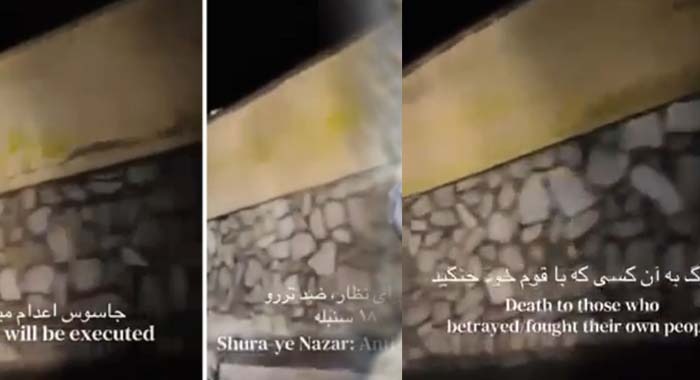
Armed resistance to the Taliban’s interim administration, present in scattered form since the group’s return to power, appears to be gaining renewed momentum, particularly in Afghanistan’s Panjshir Valley.
Over the past several days, slogans circulating from Panjshir suggest a sharpened tone and organized messaging. Phrases declaring the “countdown” of the interim Taliban administration, calls for unity, and warnings against informers have surfaced alongside claims of increased militant activity under the banner of anti-Taliban resistance networks.
Panjshir has historically served as a symbol of defiance. During previous phases of conflict, the valley resisted both Soviet forces and later Taliban control. Today, emerging resistance elements, often loosely identified with the National Resistance Front and affiliated local fighters, are attempting to reassert that legacy in a vastly altered strategic environment.
Messaging Turns Sharper
Statements attributed to resistance elements include explicit threats against alleged Taliban informers and collaborators, reflecting a shift from defensive posturing to punitive rhetoric. Analysts note that such language is designed both to deter intelligence penetration and to project strength amid a broader security crackdown.
Security observers say the growing assertiveness may reflect three parallel dynamics:
Frustration over political exclusion and economic hardship.
Internal fissures within Taliban ranks.
An attempt by resistance factions to capitalize on regional instability and shifting geopolitical currents.
While independent verification of battlefield gains remains limited, localized skirmishes and targeted attacks have been reported intermittently in Panjshir and parts of Baghlan. Taliban authorities have not issued a comprehensive response to the latest wave of messaging but have previously maintained that resistance groups lack operational capacity to mount sustained campaigns.
Momentum or Messaging?
The key question is whether this resurgence represents symbolic resistance amplified through information networks, or the early phase of a structured insurgent escalation.
Security experts caution that armed resistance movements often pass through cycles of dormancy and reactivation. Increased rhetoric does not automatically translate into strategic breakthrough, but it can alter perception, morale and recruitment patterns.
The re-emergence of slogans emphasizing unity suggests efforts to consolidate fragmented anti-Taliban factions under a broader narrative of national resistance. However, without external backing, territorial depth or sustained logistical supply chains, resistance forces face significant structural constraints.
Regional Implications
Any intensification of armed opposition carries implications beyond Panjshir. A widening insurgency could:
Trigger harsher Taliban internal security measures.
Increase displacement risks in affected districts.
Complicate regional diplomatic engagement with Kabul.
Open space for transnational militant exploitation in security vacuums.
For now, Panjshir’s mountains echo once again with defiance. Whether those echoes build into a sustained campaign or fade into another chapter of symbolic resistance will depend on organization, external dynamics and the Taliban’s internal cohesion.
Afghanistan has seen many countdowns announced in its long history of conflict. Few follow predictable clocks.



