
Muhammad Haseenullah
The United States is facing a renewed reckoning over the 2021 evacuation from Kabul, as multiple incidents and official disclosures converge to expose what appears to be a deeper, structural failure in the vetting of Afghan evacuees. Recent developments, including the decision to deport six Afghans involved in terrorism or criminal cases, the arrest of another Afghan national in Texas on federal charges, and the disclosure that over 5,000 evacuees were flagged as potential security risks, have revived scrutiny of the chaotic airlift that followed the US withdrawal. At the heart of this renewed turmoil is the House Foreign Relations Committee’s decision to republish a damning investigative report on the Kabul evacuation, a document that accuses the Biden administration of knowingly ignoring the consequences of a flawed and hasty exit.
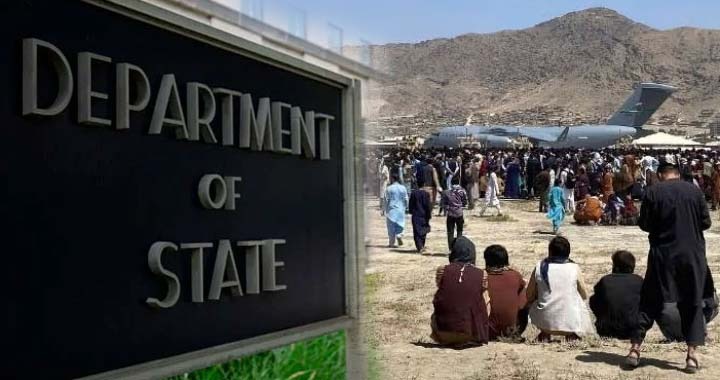
The committee’s report outlines dozens of failures, beginning with the collapse of documentation and screening operations at Hamid Karzai International Airport. Consular officers lacked proper systems, identification checks were inconsistent, and thousands of evacuees entered the pipeline without verifiable identity papers. The testimonies quoted in the report paint a picture of confusion and risk. A plane reportedly returned to Kabul after passengers were red flagged during secondary screening. Five passengers were found carrying American passports that did not belong to them. US personnel in Doha later found that many evacuees arrived with no real documentation at all, often with only one person per family holding a legitimate American document while the rest travelled without records.
The report also details the destruction of passports and visa stickers at the US embassy in Kabul after Taliban forces reached the compound gate. Embassy leadership decided to burn documents to prevent them from being captured, but this left many SIV applicants and US linked Afghans completely undocumented. The State Department attempted to compensate by issuing digital entry passports through emails, a solution that rapidly collapsed when those emails were forged by ineligible groups. Instead of reducing chaos, the scheme created more fraudulent crowds that overwhelmed airport gates and made it nearly impossible for security personnel to identify those genuinely eligible for evacuation.
These failures, according to the report, put American forces and diplomats at direct risk and contributed to the environment that enabled the ISIS K suicide bombing at Abbey Gate, a blast that killed 13 US service members and more than 170 Afghans. The committee argues that the cumulative effect of these lapses has undermined US national security, damaged America’s global reputation, and allowed Afghanistan to again become a safe haven for militant groups.
The Wider Security Fallout
This revived report is not appearing in isolation. It coincides with a series of domestic US security incidents involving Afghan evacuees, creating a political moment that Washington cannot easily ignore. The Biden administration recently confirmed the deportation of six Afghans linked to terror or criminal activity. In another case, an Afghan national was arrested in Texas and charged with federal offences after reportedly slipping through earlier screening mechanisms. These incidents reinforce the claim that vetting gaps were not abstract bureaucratic failures, but real security breaches with direct consequences.
Moreover, congressional disclosures have confirmed that more than 5,000 evacuees triggered security flags during screening. Many of these individuals remained inside the United States for months or years while investigations continued, a situation that critics argue was both irresponsible and avoidable. Former president Donald Trump seized on the most recent attack in Washington, where an Afghan citizen killed one National Guard soldier and injured another, to accuse Biden and Kamala Harris of bringing tens of thousands of Afghans to America without adequate screening.
The timing of the report’s republication suggests a deliberate political strategy. By reissuing the findings immediately after the Washington attack, the House committee has placed the administration’s handling of the Kabul evacuation back at the centre of America’s security debate. Senior counterterrorism officials quoted in the report described the operation as a slow moving train toward disaster. In their view, failure was inevitable, with only the scale of that failure being in question.
Between Security Risks and Rising Afghanophobia
While the facts surrounding the Kabul evacuation and subsequent vetting failures are serious, the consequences for ordinary Afghan refugees are equally troubling. Many Afghan families who resettled in the United States after fleeing Taliban rule now speak of what they describe as a wave of Afghanophobia. They sense growing hostility, fear, and suspicion in public discourse, a climate further inflamed by criminal cases or terror related incidents involving a small number of evacuees.
This dual crisis, consisting of legitimate security concerns on one side and rising public backlash on the other, reflects the reality that America’s chaotic withdrawal has continued to shape politics long after the last aircraft departed Kabul. The failure to document and screen evacuees with rigour did not merely create vulnerabilities, it also placed thousands of innocent Afghans in the crossfire of domestic political battles. As the United States reassesses its policies toward the Afghan diaspora, the challenge will be to address security gaps without reinforcing social and political prejudice against those who played no role in the failures that occurred at the airport gates during those final days of the war.



