
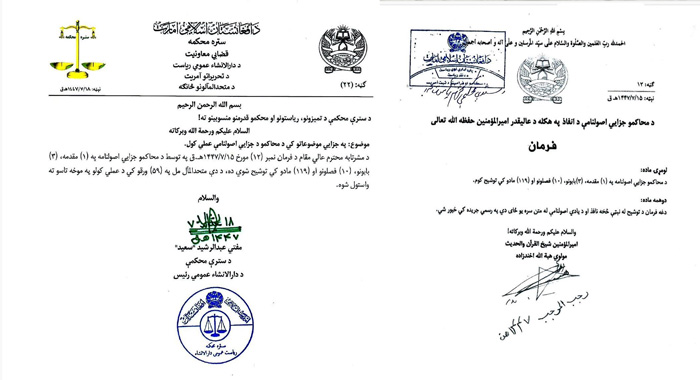
Afghanistan has increasingly become a safe haven for terrorist organizations and a serious threat to regional peace, while the Taliban’s imposition of a controversial new “constitution” has provoked widespread criticism both domestically and internationally.
According to reports, the Taliban’s newly introduced framework, announced by Supreme Leader Hibatullah Akhundzada, has created deep unrest among the Afghan population. The so-called “constitution” has drawn scrutiny from human rights advocates, experts, and global observers, who argue that it neither aligns with Islamic principles nor respects fundamental human rights.
Analysts describe the framework as a modern form of societal subjugation, dividing Afghan society into four hierarchical classes: the elite, spiritual and influential figures, the middle class, and the lower class. Observers note that the elite enjoy judicial privileges and special entitlements, while the poorer and weaker segments of society face increased oppression and marginalization.
Human rights organizations have condemned the system as a direct violation of social justice and equality. “This hierarchical structure institutionalizes discrimination, concentrating power and privileges among the elite while further suppressing vulnerable populations,” said one rights observer.
The Taliban maintain that their new system is “Islamic” in nature. However, the international community has widely criticized it as a framework that entrenches inequality, promotes systemic injustice, and effectively reinstates a new form of modern-day slavery.
The controversy surrounding the Taliban’s framework has intensified public debate on social media platforms and other communication channels. Experts warn that the new system threatens not only internal stability in Afghanistan but also regional security, as the country continues to serve as a base for extremist groups.
This development underscores the urgent need for the international community to engage with Afghan civil society and human rights advocates to address the humanitarian and governance crises in the country.



