
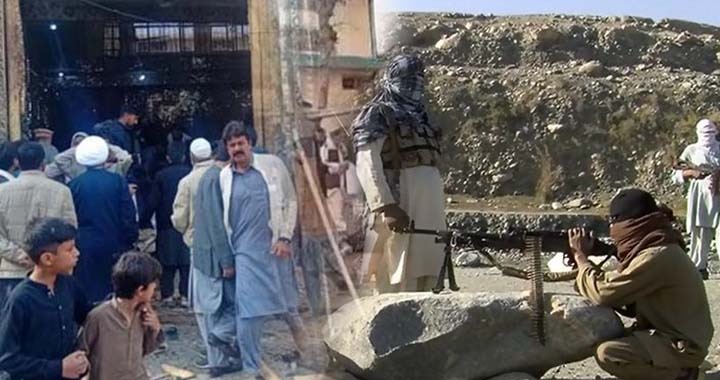
The Tarlai mosque bombing, now conclusively linked to a suicide attacker trained in Afghanistan, highlights the persistent cross-border threat confronting Pakistan. With 31 dead and 169 injured, the attack underscores the operational reach of militant ecosystems stretching from Afghan sanctuaries into urban Pakistani centres.
Security assessments reveal a multi-layered threat matrix:
Sanctuary Layer – Extremist groups maintain active bases in Afghan territory, facilitating training, ideological indoctrination, and logistical planning.
Training Layer – Recruits, including suicide attackers, receive both ideological and technical instruction, encompassing explosives handling and urban operational tactics.
Transit Layer – Repeated travel histories and safe passage networks allow militants to cross provincial and national borders with relative ease.
Execution Layer – Urban religious sites and crowded public venues remain prime targets for maximizing civilian casualties and psychological impact.
The recent arrest of four facilitators—two each from Peshawar and Nowshera—confirms that the attack was part of a structured support network rather than an isolated incident. The arrests also exposed provincial-level operational nodes, including logistical coordination and local accomplices, which underscore the systemic nature of militant planning.
Officials stress that the combination of Afghan-based training and domestic facilitation is a critical vector through which extremist groups maintain operational momentum inside Pakistan. Investigations continue to map out additional facilitators and support cells linked to the bombing.
This latest development reinforces Islamabad’s position that cross-border militant infrastructure cannot be separated from attacks on Pakistani soil. Analysts warn that dismantling these networks requires sustained, intelligence-driven operations combined with regional cooperation and proactive counterterrorism frameworks.



