
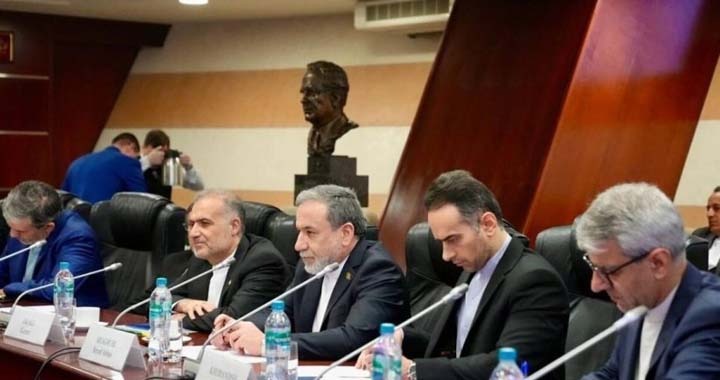
Iran’s Foreign Minister Abbas Araqchi has underscored that the people of Afghanistan must be granted the right to determine their future through a legitimate, representative government, warning that the country’s current political trajectory continues to generate instability with serious regional consequences.
Speaking at Moscow’s MGIMO University on Saturday, December 27, Araqchi made it clear that Iran has not formally recognized the Taliban-led administration, citing persistent and unresolved challenges that undermine confidence in Kabul’s ability to function as a responsible governing authority.
He identified a range of critical issues straining relations between the two neighbors, including weak border security, unresolved water disputes, the expansion of narcotics trafficking, and uncontrolled migration. According to Araqchi, these problems have not only destabilized Afghanistan internally but have also spilled across borders, directly affecting regional countries such as Iran.
Despite maintaining political and economic engagement with the Taliban over the past four years, Iran’s approach has remained pragmatic rather than endorsing. Araqchi noted that Tehran’s decision to allow the Taliban to assume control of Afghan diplomatic missions abroad was driven by necessity, not legitimacy, as Afghanistan lacks an inclusive political system that reflects the will of its people.
Historical disputes between Iran and Afghanistan particularly over water rights and border management—have repeatedly escalated, at times resulting in armed confrontations. Araqchi warned that without structured dialogue and credible governance mechanisms, Afghanistan risks remaining a source of chronic instability rather than a constructive regional partner.
The Iranian foreign minister stressed that engagement with the Taliban is aimed at crisis management rather than political approval. He reiterated Iran’s position that lasting stability in Afghanistan depends on inclusive governance, respect for human rights, and meaningful political representation for all ethnic and social groups—conditions that, he implied, remain absent under the current administration.
Araqchi added that while dialogue is necessary to address urgent concerns such as migration control, counter-narcotics efforts, and cross-border security, Afghanistan’s failure to establish a legitimate and accountable government continues to hinder long-term cooperation and regional trust.
His remarks reflect growing frustration among regional stakeholders over Afghanistan’s direction, reinforcing concerns that the country’s internal political shortcomings are increasingly becoming a liability for regional security and stability.



