
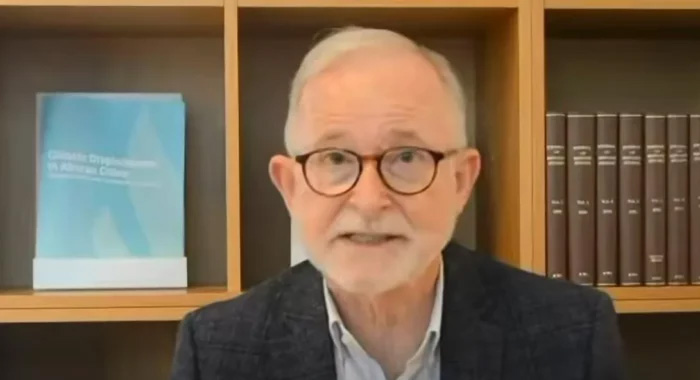
The United Nations Special Rapporteur on the situation of human rights in Afghanistan, Richard Bennett, has issued a strong warning regarding the recently signed Taliban “Criminal Procedure Code,” emphasizing that its implementation could have deeply troubling consequences for the Afghan population.
Bennett stated that he is reviewing the code from both human rights and Islamic law perspectives. “Still analyzing the Taliban’s new Criminal Procedure Code, including from a human rights and Sharia perspectives, but it is already very clear that the implications for #Afghans are extremely concerning. I will be issuing more detailed statements in due course,” he said.
The warning follows reporting by Afghan human rights organization Rawadari, which confirmed that Taliban leader Hibatullah Akhundzada has formally endorsed the document and directed its implementation across all Taliban-controlled courts. According to Rawadari, the code institutionalizes several practices that could constitute severe violations of fundamental rights and freedoms.
Among the most alarming provisions, the code reportedly recognizes only followers of the Hanafi school of Islam as legitimate Muslims, labeling adherents of other Islamic schools as “deviant.” Human rights experts warn this could institutionalize religious discrimination and marginalize religious minorities.
The code also introduces a system of social classification and appears to legitimize forms of slavery, directly undermining the principle of equality before the law. Additionally, violence against women and children is narrowly defined, limited to severe physical harm, while forms of psychological, sexual, and other non-physical abuse are not adequately prohibited.
Human rights groups have highlighted further dangers in the code’s treatment of political opposition. Taliban opponents are reportedly labeled as “rebels” (baghi), with the code authorizing their killing and providing no guarantee of a fair trial. Experts warn this could drastically increase the risk of arbitrary detention, torture, and extrajudicial killings.
Legal scholars and international organizations have expressed concern that the principles outlined in the code are incompatible with both internationally recognized human rights standards and widely accepted interpretations of Islamic law. If fully enforced, the code could further entrench repression in Afghanistan, particularly targeting women, religious minorities, and political dissenters.
The UN Special Rapporteur’s warning underscores the urgent need for the international community to monitor developments closely and to advocate for legal reforms that uphold fundamental rights and protections for all Afghans.
Afghanistan now faces a critical human rights crossroads, as the implementation of the Taliban’s new Criminal Procedure Code threatens to roll back decades of progress in legal protections, gender equality, and minority rights, raising alarm among international observers, rights organizations, and local communities alike.



