
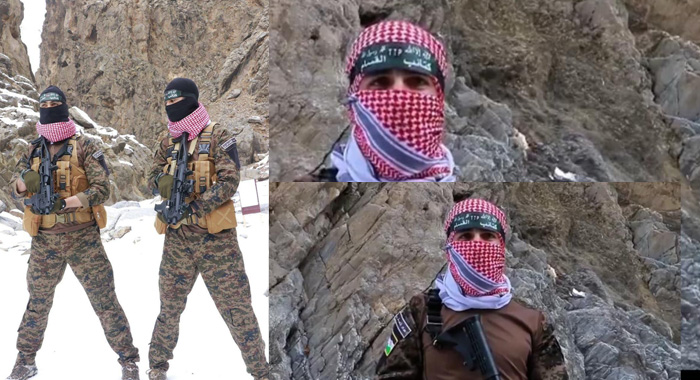
Recent propaganda emerging from extremist elements in Afghanistan reveals what appears to be a calculated effort to manufacture legitimacy through symbolism while concealing a striking contradiction. In newly circulated videos and posters, Khawarij-linked factions present themselves in a visual style closely resembling prominent Palestinian resistance figures, particularly adopting imagery associated with Abu Ubaida. The aesthetic choices carefully curated visuals, tone, and presentation suggest a deliberate attempt to tap into emotional solidarity surrounding the Palestinian cause and project themselves as part of a broader ideological struggle.
Yet embedded within the same material is a detail that raises serious questions.
These groups prominently display modern Israeli-manufactured weapons components, specifically Roni Glock chassis conversion kits. Open-source assessments identify these systems as products of CAA Industries, an Israeli defense company. The Roni platform is designed to convert a standard Glock pistol into a more stabilized and compact weapon system, enhancing control and operational effectiveness.
The contradiction is difficult to ignore. While invoking the language of Islamic resistance and positioning themselves rhetorically against Israel, these actors are simultaneously showcasing Israeli defense technology in their operational imagery. Whether these weapons were obtained through secondary markets or illicit supply chains does not diminish the symbolic inconsistency. The optics alone reveal a gap between ideological messaging and operational reality.
This development appears less accidental and more strategic. The blending of borrowed resistance symbolism with sophisticated weapon displays reflects a modern propaganda model one that prioritizes emotional mobilization and digital impact over doctrinal coherence. By adopting globally recognizable resistance imagery, these groups may be attempting to manufacture legitimacy, expand recruitment appeal, and embed their local agendas within wider geopolitical narratives.
What emerges is not simply hypocrisy, but a pattern of ideological opportunism. In this framework, rhetoric functions as a tool of influence rather than a reflection of consistent belief. The use of Israeli-produced technology while advancing anti-Israel slogans exposes a tension between declared ideology and tactical pragmatism.
Beyond the narrative contradiction, the broader implications are concerning. Afghanistan’s fragile environment continues to provide space for non-state actors to refine both their military capabilities and psychological operations. The convergence of sophisticated visual propaganda, transnational symbolic branding, and enhanced small-arms systems suggests an evolving militant ecosystem that is increasingly media-aware and strategically adaptive.
The central question remains unavoidable: when movements that claim uncompromising ideological purity rely on the very technology they publicly condemn, what does that reveal about the authenticity of their cause?
As extremist factions attempt to cloak themselves in the imagery of global resistance, the evidence points to a deeper reality one in which symbolism is weaponized, narratives are engineered, and ideological consistency is secondary to strategic gain.



