
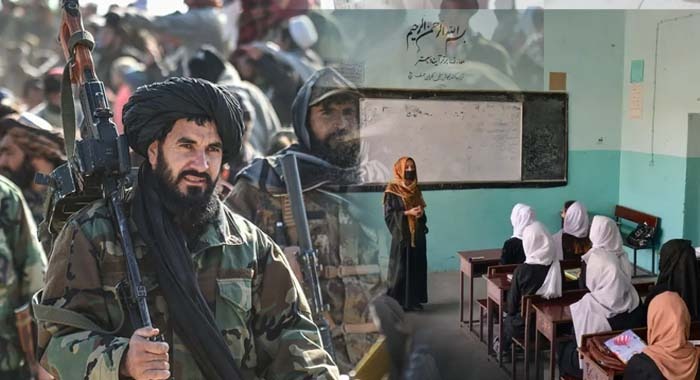
Afghanistan’s prolonged political and social collapse is generating a silent, long-term security threat for Pakistan: the erosion of human capital. Restrictions imposed by the Taliban on education, particularly for women, and limitations on employment opportunities across sectors are accelerating the degradation of Afghanistan’s skilled workforce. Analysts warn that this “lost generation” will not only impede Afghanistan’s recovery but also exacerbate instability that spills across Pakistan’s western border.
According to UN reports, nearly half of Afghan children, especially girls, remain outside formal education. The impact is profound: reduced literacy, limited professional skills, and stunted societal development. These structural deficits do not remain confined within Afghanistan—they ripple into Pakistan, where border regions rely on skilled labor and cross-border cooperation to sustain local economies and social cohesion.
Security analysts highlight that declining education levels amplify susceptibility to extremist narratives. Afghanistan’s youth, deprived of formal schooling and meaningful employment, are increasingly targeted by militant groups seeking recruits for operations in both Afghanistan and Pakistan. The banned Tehreek-e-Taliban Pakistan (TTP) has reportedly leveraged these networks, exploiting ideological voids and offering financial or operational incentives to marginalized young men.
The erosion of human capital also undermines institutional resilience. Weak governance, coupled with limited technical expertise, diminishes the Afghan state’s ability to manage border security, migration flows, and counterterrorism operations. This vacuum directly affects Pakistan, increasing the likelihood of cross-border infiltration, illegal trade, and militant safe havens.
Experts suggest that reversing this trend is a complex but essential security measure. Regional cooperation to support education, vocational training, and women’s workforce participation could mitigate the long-term spillover effects. Pakistan’s engagement in humanitarian and technical assistance programs, linked with verifiable benchmarks, is considered critical to prevent generational radicalization.
Human capital collapse is a slow-burning threat that does not trigger immediate headlines but has profound implications for Pakistan’s stability. Education restrictions, workforce marginalization, and generational skill gaps create conditions in which extremist organizations can flourish. In effect, Afghanistan’s failure to preserve and develop human capital translates into a direct, structural risk for Pakistan, necessitating proactive regional interventions rather than reactive border security measures.



