
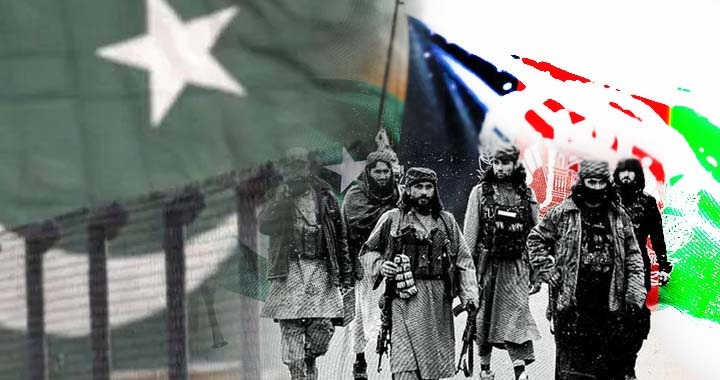
Afghanistan’s worsening political and economic crisis is increasingly manifesting as a direct and expanding security challenge for Pakistan. What was once viewed as a contained internal struggle has now evolved into a cross-border threat, as governance failures and rigid ideological structures create fertile ground for terrorist regrouping and infiltration.
Security observers caution that Afghanistan’s prolonged isolation, combined with institutional fragility and economic breakdown, has transformed the country into a strategic fault line rather than a distant concern. The consequences are no longer theoretical; they are unfolding along Pakistan’s western frontier, where security dynamics are becoming more volatile.
At the heart of this shift is the absence of an inclusive and accountable governance framework in Afghanistan. This vacuum has enabled terrorist networks, particularly the banned Tehreek-e-Taliban Pakistan (TTP) and allied groups, to re-establish operational bases. These organizations exploit weak administrative oversight, ungoverned spaces, and limited enforcement capacity to rebuild their infrastructure, recruit fighters, and coordinate attacks targeting Pakistan.
Recent security assessments indicate a noticeable increase in cross-border movement, complicating Pakistan’s counterterrorism operations. Border regions in Khyber Pakhtunkhwa and Balochistan are facing sustained pressure, driven not only by infiltration risks but also by population movements linked to economic hardship and displacement inside Afghanistan.
Compounding the challenge is the broader presence of multiple terrorist outfits operating from Afghan territory, including the banned Balochistan Liberation Army (BLA), its Majid Brigade, and transnational networks such as Al-Qaeda. This convergence of actors is turning Afghanistan into a hub of overlapping threats, amplifying risks for regional stability.
A critical transformation is now underway. Afghanistan is no longer simply unstable; it is becoming structurally permissive for forces that directly undermine Pakistan’s internal security. This distinction is significant. Instability can be managed, but a permissive environment actively generates threats.
Experts point out that prolonged political exclusion, restrictions on basic rights, and limited international engagement have hardened ideological positions within Afghanistan. This has reduced incentives for moderation while expanding operational space for terrorists.
Pakistan is therefore confronted with a dual and persistent challenge: strengthening border security and counterterrorism measures, while navigating a complex regional landscape where direct intervention is neither practical nor sustainable. Intelligence-driven operations, enhanced border management, and calibrated diplomatic engagement have become central to Islamabad’s approach.
Without coordinated regional mechanisms, credible counterterrorism commitments from Kabul, and meaningful governance reforms within Afghanistan, the trajectory points toward prolonged instability. In such a scenario, Pakistan remains the frontline state, absorbing the immediate impact of a crisis that continues to deepen across the border.



