
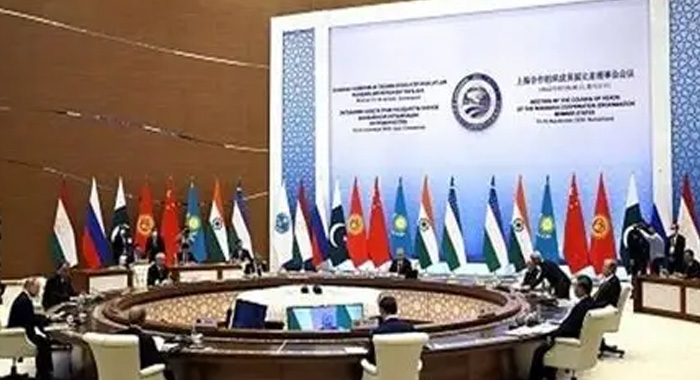
Representatives of Central Asian countries announced in Astana that they are developing a coordinated regional strategy on Afghanistan, acknowledging the country’s continued political instability, economic collapse, and governance shortcomings while seeking to manage its risks through structured regional engagement.
The announcement came on the sidelines of an emergency meeting of a regional contact group, where officials emphasized that Afghanistan remains one of the most volatile and economically fragile states in the broader region. Despite the absence of international recognition of the current authorities in Kabul and the country’s ongoing isolation from the global financial system, Central Asian governments signaled a pragmatic recalibration of their approach.
For years, Afghanistan has been widely perceived as a source of cross-border insecurity, extremist threats, humanitarian crisis, illicit trafficking, and chronic institutional failure. Today, while these risks persist, regional leaders are working to contain potential spillover effects and cautiously explore economic engagement that could serve their strategic interests.
Yerkin Tukumov, Kazakhstan’s Special Representative for Afghanistan, stated that Kazakhstan’s policy reflects both realism and risk management. While Kazakhstan has not formally recognized the Islamic Emirate and maintains clear reservations about governance standards and international obligations in Afghanistan, Astana has continued limited trade, economic, and humanitarian cooperation.
Tukumov acknowledged that Afghanistan remains deeply unstable, with weak institutional capacity, limited regulatory transparency, and severe economic dysfunction. “The situation in Afghanistan continues to present serious political and economic uncertainties,” he noted. “However, disengagement alone does not eliminate the risks. Coordinated regional action allows us to better manage them.”
Afghanistan’s economy has suffered from international sanctions, banking restrictions, declining foreign assistance, high unemployment, and widespread poverty. Humanitarian indicators remain alarming, and concerns persist regarding governance practices, human rights limitations, and the absence of inclusive political structures.
Ismatullah Irgashev, Uzbekistan’s Special Representative on Afghan Affairs, stated that Central Asian countries are preparing to initiate joint regional projects within Afghanistan, despite its challenging environment. He described the country as a geographic corridor linking Central and South Asia, while emphasizing that any engagement must account for the country’s fragile security landscape and underdeveloped infrastructure.
Irgashev noted that trade between Uzbekistan and Afghanistan reached nearly $1.7 billion last year, highlighting that, even amid instability, structured economic ties have continued. He added that Kazakhstan and Uzbekistan have, through carefully managed initiatives, positioned Afghanistan as a significant—though high-risk—trading partner.
Officials underscored that Afghanistan’s role as a potential land bridge between Central and South Asia remains constrained by internal instability, inconsistent regulatory frameworks, inadequate financial oversight, and limited international integration. As such, regional cooperation is seen as essential to mitigate exposure and ensure that economic projects are structured to minimize vulnerability.
The proposed joint regional strategy will focus on: Coordinated policy alignment toward Afghanistan; Risk-controlled expansion of trade and transit corridors; Infrastructure projects designed to enhance connectivity while safeguarding regional security interests; Mechanisms to monitor and manage financial, political, and security risks associated with engagement.
Participants at the Astana meeting made clear that Afghanistan’s ongoing governance deficiencies and economic fragility remain a central concern. However, they stressed that a unified regional approach offers a more strategic alternative to fragmented policies or complete disengagement.
The evolving framework signals a pragmatic but cautious shift: while Afghanistan continues to face deep structural challenges and international isolation, Central Asian states are seeking to manage its instability through collective economic and diplomatic coordination rather than leaving it entirely outside regional frameworks.



