
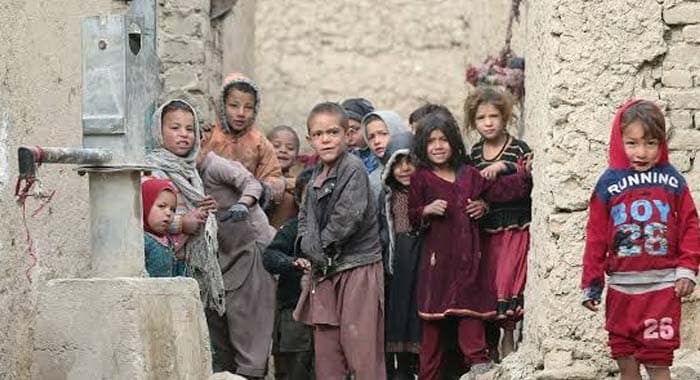
Decades of armed conflict have left Afghanistan with a continuing threat to children, as unexploded ammunition and other explosive remnants of war account for the overwhelming majority of verified child casualties in the country.
A new Save the Children report has placed Afghanistan among five countries and territories accounting for more than 70 percent of all verified cases of children killed or maimed in armed conflicts worldwide between 2005 and 2025.
The report, Stop the War on Children: Changing the Odds, said the United Nations had verified 171,712 cases of children killed or maimed in armed conflicts over the two decades. Afghanistan, Palestine, Somalia, Syria and Yemen accounted for more than 70 percent of the documented cases.
The danger remains particularly acute in Afghanistan, where children continue to encounter landmines, abandoned ammunition and unexploded devices left behind by years of fighting.
A separate United Nations assessment covering January 2023 to December 2025 verified 1,415 children killed or maimed in Afghanistan. Approximately 80 percent of these casualties were attributed to explosive ordnance.
The threat is particularly difficult to contain because unexploded devices can remain dangerous long after fighting has stopped. Children may encounter abandoned ammunition while playing or moving through fields and residential areas, sometimes mistaking unfamiliar objects for toys or handling them without understanding the danger.
The continued presence of explosive remnants also complicates the return and resettlement of displaced families. Communities rebuilding homes and livelihoods in areas previously affected by fighting can face hazards that are not immediately visible, leaving children especially vulnerable.
The global report documented 171,712 verified cases of children killed or maimed in conflict over the period under review, making killing and maiming the largest category of grave violations against children. It also recorded 28,909 verified cases of rape and other forms of sexual violence against children in armed conflicts between 2005 and 2025.
The findings come amid a broader deterioration in the security environment for children worldwide. Nearly 589 million children, or 23.4 percent of the global child population, were living in conflict-affected areas in 2025, the highest figure recorded since 1990.
Save the Children warned that the verified figures represent only a portion of the actual harm suffered by children, as many incidents remain undocumented.
The organization called for stronger protection measures, accountability for violations against children and improved humanitarian access in conflict-affected areas.
For Afghanistan, the figures underline a security challenge that extends beyond active fighting. Even when armed confrontations subside, unexploded devices and abandoned ammunition can continue to threaten civilian lives, obstruct reconstruction and expose children to deadly risks.
The country’s conflict legacy therefore remains a direct threat to public safety, particularly for children growing up in communities where the dangers left behind by war have not been fully identified or cleared.



