
Pakistan’s patience is not infinite. This was the unmistakable message delivered this week by both Deputy Prime Minister and Foreign Minister Ishaq Dar and DG ISPR Lt Gen Ahmed Sharif Chaudhry two voices representing the political and military leadership in rare, unequivocal alignment. Their statements were more than routine diplomatic remarks; they were a stark reminder that Pakistan’s tolerance for cross-border terrorism has reached a critical limit.
Ishaq Dar’s assertion that Afghanistan has arrested “a few hundred” TTP operatives but that “this is not enough” exposed a truth long whispered in policy circles: the problem is not numerical it is structural. A network so deeply entrenched cannot be dismantled by selective arrests or symbolic gestures. When Dar said Pakistan can resolve the matter by force but chooses not to, he articulated a principle of regional restraint. But restraint should never be mistaken for weakness.
DG ISPR went further, calling out the Taliban regime’s narrative that TTP militants “migrated from Pakistan.” His response was sharp: if they are Pakistanis, hand them over. How can armed militants crossing into Pakistan to wage terror be described as “guests”? This simple question exposes the contradictions at the heart of Kabul’s position. Even more alarming was the ISPR’s assessment that the “political-terror-crime nexus” along the border has evolved into a powerful and destabilizing syndicate one that threatens not only Pakistan but the entire region.
One of the most important points raised by the military spokesperson was that bloodshed and trade cannot run parallel. Pakistan has no reason to keep border markets open when its own citizens are dying at the hands of terrorists operating from Afghan soil. Trade is an instrument of peace, not a reward for non-compliance. A stable border economy is only possible when both sides ensure that their territories are not used for violence.
For years, Afghanistan has hosted organized centres where militants train, plan, and launch attacks on Pakistan. Reports, intelligence, and investigations repeatedly show a hardened infrastructure of militant sanctuaries, smuggling lines, and criminal patronage networks that operate with impunity. This is not a new revelation but its consequences are becoming impossible to ignore.
Pakistan has fought the war on terror at staggering human and financial cost. Thousands of citizens, soldiers, teachers, and children have been martyred; entire families shattered; billions drained from the national economy. Yet, even after years of sacrifice, the country is forced to confront the reality that its neighbour continues to allow anti-Pakistan groups to operate freely.
And while Pakistan battles terrorists, non-custom-paid vehicles roam freely across provinces vehicles that have been used in suicide attacks. This is not merely a border control issue; it is a weakness that empowers terrorists and undermines internal stability. Such administrative loopholes are the oxygen supply of militancy and Pakistan can no longer afford them.
The Indian Army Chief’s bravado about “Operation Sandor” being a “trailer” was swiftly countered by Pakistan’s military leadership. The destruction of seven Indian fighter jets, successful strikes on key ammunition depots, and the neutralization of the S-400 India’s pride demonstrate that Pakistan’s defence posture is not rhetoric. If anything, the episode showed who is dealing in illusions and who operates in reality.
The real crisis, however, lies in Afghanistan’s internal disorder. The Taliban regime lacks institutional structures, international recognition, and administrative discipline. Over thirty global terrorist organizations operate freely on Afghan soil. This is not just Pakistan’s concern. China, Tajikistan, Iran, and Central Asian republics all share the same anxiety.
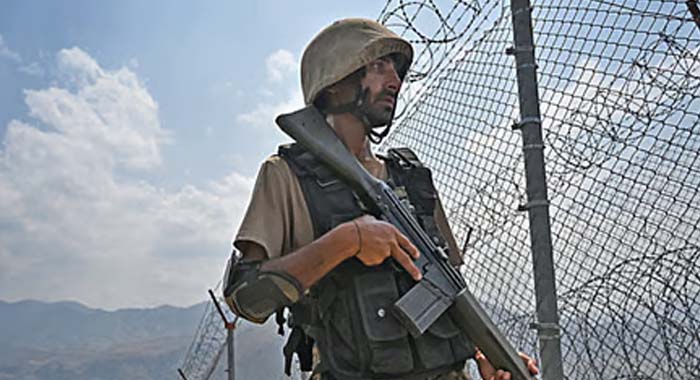
A 2,640-kilometre border much of it rugged and sparsely monitored poses immense security challenges. Yet Pakistan has managed such threats before and can do so again, provided there is national unity and political consensus. Counterterrorism is not the military’s job alone. Civil governments, police forces especially in Khyber Pakhtunkhwa and Balochistan—and provincial leadership must operate with clarity and purpose. Where political cooperation exists, such as in Balochistan, results are visible. Where it is missing, progress becomes painfully slow.
When Pakistan demands that Afghan soil not be used for terrorism, it is not asking for a favour. It is invoking a principle enshrined in international law and UN resolutions. Kabul’s leadership must decide: does it want to be integrated into the global community or remain a sanctuary for extremist networks? Does it wish to govern as a responsible state or continue allowing its territory to be a launching pad for regional chaos? Afghanistan owes these answers not only to Pakistan but to its own people millions of whom remain trapped under fear, poverty, and the rule of militant factions.
While external threats persist, Pakistan must also look inward. The country needs a coherent national counterterrorism doctrine one that addresses not only the militants but the facilitators, loopholes, financiers, and administrative weaknesses that enable them. This is a fight for national existence. It cannot be compromised for short-term political gain.
Political parties must understand that terrorism is not a provincial or partisan issue. It is a national survival issue. Pakistan extended hospitality to Afghan refugees for decades, offered aid, and endured demographic pressures. In return, it received terrorism, cross-border attacks, and accusatory rhetoric. This imbalance is no longer sustainable.
The blood-soaked history of this region demands a new reality one built on peace, accountability, and responsible governance. Pakistan will continue to defend its people and interests, but Afghanistan must finally honour its obligations. Terrorism cannot be defeated by one country alone; it requires coordinated action. But meaningful cooperation is impossible until Kabul stops enabling the very networks that destabilize the entire region. Pakistan is not the enemy. But it will never compromise on the safety of its citizens. Peace is still possible but only if Afghanistan dismantles the militant infrastructure it has long allowed to thrive. Until then, the responsibility for regional instability rests squarely where it belongs: in Kabul’s unwillingness to act like a state rather than a sanctuary.



