
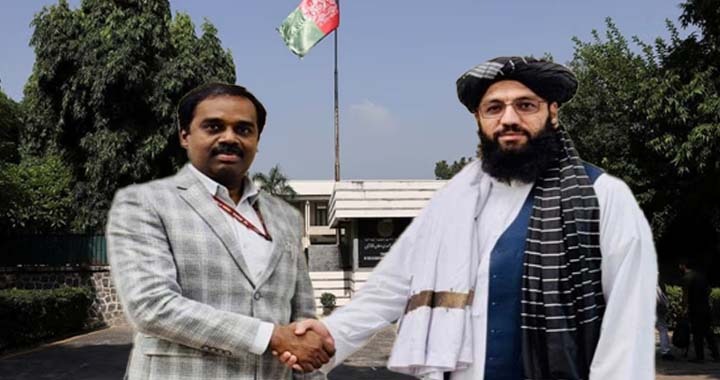
An Afghan resistance group has criticized India’s decision to hand over control of the Afghan embassy in New Delhi to Taliban representatives, warning that the move could have security and social implications at the regional and global levels.
In a statement issued on Saturday, the Supreme Council of Resistance for the Salvation of Afghanistan described India’s decision as “hasty” and said it did not correspond to the political, security, and social realities prevailing in Afghanistan.
The council said the Taliban lack political legitimacy and have failed to comply with commitments made to the international community, including assurances related to governance, rights, and security. It cautioned that interaction or normalization with the Taliban could carry consequences extending beyond Afghanistan.
According to the statement, such engagement risks weakening international efforts aimed at establishing peace and stability based on international norms, while potentially encouraging the Taliban to expand activities that could affect regional and global security.
The Afghan resistance body urged the Indian government to cooperate with the Afghan people and what it described as their “real representatives,” rather than taking steps that could be interpreted as conferring legitimacy on the Taliban administration.
India handed over the Afghan embassy in New Delhi to Taliban-appointed diplomat Noor Ahmad Noor on January 15, granting the group administrative control of the mission. Indian authorities have not formally recognized the Taliban government, which returned to power in Kabul in August 2021.
However, India has expanded its engagement with the Taliban in recent years. The country reopened its technical mission in Kabul in 2022, and its foreign ministry had earlier stated that the mission would be upgraded to the level of an embassy.
The development comes amid continued international debate over diplomatic engagement with the Taliban, as concerns persist regarding security, governance, and the group’s compliance with international commitments.



