
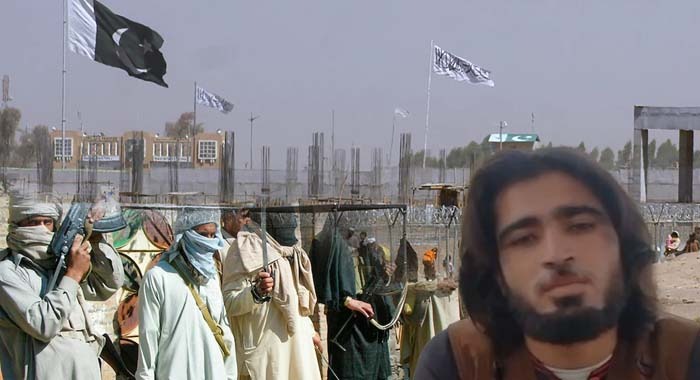
Pakistani security officials have exposed a dangerous and highly organised cross-border terror pipeline after the arrest and confessional statement of an Afghan national in Talagang, revealing systematic recruitment, indoctrination, and deployment of operatives from Afghan territory for attacks inside Pakistan. The detailed admissions—described by officials as direct, irrefutable, and deeply alarming—lay bare the intricate network of Afghan-based handlers orchestrating terrorism across Pakistani regions.
The arrested individual, identified as Qasim alias Hassan, son of Lal Khan and belonging to the Dlowzi tribe, confessed that he hailed from Gardez province in Afghanistan and migrated to Pakistan nearly a decade ago. Settling in Lakki Marwat with his family, he lived, worked, and grew up within a peaceful local community—before being drawn into militant circles through targeted radicalisation.
According to his confession, Qasim’s path to terrorism began in 2025, when he was approached by Taliban commander Armani at Surah Dargah. “Commander Armani invited me towards jihad, and I agreed,” he stated. His initial 20-day stay within the organization marked the beginning of his involvement in extremist operations. He disclosed that during this period, Armani directly instructed him to prepare as a suicide attacker.
The detainee further revealed that he and an accomplice named Farooq were assigned to conduct reconnaissance of a military fort in Tajori as part of a planned suicide mission. However, due to lack of opportunity, the attack could not be executed.
The confession also unveiled a structured recruitment mechanism orchestrated from across the border. Qasim admitted that, under Armani’s directions, he returned to the organisation to identify new recruits. “I handed over five individuals to Commander Armani and received ten thousand rupees for each person,” he stated, exposing a transactional, incentivised system of radicalising Pakistani youth through Afghan-based handlers.
More disturbingly, the suspect revealed that he was later dispatched to Punjab to search for additional young recruits on behalf of the organisation. It was during this mission that he was intercepted and arrested by Pakistani law enforcement.
Officials say the confession provides clear, undeniable proof that Afghan soil continues to serve as a staging ground for anti-Pakistan terrorist activities. It corroborates Pakistan’s repeated warnings to the international community about the use of Afghan territory—particularly by TTP-linked factions—for planning, recruitment, and operational coordination.
Security analysts note that the suspect’s account aligns with intelligence dossiers previously shared by Pakistan, detailing how Afghan-based commanders exploit vulnerable communities, infiltrate local populations, and manipulate economically or socially distressed individuals into carrying out attacks.
Authorities emphasised that the revelations highlight the urgent necessity for enhanced border security, dismantling recruitment chains, and coordinated regional action to curb cross-border terrorism. They reiterated Pakistan’s longstanding concern that unchecked militant sanctuaries across the Afghan border continue to pose a direct threat to Pakistan’s national security.
The government reaffirmed its commitment to defeating terrorism through intelligence-driven operations, strengthened counter-radicalisation measures, and continued efforts to safeguard local communities from extremist influence. Investigations into the broader network connected to Commander Armani are ongoing, with more arrests expected.



