
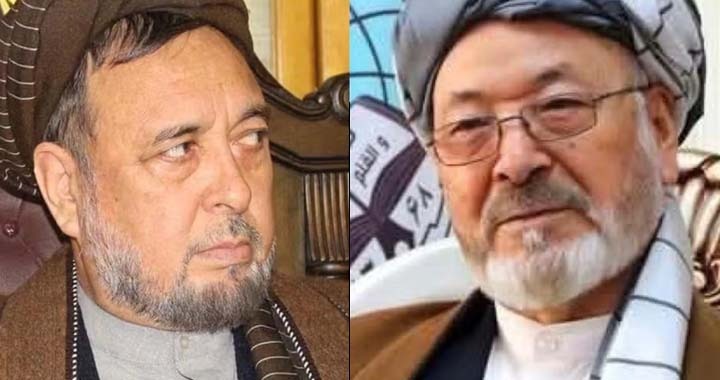
Prominent Afghan political leaders Karim Khalili, head of the Islamic Unity Party of Afghanistan, and Mohammad Mohaqiq, leader of the People’s Islamic Unity Party of Afghanistan, have strongly condemned the killing of civilians in Herat, describing the incident as a targeted act based on sectarian identity and a serious violation of human rights.
In separate statements, both leaders warned of what they described as an increasingly unsafe environment for religious minorities in Afghanistan, particularly communities belonging to the Jafari and Ismaili sects, amid reports of discrimination and targeted violence.
Karim Khalili stated that the attack highlights continued exposure of minority communities to organized violence and systemic discrimination. He said the pattern of incidents reflects a deteriorating security environment in which vulnerable groups remain at risk.
He further raised concerns regarding what he described as interference in academic and religious freedoms, alleging attempts to influence students’ religious identity. Khalili warned that such practices undermine universities as institutions of free thought and contribute to the erosion of intellectual and religious diversity.
He added that any coercive environment within educational institutions risks deepening societal divisions and increasing the potential for further instability and violence.
Mohammad Mohaqiq also condemned the Herat attack, stating that recent violence reflects what he described as the influence of extremist thinking within the prevailing power structure. He argued that such conditions contribute to an environment where minority communities face heightened risks.
Mohaqiq further claimed that the diminishing recognition of Shia Islam and related narratives contribute to rising tensions, warning that pressure on religious minorities and attempts to alter students’ sectarian identity may encourage extremist elements and increase the likelihood of further attacks. He stressed that continued marginalization of vulnerable communities could have serious consequences for national stability.
The condemnation follows a deadly attack in Deh Mehri village, Injil district of Herat province, where armed assailants on motorcycles opened fire on Shia families on Friday afternoon, killing at least 11 people, according to local authorities. The Taliban Interior Ministry confirmed that unidentified gunmen carried out the attack. No group has claimed responsibility.
Former Bamiyan governor Tahir Zuhair also expressed concern over the incident, alleging that sectarian rhetoric in public discourse may contribute to conditions enabling violence against minority communities. He described the attack as part of a broader pattern of exclusion and restrictions affecting minority participation in public life and media.
The incident has drawn widespread condemnation and renewed calls from political leaders and civil society for stronger protections for religious minorities, accountability measures, and urgent steps to prevent further escalation of sectarian violence.
Observers warn that the attack could deepen existing tensions unless concrete measures are taken to ensure inclusivity, safeguard minority rights, and address rising security concerns.



