
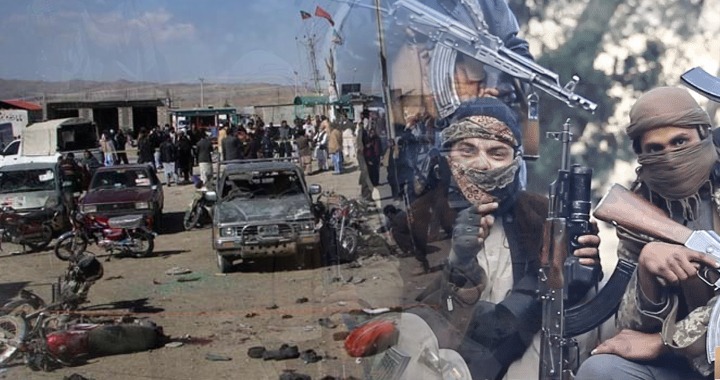
A militant group identifying itself as Aswad al‑Khorasan has claimed responsibility for the recent attack on the Chashma Pul check post near Miranshah in North Waziristan, drawing attention to what analysts describe as a newly active faction linked to the Hafiz Gul Bahadur Network.
According to statements circulated on militant communication channels, the group said its fighters carried out the attack targeting security personnel at the check post. Security officials are examining the claim as part of ongoing assessments of militant activity in the region.
Aswad al-Khorasan is considered one of several smaller factions associated with the Hafiz Gul Bahadur network, which operates primarily in parts of North Waziristan. The group’s name has surfaced in recent months in connection with militant propaganda and claims of involvement in attacks.
A familiar pattern of responsibility claims
Observers note that the emergence of such smaller factions reflects a pattern that has developed since the formation of Ittehad‑ul‑Mujahideen Pakistan in April 2025, an alliance bringing together several militant groups operating in Pakistan’s tribal districts.
Since the alliance was announced, many attacks attributed to the Hafiz Gul Bahadur network have formally been claimed through the umbrella platform of Ittehad-ul-Mujahideen Pakistan. However, a recurring trend has been that initial claims, particularly in suicide or high-profile attacks, are often issued by smaller affiliated groups before the umbrella organization later releases an official statement.
One example cited by analysts is the February 21, 2026 attack in the Sra Darga area of Bannu. The initial claim was issued by a faction linked to the Hafiz Gul Bahadur network led by Akhtar Muhammad Khalil Mansoor, while the responsibility was later formally announced by Ittehad-ul-Mujahideen Pakistan.
Security observers say the use of smaller faction names may serve multiple purposes for militant networks, including operational compartmentalization, propaganda messaging, and the ability to test or introduce new identities within broader alliances.
Authorities have not yet released further operational details regarding the Miranshah attack, while security agencies continue to monitor militant activity across North Waziristan and surrounding districts.



