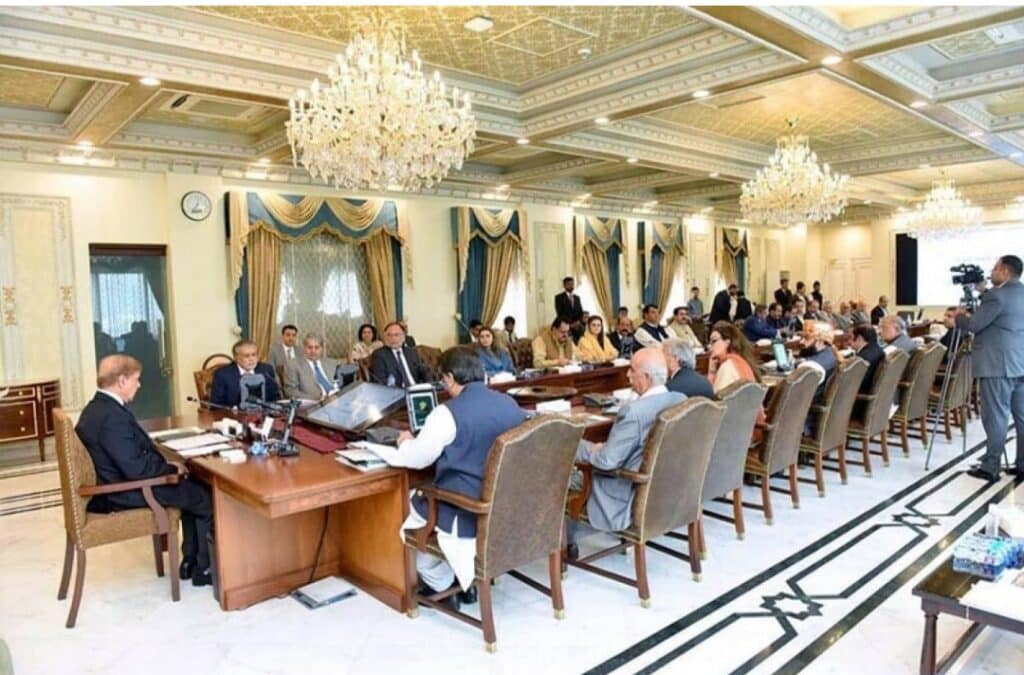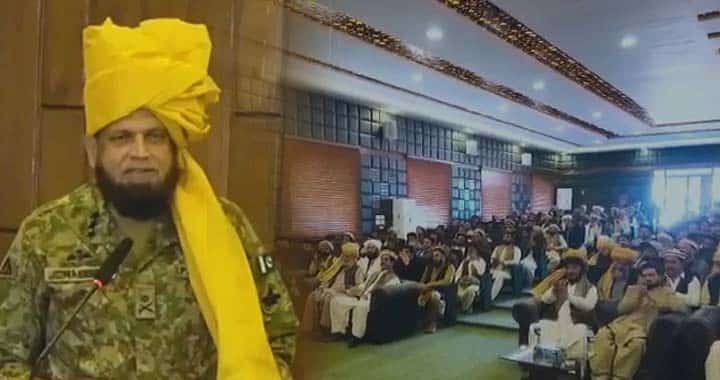
A Grand Tribal Jirga was convened in Wana, South Waziristan, bringing together tribal elders, political and community representatives, government officials, and representatives from various segments of society to deliberate on the region’s development priorities, sustainable peace, provision of essential public services, and effective resolution of long-standing public grievances.
The Jirga held comprehensive discussions on accelerating ongoing and proposed development initiatives, strengthening the region’s socio-economic infrastructure, improving access to basic facilities, and addressing the issues confronting the local population. Participants reached a broad consensus on the urgent need to translate development commitments into tangible action, ensuring that the people of South Waziristan benefit from meaningful, visible, and sustainable progress.
The Corps Commander Peshawar attended the Grand Tribal Jirga, underscoring the importance attached to constructive engagement with tribal communities, strengthening institutional coordination, and advancing a shared vision of peace, stability, and development in the region.
Among the prominent participants were Regional Representative and Chairman of the Development Council Engineer Shaukatullah Khan, Vice Chairman Malik Khan Marjan Wazir, and Administrator of the Area Development Secretariat Yahya Akhunzada, alongside tribal elders and representatives of diverse communities and institutions.
A major outcome of the Jirga was the consensus that development projects in South Waziristan must be taken forward on a priority basis, with work initiated at the earliest possible stage. Participants emphasized that development cannot remain confined to plans and commitments; rather, it must translate into practical outcomes that directly improve the lives of ordinary citizens.
The proposed development initiatives are expected to contribute towards strengthening basic infrastructure, improving access to essential services, creating opportunities for economic activity, reducing public hardships, and promoting the overall socio-economic uplift of the area.
The participants stressed that the timely execution of development projects, effective monitoring, institutional accountability, and close coordination among relevant stakeholders are essential to ensuring that the benefits of development reach every segment of the population.
The Jirga also underscored that sustainable peace remains fundamental to the region’s long-term stability and prosperity. Participants highlighted the need to further strengthen mutual trust, institutional cooperation, and effective communication among security forces, civil administration, and tribal elders.
It was emphasized that lasting peace is a collective responsibility requiring continuous engagement, mutual understanding, and coordinated efforts by all relevant stakeholders. The role of tribal leadership and local communities was recognized as particularly important in promoting social cohesion, strengthening public confidence, and creating an environment conducive to stability and development.
Participants reaffirmed that peace, security, and development are interconnected priorities and that meaningful progress on one front reinforces achievements on the others.
The Grand Tribal Jirga witnessed broad-based participation from tribal elders representing different tribes, district administration, various government departments, religious scholars, teachers, the business community, social activists, journalists, youth, and women.
The diverse representation reflected a collective commitment to addressing the region’s challenges through consultation, cooperation, and a unified approach. Participants emphasized that the aspirations and concerns of local communities must remain central to all development and public welfare initiatives.
The Jirga provided an important platform for exchanging views, identifying priority issues, strengthening coordination, and building consensus on a common roadmap for the future of South Waziristan.
Concluding the deliberations, participants expressed their firm resolve to play an active, constructive, and effective role in advancing peace, accelerating development, and safeguarding the welfare and interests of the people of South Waziristan.
They reaffirmed that the region’s progress requires unity of purpose, sustained institutional engagement, practical implementation of development initiatives, and an enduring partnership between the government, security forces, tribal leadership, and local communities.
The Grand Tribal Jirga sent a strong and unified message that the people of South Waziristan are committed to a future defined by peace, stability, opportunity, dignity, and sustainable development.
The collective resolve is clear: sustainable peace, accelerated development, effective governance, and public welfare must move forward together. The time has come to turn commitments into concrete action and ensure that the people of South Wazirist