
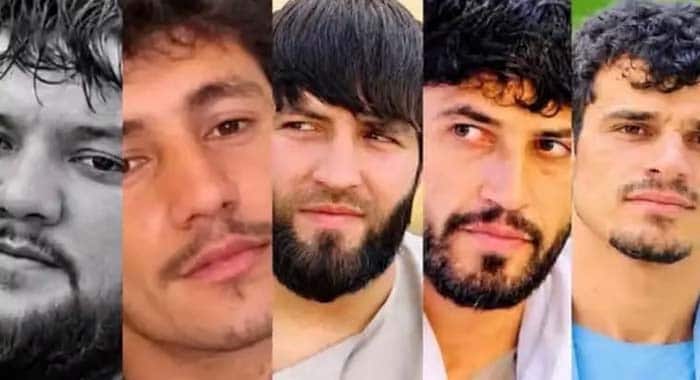
erious questions over the conduct of Taliban forces have emerged following the killing of six young men from Panjshir Province in Kabul’s Karte Naw neighbourhood, in an incident that has sparked outrage and raised grave concerns over the safety of civilians, arbitrary use of force, and the absence of accountability under Taliban rule.
According to sources cited by Afghanistan International, the six young men were returning from a wedding in the early hours of Wednesday, 25 November, when they encountered a Taliban checkpoint in the Sar-e Tapa area of Kabul’s eighth police district. The men failed to stop at the checkpoint, reportedly fearing that a firearm inside their vehicle would be discovered.
Taliban forces opened fire on their vehicle, striking its gas cylinder and triggering a massive explosion that engulfed the vehicle in flames. According to a relative of the victims, Taliban personnel also fired at the occupants as they attempted to escape the burning vehicle.
Eyewitnesses described the devastating aftermath, stating that the victims’ bodies were severely burned and bore gunshot wounds.
The Taliban police command in Kabul subsequently presented a different account of the incident. Its spokesperson, Khalid Zadran, claimed that six alleged robbers had been killed during an armed confrontation with Taliban forces. He further stated that three pistols and two knives had been recovered from the vehicle, claiming that the occupants had repeatedly ignored orders to stop.
However, the victims’ families maintain that the six men were friends and relatives returning from a wedding. Five of the victims have been identified as Feroz, 22, Farzad Ayoubi, Khodadad, Zubair, and Nawaz, all originally from different villages in Panjshir Province.
The circumstances surrounding the incident have become even more disturbing following claims by a family member that Taliban authorities withheld the victims’ bodies from their families for approximately 24 hours. The families were also required to pledge that they would not speak to the media about the incident.
Such actions raise serious concerns about intimidation, suppression of information, and the denial of families’ fundamental right to seek justice and demand accountability.
The Panjshir Studies Centre has condemned the incident, describing it as a targeted killing and emphasizing that no accusation can justify taking human lives without due process and a fair trial.
The killing of six young men under these circumstances raises fundamental questions about the conduct of Taliban forces and the protection of civilian lives in Afghanistan.
Even if individuals are suspected of possessing firearms or involvement in criminal activities, no authority has the right to substitute extrajudicial violence for lawful investigation and judicial proceedings. Suspicion is not a death sentence, and law enforcement cannot operate above the law.



