
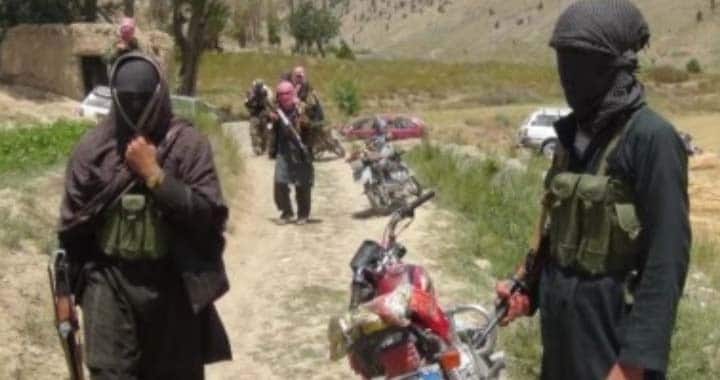
Islamic State Khorasan Province (ISKP), also known as ISIS-K, is reportedly rebuilding its operational capabilities in Afghanistan, emerging as a persistent and increasingly concerning threat to regional and international security. Recent assessments by the United Nations, Russian authorities and US intelligence agencies point to the organisation’s continued ability to reorganise, sustain its operational networks and pursue terrorist activities beyond Afghanistan’s borders.
Despite sustained counterterrorism pressure from the Taliban authorities and Pakistani security operations, ISIS-K has demonstrated considerable resilience. Intelligence assessments indicate that the organisation has not been dismantled and continues to retain the capacity to carry out high-profile terrorist attacks, exploit regional security vulnerabilities and maintain connections with transnational extremist networks.
The growing threat posed by ISIS-K has attracted renewed attention from major international stakeholders.
On 20 November 2026, Russian Foreign Ministry spokesperson Maria Zakharova warned that ISIS-K and other international terrorist organisations continued to operate in Afghanistan, posing a serious threat to regional stability and security.
A day earlier, on 19 November 2026, UN Acting Under-Secretary-General for Counterterrorism Alexandre Zouev expressed concern over ISIS-K’s rebuilding efforts, warning that the organisation was seeking to strengthen its capabilities and retain the ability to conduct attacks both inside Afghanistan and beyond its borders.
Meanwhile, the latest Lead Inspector General report on Operation Enduring Sentinel, citing the US Defence Intelligence Agency (DIA), estimates ISIS-K’s strength in Afghanistan at approximately 2,000 members.
The convergence of these assessments from Moscow, Washington and the United Nations highlights the continuing international concern surrounding the group’s presence, resilience and potential for cross-border terrorist activities.
According to the UN Security Council monitoring report dated 10 August 2026, ISIS-K continues to demonstrate organisational resilience despite suffering setbacks from counterterrorism operations.
The decline in its reported attacks inside Afghanistan should not be interpreted as the elimination of its operational capabilities. Rather, international assessments suggest that the organisation retains the capacity to regroup, maintain extremist networks and exploit changing security conditions.
Of particular concern are reports of technological adaptation, including the acquisition of drone capabilities and other advanced tactical equipment. Such developments underscore the evolving nature of the threat and the importance of monitoring emerging terrorist capabilities.
One of the most concerning aspects of ISIS-K’s evolving presence is the reported geographical shift in its terrorist activities.
While attacks attributed to the organisation have declined inside Afghanistan, assessments indicate an increase in its terrorist activities in Pakistan. This development raises serious concerns about the potential expansion of cross-border extremist networks and the security implications for neighbouring countries.
For Pakistan, the continued presence of ISIS-K networks in the wider region represents an additional counterterrorism challenge, particularly given the organisation’s transnational ambitions and ability to exploit extremist connections across national boundaries.
The threat is not confined to Afghanistan or Pakistan. South and Central Asian countries remain exposed to the broader consequences of terrorist recruitment, cross-border networks, extremist financing and the possible expansion of ISIS-K’s external operations.
Financial support remains another critical component of ISIS-K’s ability to sustain its activities. US assessments identify financial assistance from other Islamic State affiliates, radicalised donors and transnational criminal activities among the sources supporting the organisation.
The group’s continued ambition to target Western interests and conduct attacks beyond Afghanistan further reinforces concerns that ISIS-K represents a transnational security threat rather than an isolated domestic insurgent challenge.
The emerging picture is clear: weakening a terrorist organisation is not the same as eliminating it.
Although the Taliban authorities have inflicted setbacks on ISIS-K, the latest international assessments indicate that the group retains a degree of organisational resilience, financial support, recruitment potential and operational capacity.
The estimated presence of approximately 2,000 fighters, reported technological advancements, continued links with international Islamic State affiliates and growing concerns over cross-border activities collectively underline the seriousness of the evolving threat.
For the international community, particularly countries across South and Central Asia, the situation demands sustained vigilance, stronger intelligence-sharing mechanisms, effective disruption of terrorist financing and coordinated counterterrorism cooperation.
ISIS-K’s continued presence in Afghanistan is a stark reminder that terrorist networks can survive operational setbacks, reorganise and exploit regional vulnerabilities. The international community must not mistake a reduction in attacks for the defeat of terrorism.



