
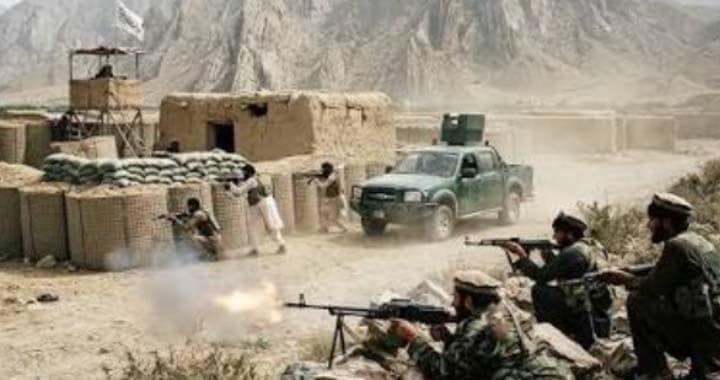
Armed resistance against the Taliban regime is gaining momentum across Afghanistan, with resistance groups reporting a series of attacks targeting Taliban personnel, security installations, intelligence operatives and military assets in nine provinces between 19 and 22 November. According to claims issued by the resistance groups, nine operations were conducted during this four-day period, resulting in the deaths of 20 Taliban personnel and injuries to at least four others.
The reported operations took place in Sar-e-Pul, Faryab, Badakhshan, Ghor, Paktia, Kunar, Wardak, Bamyan and Kandahar, highlighting the geographical spread of armed opposition to the Taliban’s rule. The incidents indicate that resistance activity is no longer confined to isolated areas but is being reported across multiple regions of the country, including provinces far apart geographically.
Among the most significant reported incidents was a rocket attack claimed by the National Islamic Front (NIF) on 21 November against a checkpoint reportedly manned by members of Supreme Leader Hibatullah Akhundzada’s personal security detail in Kandahar’s Ninth Security District. The NIF claimed that five members of the security detail were killed and two others critically wounded in the attack.
On 22 November, the NIF also claimed responsibility for an ambush targeting Taliban personnel in Bamyan province. According to the group, nine Taliban personnel were killed, while military equipment was seized during the operation.
In another operation on 19 November, the NIF reportedly attacked a Taliban security checkpoint in Jalrez district of Wardak province. The group claimed that two Taliban personnel were killed and weapons and ammunition were seized.
The Afghanistan United Front (AUF) reported carrying out four separate attacks against Taliban targets on 22 November in Sar-e-Pul, Faryab, Ghor and Paktia provinces.
According to the AUF, three Taliban personnel were killed in Ghor, including the provincial head of the Ministry for the Propagation of Virtue and Prevention of Vice and a Taliban intelligence operative. In Paktia, the group claimed that a Taliban vehicle was destroyed.
These reported operations demonstrate the growing geographical reach of armed opposition groups and their continued targeting of Taliban security and administrative structures.
The Afghanistan Freedom Front (AFF) reported an attack on a Taliban checkpoint in Kunar province on 19 November. The group claimed that one Taliban member was killed and two others wounded.
Meanwhile, the Afghan Green Trend (AGT) reportedly targeted a Ranger vehicle belonging to the Taliban’s 219th Division on the Kashm–Faizabad highway in Badakhshan province on 20 November.
Taken together, the reported incidents reflect a series of operations against Taliban security positions, military transportation and personnel across different parts of Afghanistan.
Analysts believe that the continued expansion of armed resistance cannot be separated from the Taliban regime’s increasingly repressive policies and its systematic restrictions on fundamental freedoms. The exclusion of women and girls from education, restrictions on freedom of expression, arbitrary arrests, intimidation and widespread human rights violations have deepened public resentment and intensified opposition to Taliban rule.
The Taliban’s policies have created an atmosphere of fear, political exclusion and social suffocation, leaving large sections of Afghan society without meaningful avenues to exercise their basic rights or peacefully challenge the authorities. Rather than securing public acceptance through governance and accountability, the regime’s coercive approach has further alienated the population.
The growing number of reported resistance operations across geographically dispersed provinces underscores the mounting challenges facing the Taliban leadership. Its continued reliance on intimidation, arbitrary detention and restrictions on civil liberties has failed to eliminate opposition or establish genuine political legitimacy.
The latest developments suggest that the Taliban regime is confronting persistent opposition on multiple fronts. From Kandahar, the seat of the Taliban leadership, to the northern and central provinces, reports of armed resistance point to the continuing instability surrounding the regime’s rule.
The Taliban leadership cannot indefinitely suppress a population’s demand for dignity, freedom, education and fundamental rights through force and intimidation. Military control over territory does not automatically translate into public legitimacy, political acceptance or national stability.
As long as the Taliban continue to deny Afghans their basic rights, impose restrictions on women, silence dissent and govern through coercion, the underlying causes of opposition will remain unresolved.
The expanding resistance across Afghanistan is a stark indication that repression has not silenced opposition. Instead, the Taliban regime’s policies continue to deepen public anger, intensify political isolation and expose the growing challenges to its hold on power.



