
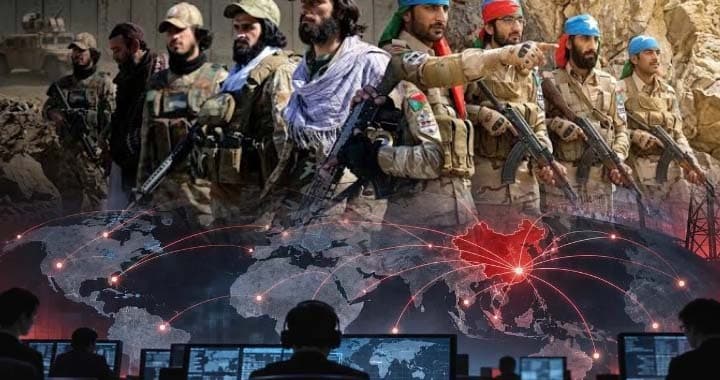
A parallel information war surrounding Balochistan has increasingly drawn attention to the role of digital propaganda, coordinated social media campaigns and alleged foreign-backed networks seeking to shape international perceptions of the security situation in Pakistan.
Claims presented in the supplied account allege that the Balochistan Liberation Army (BLA) has developed a sophisticated media apparatus extending beyond the battlefield, using digital platforms, fabricated claims and coordinated amplification to project its narrative to domestic and international audiences.
At the centre of these allegations is the purported involvement of Indian political, media and ideological networks in amplifying BLA-linked messaging. The account specifically names Indian media organisations, political figures and advocacy platforms, although the extent of any direct operational or financial relationship remains subject to independent verification.
The account alleges that BLA’s media wing, Hakkal Media, distributes attack footage, statements, farewell videos and infographics in Balochi, Urdu, English and Chinese to establish a sustained online presence.
It further claims that footage and casualty figures are sometimes circulated without independent verification, potentially creating misleading impressions about developments on the ground.
Social media platforms, particularly X, Telegram and TikTok, are identified as major channels through which competing narratives surrounding Balochistan’s security situation are disseminated.
The supplied material alleges that accounts operating from different countries amplify BLA-related claims and present unverified material as frontline reporting.
It also identifies several Indian television networks that allegedly broadcast social media claims without sufficient independent verification, raising broader questions about journalistic standards, source authentication and the potential consequences of amplifying militant propaganda.
The account further points to the activities of Mir Yar Baloch, described in the material as an online persona associated with Mazdak Dilshad Baloch. Claims concerning his identity, international activities and alleged political connections require independent documentary verification.
Another serious concern raised in the account involves the alleged use of online gaming communities and social media spaces to approach, influence and recruit young people.
The allegations highlight the vulnerability of teenagers and young social media users to manipulation through emotionally charged content, online relationships and extremist narratives.
Such claims underline the importance of protecting young people from extremist recruitment and ensuring that digital platforms respond effectively to credible reports of organised abuse.
The supplied account also refers to the reported suspension of Mir Yar Baloch’s social media account and associated backup accounts in August 2026.
It alleges that the suspensions triggered reactions from sections of Indian media, which questioned the platform’s decision and called for the account’s restoration.
The episode raises wider questions about platform accountability, coordinated online activity and the distinction between legitimate political expression and the dissemination of unverified or potentially harmful material.
The allegations also raise concerns about the polarisation of public debate surrounding missing persons, counterterrorism operations and militant violence.
Claims concerning individual activists and organisations must be assessed against verifiable evidence, and allegations of complicity should not be treated as established facts without substantiation.
The central issue remains the need to distinguish legitimate human rights advocacy and peaceful political expression from the promotion, justification or glorification of violence.
The conflict surrounding Balochistan is not limited to developments on the ground. Competing narratives, digital campaigns and allegations of foreign interference have become an increasingly significant part of the broader information environment.
The allegations outlined in the supplied material warrant serious scrutiny, particularly where they concern fabricated reporting, extremist recruitment and the international amplification of unverified claims.
In an era where a social media post can be transformed into an international headline within minutes, independent verification, credible journalism and accountability are essential. The battle for truth must not be surrendered to propaganda, manipulation or unsubstantiated narratives.



