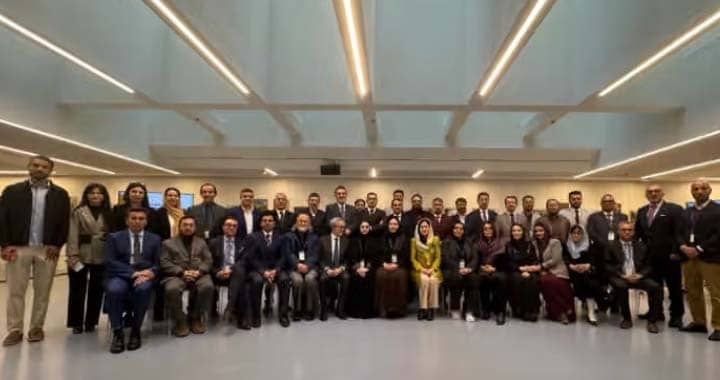
The third round of high-level discussions bringing together Afghan political figures, former government officials, diplomats, academics, religious scholars and civil society representatives commenced on Wednesday at Spain’s Ministry of Foreign Affairs, with a renewed focus on Afghanistan’s political future, national solidarity and the prospects for an inclusive political settlement.
The Madrid dialogue brings together a broad spectrum of Afghan political and social representatives to examine possible pathways for the country’s future, assess emerging opportunities and challenges, and explore areas of common ground amid Afghanistan’s continuing political uncertainties.
Organised under the leadership of Women for Afghanistan, an organisation led by Fawzia Koofi, former Deputy Speaker of Afghanistan’s House of Representatives, the one-day meeting marks the third round of consultations aimed at strengthening cooperation and building trust among Afghanistan’s diverse political and civil society groups.
The discussions are focused on identifying possible political scenarios for Afghanistan and examining the implications of each for national stability, governance, social cohesion and the country’s long-term future.
A central objective of the dialogue is to overcome divisions among political and civil society stakeholders, strengthen mutual confidence and identify practical areas for collective engagement.
Participants are examining the need for an inclusive political framework that reflects Afghanistan’s ethnic, political, religious and social diversity while ensuring meaningful participation across different segments of society.
Women’s rights and their meaningful participation in political decision-making remain among the central priorities of the Madrid discussions.
The dialogue places particular emphasis on safeguarding human dignity, protecting fundamental rights, promoting inclusive governance, strengthening the rule of law and ensuring access to justice.
Organisers have stressed that Afghanistan’s future political system must provide meaningful opportunities for women to participate in public affairs and decision-making rather than exclude them from the country’s political and institutional life.
According to Women for Afghanistan, the women-led initiative seeks to bring diverse political and social groups together around a shared objective: achieving lasting peace and establishing an inclusive and democratic political system in Afghanistan.
The Madrid meeting has brought together a diverse group of prominent Afghan personalities, including former ministers, parliamentarians, political leaders, diplomats, academics and civil society representatives.
Among the participants are:
- Abbas Basir, former Minister of Higher Education.
- Mustafa Mastoor, former Minister of Economy.
- Hussain Yasa, political activist.
- Fazl Hadi Wazin, member of the International Union of Muslim Scholars.
- Abdullah Qarluq, spokesperson for the High Council of National Resistance for the Salvation of Afghanistan.
- Mohammad Asif Sediqi, former Deputy Speaker of the Senate.
- Nazif Shahrani, university professor.
- Nasir Ahmad Andisha, Afghanistan’s Ambassador and Permanent Representative in Geneva.
- Barna Karimi, former Afghan Ambassador to Canada.
- Nabila Mosleh, former Deputy Minister of Women’s Affairs.
- Zakir Hussain Ershad, leader of the Citizens’ Party of Afghanistan.
- Rahela Dostum, former senator and daughter of Marshal Abdul Rashid Dostum.
- Mujib Rahman Rahimi, former spokesperson for Abdullah Abdullah.
- Anwar Sadat, former Minister of Labour and Social Affairs.
- Masouma Khawari, former Minister of Communications and Information Technology.
The participation of these figures reflects the breadth of political, diplomatic, academic and civil society perspectives being brought into the discussions.
The Madrid dialogue builds upon the outcomes of two previous rounds of consultations and represents a continued effort to create a platform for constructive engagement among Afghan stakeholders.
Beyond exchanging views, the discussions aim to identify shared priorities, reduce political fragmentation and explore possibilities for coordinated action towards a peaceful and inclusive future.
The organisers view trust-building and solidarity as essential foundations for meaningful political cooperation, particularly in a country where competing political perspectives and unresolved questions about governance continue to shape the national landscape.
The third round of Madrid talks underscores the importance of sustained engagement among Afghan political leaders, women representatives, civil society organisations and other stakeholders in determining the country’s future.
The central challenge remains translating dialogue and shared commitments into a credible political vision that protects fundamental rights, ensures equal participation and reflects the aspirations of Afghanistan’s diverse population.