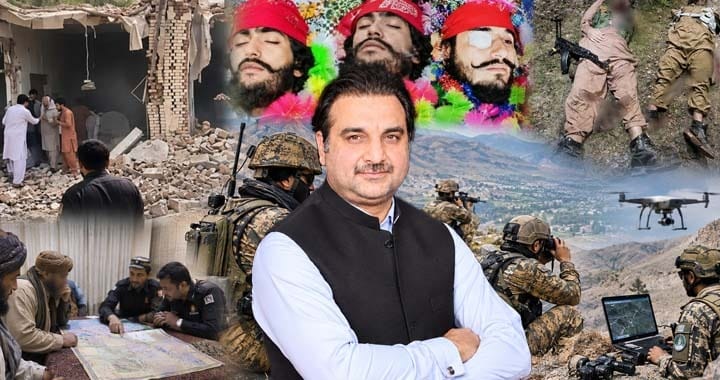
The security situation in Khyber Pakhtunkhwa has shown some improvement over the past 35 to 40 days, with no major terrorist incident on the scale of the Kohat Police Lines attack reported during this period. Recent operations, including the elimination of three Fitna al-Khwarij terrorists in a joint operation by the Counter Terrorism Department (CTD) and police in Kohat, indicate that security institutions are responding more effectively to emerging threats. The elimination of a terrorist commander involved in the Kohat Police Lines suicide attack is particularly significant.
One of the main reasons behind this improvement appears to be better coordination among security institutions, police, the CTD and local communities. An effective communication and liaison system has been developed through which information about terrorist movements and possible threats reaches the relevant institutions in time. Whenever an alert is issued about the presence of terrorists in a particular area, security personnel and local people respond together, often reaching the location before the terrorists can carry out their plans. In many cases, the terrorists abandon the area or flee, while their intended attacks are foiled.
The most important factor in this arrangement is human intelligence. Security forces and police receive information from local people and use it to conduct intelligence-based operations at specific locations. This timely flow of information has made a considerable difference.
However, the question of local facilitation remains equally important. Terrorists do not operate in open fields all the time. When they enter populated areas, somebody provides them shelter. They may spend the night in mosques, stay in hujras or take refuge in private houses. The incident in Karak, where DSP Imranuddin was martyred, is an example of how terrorists can use an unoccupied or deserted house as a place to stay. Their presence in populated areas cannot be understood without examining who provides them shelter and how they manage to move around.
The recent operation in Kohat also reflects the effectiveness of intelligence gathering. Information about the movement of terrorists and their locations appears to be reaching the relevant institutions more efficiently, allowing them to act before attacks can materialize.
Nevertheless, the improvement should not lead to complacency. Terrorist networks have not disappeared. They have an established mindset, and considerable financial resources are being invested in them. Those providing money to terrorist groups will naturally demand results in return. Therefore, even if attacks have declined, it does not mean that the threat has been eliminated. The terrorists may be preparing for a major attack to demonstrate their capacity and justify the money being spent on them.
Seasonal conditions are also an important factor. Areas such as Khyber, Tirah, North Waziristan and South Waziristan, Bajaur and Chitral have traditionally been used by terrorists to enter, carry out attacks and retreat. During November, December and January, severe cold makes it difficult for them to remain in these mountainous areas. They consequently move across the border, and terrorist incidents tend to decline during these months. A reduction in attacks, therefore, cannot automatically be treated as a permanent security achievement. Security institutions must continue adapting their strategies because terrorist groups also change their methods and plans.
Another concerning development is the arrest of an Afghan national from Nangarhar for filming sensitive installations at an airport. The individual, identified as Jabbar, was reportedly residing at the Panian camp in Haripur, Khyber Pakhtunkhwa. His case raises important questions about the presence, documentation and activities of Afghan nationals living in Pakistan.
Every country has its own immigration and security policies. Pakistan had already expressed concerns and developed a mechanism for the return of undocumented foreigners. Those permitted to remain or enter the country must follow the applicable legal procedures.
The strategy of terrorist networks appears to involve using people already residing in Pakistan to gather information about sensitive installations. These individuals may be approached because they live in the country and can access locations more easily than people coming from across the border. They may be offered payments of Rs100,000 or Rs200,000 to carry out surveillance, record videos and share information.
Although modern technology, including satellite imagery, can provide extensive information about locations, sending someone inside a sensitive installation or nearby area to record specific details can serve a different purpose. Such individuals may be used to obtain information that cannot easily be gathered remotely. Financial incentives make this recruitment easier, particularly when people are unemployed and have no established source of income. In some cases, the networks may even pay for travel and accommodation, spending several hundred thousand rupees on one individual if the assignment serves their objectives. Information and other material recovered from the arrested man’s mobile phone could help investigators establish further details.
The situation in Afghanistan presents another challenge. Kabul appears interested in restoring relations with Islamabad, reopening borders and improving trade, but taking action against the banned Tehreek-e-Taliban Pakistan (TTP) remains a major obstacle. Pakistan has made its position clear: terrorist groups operating against it should either be relocated away from the border and restricted to designated areas or handed over to Pakistan to face the law.
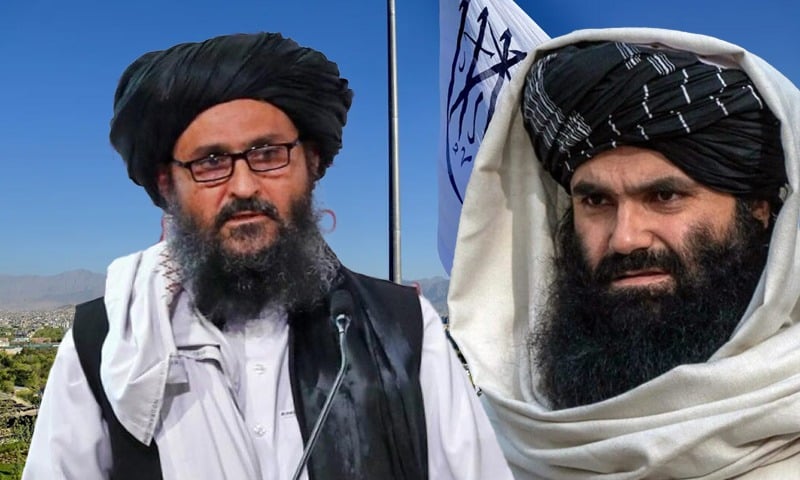
The problem is compounded by divisions within the Afghan Taliban leadership. A significant rift has reportedly developed between the Kandahar leadership and the Haqqani network, and these differences date back to 2021. One major source of disagreement concerns administrative authority. Most important ministries and government positions are held by the Kandahar faction, while the Haqqani network has been left with relatively few significant positions.
The second source of tension concerns financial resources. Afghanistan has continued receiving around $40 million in US assistance, although there are differing accounts of whether this amount was provided weekly or monthly. The distribution of this humanitarian assistance has also reportedly favored the Kandahar faction, leaving the Haqqani network sidelined. Differences over financial and administrative powers have consequently deepened.
These divisions also affect the question of terrorist organizations operating from Afghan territory. If one faction supports maintaining ties with such groups while another favors a different approach, reaching an agreement on Pakistan’s demands becomes increasingly difficult.
Meanwhile, public criticism of Taliban policies has grown during the past five and a half years. Resistance movements, including the National Resistance Front and the Freedom Front, are also active, and opposition to the Taliban administration is becoming more visible. The regime is therefore facing challenges from within as well as pressure from neighboring countries.
Kabul may now seek a way to reconcile its internal factions and improve relations with Pakistan to protect its administration. But better relations cannot be achieved merely through diplomatic statements or demands for reopened borders. Unless the Afghan Taliban address Pakistan’s concerns about terrorist organizations operating from their territory, the fundamental obstacle will remain.