
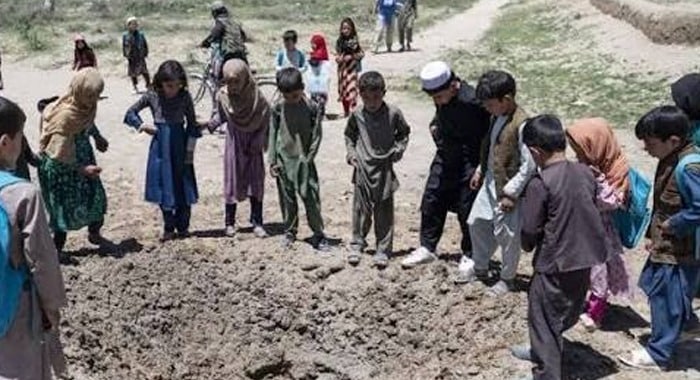
Afghanistan’s growing displacement crisis is exposing children to worsening hunger, deteriorating health and protection risks, with millions of returnees adding pressure to communities already struggling with poverty, food insecurity and repeated humanitarian emergencies.
A new Save the Children study, based on interviews with 824 children and 838 caregivers across seven Afghan provinces, has found that displacement is disrupting children’s access to food, healthcare and education while leaving most families without adequate assistance.
More than half of the children surveyed, 55 percent, said they had less food to eat after leaving their homes, while 41 percent reported a deterioration in their health. Around one-third of caregivers said children’s access to education had worsened following displacement.
The findings highlight the security and protection challenges accompanying population movements in a country where economic hardship, conflict and natural disasters have repeatedly forced families to abandon their homes.
The study found that more than nine in 10 children surveyed had experienced displacement or migration. Nearly half said their families had moved because they could not find work or earn sufficient income, while one-third cited food shortages. Almost one in four said their families had relocated because of deportation or pressure to leave another country.
The situation is being compounded by the return of more than 6.67 million Afghans from Pakistan and Iran since September 2023. The influx has increased Afghanistan’s population by up to 14 percent, placing additional pressure on communities and services already facing severe economic and humanitarian difficulties.
Afghanistan also has an estimated seven million internally displaced people, representing around 14 percent of its population, according to displacement data cited in the report.
The consequences extend beyond shortages of food and shelter. More than one in 10 children surveyed said they had experienced at least one protection risk, including child labor, physical or verbal violence and early marriage. Caregivers reported that girls faced particularly serious risks during displacement journeys and after arriving in new locations.
The scale of unmet needs is another concern. Fewer than one in 10 children surveyed said they had received assistance, while nine in 10 said they needed support to access food. Nearly seven in 10 had experienced at least two crises during the preceding three years, including droughts, floods, earthquakes and conflict.
The report’s findings are based on selected locations in Nangarhar, Herat, Balkh, Faryab, Kabul, Kandahar and Sar-e-Pul. They represent the areas covered by Save the Children’s operations rather than the entire Afghan population.
The organization warned that displacement does not necessarily bring children to safety, as families often arrive in new locations without livelihoods, adequate shelter or access to essential services.
The situation raises wider concerns about the long-term consequences of repeated displacement, particularly when children lose access to education and become exposed to exploitation and violence. Without sustained protection and humanitarian assistance, families already affected by conflict and economic instability risk remaining trapped in cycles of displacement and deprivation.



