
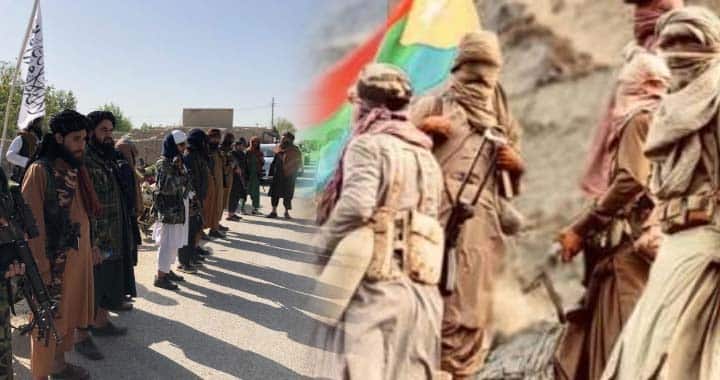
A striking transformation in the appearance of senior commanders of the proscribed Balochistan Liberation Army (BLA) has brought renewed attention to the group’s presence in southern Afghanistan, its operating arrangements under Taliban rule and the measures its leadership employs to conceal its identity and movement.
The changing appearance of BLA leadership, particularly Bashir Zeb Baloch and the newly appointed chief commander Captain Rehman Gul, raises serious questions about the group’s operational environment in Afghanistan and its apparent efforts to blend into Taliban-controlled areas.
Bashir Zeb Baloch was previously known for his clean-shaven appearance. However, in his last known video footage from January 2026, he appeared with a noticeably grown beard and longer hair.
A similar appearance is now visible in photographs of the new BLA chief commander, Captain Rehman Gul, who also sports a long beard and hair.
This transformation is particularly significant in the context of the group’s presence in southern Afghanistan. Adopting an appearance resembling ordinary Taliban fighters provides a plausible explanation for how BLA commanders can move through Taliban-controlled territories while attracting less attention.
The contrast between their appearances in recorded propaganda videos and their everyday appearance is equally noteworthy. While BLA commanders frequently adopt a conventional guerrilla-style image, wearing military caps and distinctive clothing in their videos, their appearance outside these recordings reflects a markedly different style.
BLA leadership is based in southern Afghanistan, where Taliban control creates an environment in which blending into the local militant landscape becomes an important consideration.
The adoption of Taliban-style beards, long hair and traditional appearances serves the practical purpose of reducing suspicion while moving through checkpoints and populated areas.
The role of the Taliban’s intelligence directorate, the General Directorate of Intelligence (GDI), also raises important security questions. The movement of senior BLA commanders through Taliban-controlled territory warrants scrutiny regarding the level of awareness, monitoring and possible facilitation by local Taliban authorities and intelligence institutions.
The issue goes beyond personal appearance. It concerns the presence of an armed organisation’s senior leadership in neighbouring territory and the security implications of allowing its operational networks to function from there.
An equally significant dimension concerns the religious composition of BLA ranks, particularly the presence of individuals belonging to the Zikri community.
This creates a potential ideological contradiction within the group’s operating environment. The Taliban’s hard-line religious outlook and its hostility towards the Zikri community could become a serious source of friction if local Taliban commanders become aware of the religious backgrounds of BLA members operating in their territory.
The situation presents a difficult challenge for BLA leadership: maintaining its presence under Taliban authority while navigating significant religious and ideological differences.
Such contradictions could complicate relations between local Taliban commanders and BLA elements, potentially creating tensions within an otherwise shared operating environment.
The changing appearance of BLA commanders, their presence in southern Afghanistan and the circumstances surrounding their movement raise fundamental questions about the Taliban administration’s approach to armed groups operating from its territory.
– Why have senior BLA commanders increasingly adopted an appearance resembling Taliban fighters?
– How are senior BLA figures maintaining their presence and movement in southern Afghanistan?
– What does the Taliban’s General Directorate of Intelligence know about BLA leadership and its activities?
– Are Taliban-controlled areas providing an operating environment for BLA’s senior leadership?
– Could religious and sectarian differences between BLA members and local Taliban elements eventually trigger internal friction?
These questions carry significant implications for regional security, cross-border militancy and the Taliban administration’s commitments regarding the prevention of armed groups using Afghan territory for hostile activities.
The contrast between the BLA’s public guerrilla identity and the Taliban-style appearance of its senior commanders exposes a deeper contradiction in the organisation’s operating environment.
While its leadership projects a distinct political and ideological identity through propaganda, its presence in Taliban-controlled Afghanistan requires adaptation to the religious, cultural and security environment in which it operates.
The apparent transformation of its commanders’ appearance, combined with the group’s presence in southern Afghanistan and the ideological differences within its operating environment, raises serious questions about the sustainability and nature of this arrangement.
The central issue is no longer simply why BLA commanders have grown beards and adopted Taliban-style appearances. The far more consequential question is why the leadership of an armed organisation is operating from Taliban-controlled Afghanistan, how it moves through these territories, and what the Taliban administration and its intelligence institutions know about its presence.



