
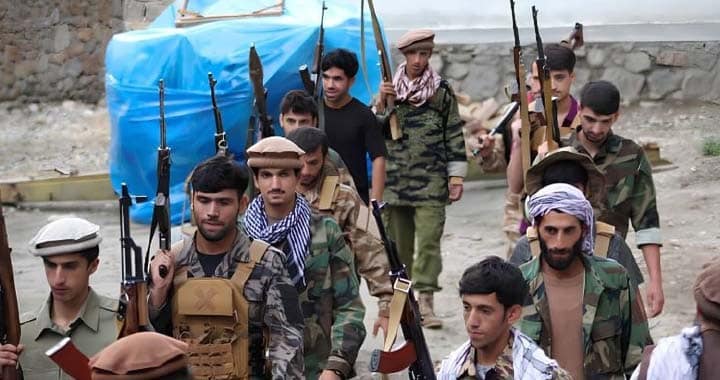
Across Afghanistan, growing opposition to Taliban rule is increasingly becoming visible, with local communities reportedly welcoming forces of the Afghanistan Freedom Front (AFF) in areas where resistance fighters have defeated Taliban units and established control. These developments point to mounting public frustration with the Taliban regime and an increasingly challenging political and security environment for the group.
Wherever Afghanistan’s Freedom Front forces have gained ground against Taliban fighters, scenes of ordinary civilians welcoming resistance personnel have emerged, reflecting the growing discontent among segments of Afghan society toward the Taliban’s continued rule. Such public reactions underscore the importance of local sentiment in shaping Afghanistan’s evolving resistance landscape.
Since seizing power in August 2021, the Taliban have faced persistent criticism over their restrictive policies, systematic suppression of fundamental freedoms, exclusion of women and girls from education and public life, political repression, and the absence of an inclusive and representative political system. These policies have deepened public dissatisfaction and widened the divide between the ruling authorities and significant sections of Afghan society.
Against this backdrop, the Afghanistan Freedom Front and other anti-Taliban resistance movements are seeking to position themselves as alternatives to the current political order. Their growing activities in different parts of the country reflect the persistence of opposition to Taliban rule and the determination of those who reject the political system imposed on Afghanistan.
The reported welcome extended by civilians to resistance forces carries particular political significance. It highlights that Afghanistan’s future cannot be determined exclusively through military control or the imposition of authority by force. Genuine political legitimacy requires public consent, respect for fundamental rights, national representation, and the participation of all segments of Afghan society.
The Taliban must recognize that maintaining territorial control does not automatically translate into popular legitimacy. A government that excludes millions of citizens, particularly women and girls, from fundamental rights and opportunities cannot claim to represent the aspirations of an entire nation.
The growing visibility of anti-Taliban resistance also sends a clear message to the international community: Afghanistan’s political crisis remains unresolved, and the demand for freedom, justice, dignity, and representative governance has not disappeared.
The international community must not mistake the absence of conventional political space under Taliban rule for the absence of opposition. It must continue to monitor developments inside Afghanistan, support the fundamental rights of the Afghan people, and stand firmly behind the principles of freedom, accountability, human dignity, and an inclusive political future.



