
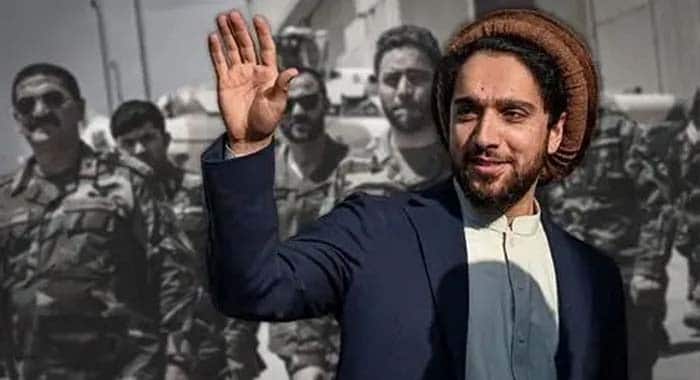
The appeal by the leader of Afghanistan’s National Independence Front for anti-Taliban groups to unite highlights one of the most consequential challenges confronting the country’s opposition: the ability to transform separate political and armed movements into a coordinated force capable of presenting a credible alternative to Taliban rule.
More than five years after the Taliban returned to power, opposition to their administration has neither disappeared nor developed into a cohesive national movement. Instead, Afghanistan’s resistance landscape has become increasingly diverse, with established organizations continuing their activities while smaller formations announce their emergence and claim operations in different provinces.
The latest appeal by NIFA leader Navid Ahmad Ibrahimkhel directly addresses this structural weakness. His call for political and armed groups to overcome their differences and cooperate recognizes that the continued existence of separate resistance organizations does not necessarily translate into collective strength. The question is whether the appeal can move beyond public declarations and produce an actual framework for coordination.
The National Resistance Front (NRF), led by Ahmad Massoud, and the Afghanistan Freedom Front (AFF), led by Yasin Zia, remain among the most prominent armed opposition organizations. Other formations, including the National Independence Front, Afghanistan United Front and several smaller groups, have also claimed activities against Taliban personnel and installations. Their reported operations have extended beyond the traditional areas associated with the initial resistance following the Taliban takeover.
The expansion of this landscape has created a more complicated opposition environment, but it has also exposed the problem of fragmentation. A BBC Monitoring assessment published in August 2026 identified limited coordination, inadequate resources, a lack of safe havens and insufficient regional backing as major obstacles facing anti-Taliban armed groups. The proliferation of organizations has not yet produced a common command or a unified military strategy.
This distinction is particularly important because the effectiveness of an opposition movement cannot be measured simply by the number of organizations operating under different names or the geographical spread of their claimed attacks. Without coordination, separate operations may create pressure on Taliban security structures without developing into a sustained national campaign.
Leadership differences represent another major obstacle. Several opposition organizations have emerged around former military commanders, political figures and individuals associated with Afghanistan’s previous republican government. Although they share opposition to Taliban rule, their political backgrounds, constituencies and visions for the country’s future are not necessarily identical.
A unified movement would therefore require more than an agreement to oppose the Taliban. It would need a common political programme, an accepted mechanism for decision-making, clear leadership arrangements and a commitment to resolve disagreements without allowing organizational rivalries to undermine collective efforts.
Ethnic representation is equally important. Afghanistan’s opposition cannot establish a genuinely national identity if its organizational structures and political outreach remain associated with particular communities or geographical areas. The appeal to overcome ethnic divisions is therefore significant, particularly in a country where political competition and armed conflict have repeatedly acquired ethnic dimensions.
A credible national platform would need to convince Pashtuns, Tajiks, Hazaras, Uzbeks and other communities that their political rights and interests would be protected under any future arrangement. It would also have to reach Afghans who oppose particular Taliban policies but remain reluctant to support a return to the political system that existed before August 2021.
This is where the political dimension of Ibrahimkhel’s appeal becomes particularly relevant. Opposition groups must explain not only what they oppose but also what they intend to establish in its place. A programme built around constitutional governance, equal citizenship, political participation, women’s education, religious freedoms and protection of minority rights could provide common ground for organizations with otherwise different backgrounds.
There are also practical limitations. The ability to sustain armed operations requires financial resources, logistical networks, secure communications and access to personnel. A declaration of unity cannot automatically resolve these constraints. Nor does cooperation between political leaders necessarily establish coordination between commanders operating in different parts of Afghanistan.
The Taliban, meanwhile, retain control over state institutions, major population centers and the country’s security apparatus. Independent assessments have cautioned that the expansion of resistance activity should not be confused with the ability to challenge the authorities’ territorial control. The European Union Agency for Asylum’s 2026 assessment similarly found that opposition groups did not exercise territorial control or maintain an overt presence sufficient to constitute a significant challenge to the Taliban administration.
Nevertheless, the persistence of armed opposition demonstrates that the Taliban have not eliminated resistance to their rule. The emergence of new organizations and the increasing geographical diversity of claimed operations indicate that opposition remains a continuing feature of Afghanistan’s political and security environment.
Ibrahimkhel’s appeal should therefore be assessed against a fundamental question: can Afghanistan’s opposition move beyond individual organizations, competing leaderships and isolated operations to develop a shared political and organizational framework?
The answer will depend on whether the different movements are prepared to make compromises, accept common political objectives and establish mechanisms for cooperation. Without these steps, the call for unity risks becoming another declaration in an already crowded opposition landscape.
Afghanistan’s resistance has demonstrated persistence. Its next major test is whether that persistence can be converted into cohesion.



