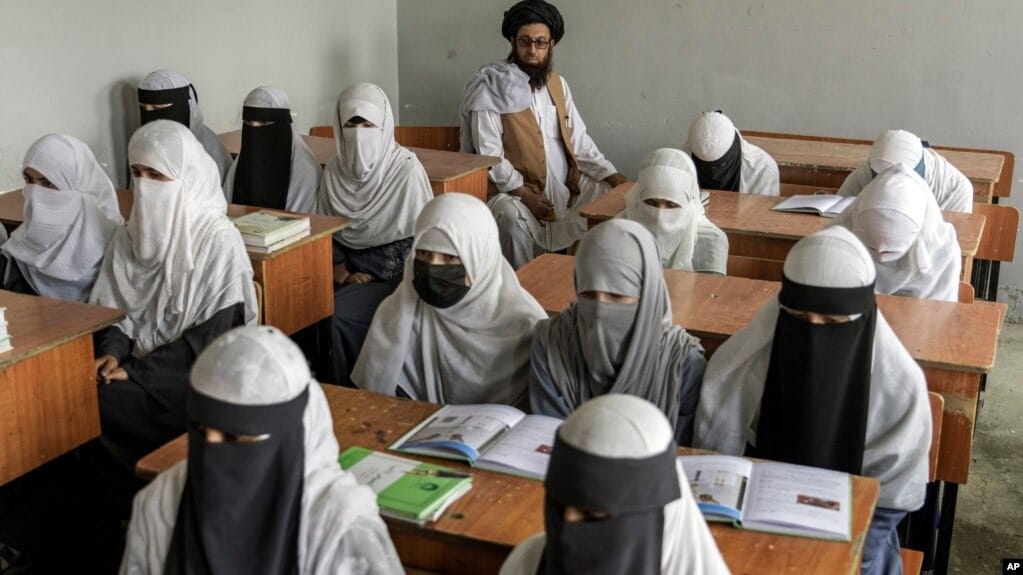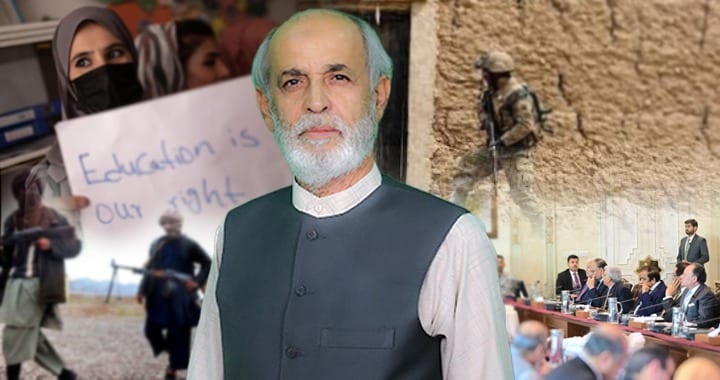
Afghanistan is facing a crisis that threatens not only its present but also the future of an entire generation. According to a UNICEF report cited in a recent discussion, approximately 53 per cent of Afghan children are deprived of education. Among them are 2.6 million girls, while a substantial number of boys are also excluded from schooling. These figures represent far more than an educational setback; they expose a deepening social crisis with potentially devastating consequences for Afghanistan and the wider region.
At the heart of this crisis lies the education policy of the Afghan Taliban, whose restrictions have severely undermined children’s access to conventional education. When more than half of a country’s children are unable to attend school, the consequences extend well beyond classroom walls. A nation that denies its children opportunities to learn risks depriving itself of skilled professionals, responsible citizens and the intellectual resources necessary for development.
The situation becomes even more alarming when the educational restrictions imposed by the Taliban are considered alongside the weakening of Afghanistan’s conventional education system. Instead of strengthening existing schools and expanding educational opportunities, the Taliban have increasingly promoted religious seminaries as alternatives to conventional educational institutions. While religious education has its own importance, it cannot replace the comprehensive academic education required to prepare children for the challenges of modern society.
The problem is not a question of choosing between religious and conventional education. Children deserve access to both religious understanding and the scientific, technical and intellectual knowledge that enables them to participate meaningfully in society. An education system that fails to provide these opportunities risks creating a generation with limited choices and diminished prospects.
Girls are particularly affected. The exclusion of 2.6 million girls from education represents an enormous loss for Afghan society. Every girl denied the opportunity to study is a potential teacher, doctor, researcher, entrepreneur or community leader whose contribution may never be realised. The consequences will not remain confined to individual families; they will affect the country’s social and economic development for decades.
Afghanistan’s growing population makes the situation even more serious. As the number of children increases, the demand for schools, teachers and educational facilities will continue to rise. Without a meaningful change in policy, the number of children deprived of education could become even greater. This is a challenge that cannot be addressed through temporary measures or political statements. It requires a fundamental reconsideration of the country’s educational priorities.
The humanitarian situation adds another dimension to this unfolding tragedy. Reports have also highlighted severe food shortages in southern Afghan provinces, including Kandahar, Helmand and Uruzgan. UNICEF representatives have expressed concern about the worsening humanitarian circumstances, while the impact of tensions and border restrictions between Pakistan and Afghanistan has also been highlighted. Educational deprivation, food insecurity and economic hardship are interconnected problems. A child struggling with hunger and poverty is already at a disadvantage, and the absence of accessible education makes that disadvantage even more difficult to overcome.
While Afghanistan struggles with its educational and humanitarian challenges, neighbouring Pakistan is confronting another serious concern: the persistent threat of terrorism, particularly in Khyber Pakhtunkhwa and the adjoining tribal districts.
Developments following the imposition of emergency measures have reportedly brought some reduction in terrorist activities. According to the assessment shared by senior journalist and commentator Shamin Shahid, several districts had experienced repeated incidents of terrorism for years. The southern districts of Khyber Pakhtunkhwa, including Dera Ismail Khan, Tank, Lakki Marwat and Bannu, have remained particularly vulnerable.
However, there are indications that the situation has improved in certain areas. In Lakki Marwat and Bannu, peace committees, local residents and police have reportedly worked together over the past two to three months. Their collective efforts appear to have contributed to a reduction in terrorist incidents. This development demonstrates the importance of cooperation between security institutions and local communities.
The reported comparison between September and October is particularly noteworthy. Terrorist incidents reportedly declined by 37 per cent in October compared with September. This is an encouraging development, but it should not be interpreted as evidence that the threat has disappeared. A temporary decline in violence does not necessarily mean that militant networks have been permanently weakened.
The real test is whether the government and security institutions can sustain this improvement. Security measures, intelligence-based operations, better-equipped police forces and stronger coordination are important elements of an effective counterterrorism strategy. The provision of bulletproof vehicles, modern weapons and improved security arrangements may strengthen the operational capacity of law enforcement agencies. Nevertheless, equipment alone cannot guarantee lasting peace.
Public confidence is equally important. Ordinary citizens have suffered enormously from terrorism and have repeatedly demonstrated their willingness to support efforts aimed at restoring peace. However, this support depends on trust, transparency and effective communication. People must understand the objectives of government policies and feel confident that their concerns are being taken seriously.
The mixed reaction in tribal areas deserves particular attention. While some residents welcome improvements in security, others remain dissatisfied, especially because of the consequences of past negotiations and the loss of properties and livelihoods. Many people believe that developments over the past 12 to 13 years have seriously affected their economic and social lives. Questions have also been raised about the authorities and officials who remained silent or failed to act when such problems emerged.
These grievances cannot simply be ignored in the pursuit of security. Lasting peace requires more than military or administrative measures. It requires justice, accountability and the restoration of public confidence. Communities that have experienced displacement, insecurity and economic losses must become active partners in rebuilding stability.
The emphasis on negotiations has also generated frustration among sections of the tribal population. People who have endured years of violence naturally expect concrete improvements in their daily lives. They want security, protection of their property, functioning institutions and opportunities to rebuild their communities. Their concerns must be addressed through meaningful political engagement rather than being dismissed as secondary issues.
Intelligence-based operations continue in several affected areas, including Lakki Marwat, Tank and surrounding districts. Other areas, including parts of North and South Waziristan and Khyber, have reportedly experienced relative calm. Yet the continuing possibility of militant movement and changing security conditions means that authorities cannot afford complacency.
Ultimately, the developments in Afghanistan and Pakistan reveal two interconnected challenges facing the region: the need to protect the future of children and the need to protect the lives of ordinary citizens from violence.
Afghanistan cannot build a stable future while millions of its children remain outside classrooms. Nor can Pakistan achieve sustainable peace through temporary reductions in terrorist incidents alone. Both challenges demand consistent policies, responsible leadership and public trust.
For Afghanistan’s Taliban rulers, the message should be unmistakable: education is not a privilege to be selectively granted; it is an essential foundation of national development. Every child, particularly every girl, deserves the opportunity to learn.
For Pakistan’s government and security institutions, the lesson is equally clear: counterterrorism efforts must be sustained, communities must be trusted, and public grievances must be addressed.
A region cannot secure its future by neglecting its children, just as it cannot secure its present by ignoring the people living under the shadow of terrorism. Classrooms and communities must both become places of hope rather than symbols of deprivation and fear. The future of this region depends on whether its leaders recognise these responsibilities and translate them into lasting action.