
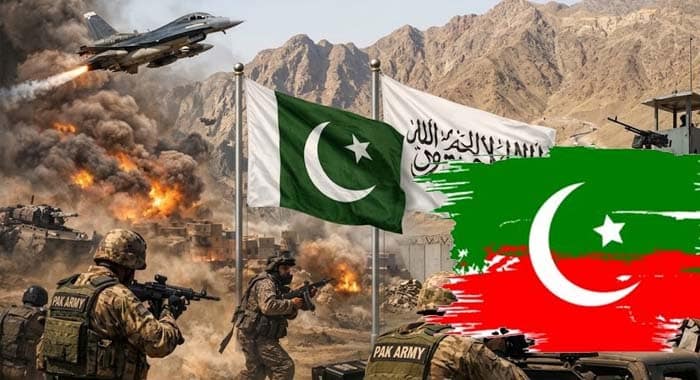
The latest assessment by the Pakistan Institute for Conflict and Security Studies (PICSS) presents a troubling picture of Pakistan’s security environment. A 66 percent increase in terrorist attacks over just three weeks underscores the mounting pressure along the country’s western frontier and raises serious questions about the effectiveness of existing security arrangements, governance structures, and counterterrorism policies.
In a podcast with The Khyber Chronicles, senior journalist and security analyst Mushtaq Yusufzai discussed these developments with host Mahnoor Rahat, examining the political changes, institutional shortcomings, and cross-border dynamics contributing to the latest escalation in violence. Their discussion highlighted the need to look beyond individual attacks and understand the wider conditions allowing terrorist networks to sustain their activities.
One important factor behind the current security challenges is political disruption in Khyber Pakhtunkhwa. For more than a decade, the Awami National Party maintained a dominant political presence in the province. Subsequent shifts in the political landscape and changes in local administrative structures disrupted established arrangements, creating gaps in governance that terrorist networks could exploit.
Transitions between administrations inevitably require time as incoming governments establish priorities and develop their approaches to security and public administration. However, when institutional coordination weakens during these periods, terrorist groups can adapt their methods, reorganize their networks, and exploit administrative uncertainty. The challenge, therefore, is not simply a change in political leadership but the ability of state institutions to maintain continuity and respond effectively while political arrangements evolve.
Yusufzai also highlighted the changing nature of the terrorist threat. Instead of relying exclusively on large, centralized formations, terrorist networks increasingly operate through smaller, decentralized cells. These groups function across tribal and semi-tribal districts, employing hit-and-run attacks, improvised explosive devices (IEDs), and targeted ambushes to keep security personnel under sustained pressure.
Such a decentralized structure complicates counterterrorism efforts because operations against one group or location may not dismantle the wider network. Addressing the threat requires better intelligence sharing, coordinated planning, and stronger cooperation among the military, Frontier Corps, specialized security forces, and local police. These institutions must operate as parts of a coordinated security framework rather than as separate entities working toward overlapping objectives.
The discussion also underscored the importance of learning from previous counterterrorism campaigns. Large-scale kinetic operations have, at times, resulted in extensive civilian displacement and deep resentment among affected communities. A more sustainable approach requires intelligence-led operations that target terrorist networks with greater precision while minimizing harm to civilians.
However, intelligence-based operations cannot deliver lasting results without public cooperation. Local communities possess knowledge of their surroundings and can play an important role in identifying suspicious activities, facilitating investigations, and preventing terrorist groups from establishing a foothold. Building that trust requires consistent engagement, effective public services, and security policies that take local circumstances into account.
Governance is equally important. One recurring weakness in previous administrative arrangements has been the appointment of officials who lack familiarity with the communities they are expected to serve. Development initiatives and security spending cannot produce their intended results if they remain disconnected from local needs.
Yusufzai’s analysis points to the importance of involving credible local representatives in planning and implementing development programs. People familiar with the social, economic, and security realities of their districts are better positioned to identify priorities and monitor the use of public funds. Without meaningful local participation and effective oversight, financial allocations risk being absorbed by bureaucratic delays, administrative inefficiencies, and corruption rather than reaching the communities they are intended to support.
The situation across the Afghan border remains another central dimension of Pakistan’s security challenge. Despite repeated denials by authorities in Kabul regarding the presence of foreign terrorist groups on Afghan soil, assessments cited in the broader security debate indicate that the banned Tehreek-e-Taliban Pakistan (TTP) continues to benefit from operational space and sanctuaries in Afghanistan.
For Pakistan, the consequences are direct. Terrorist attacks inside the country and against border installations place security personnel and civilians at risk, while the continued presence of terrorist networks across the border complicates efforts to prevent infiltration and disrupt attack planning. Kabul’s assurances must therefore be assessed against the security situation on the ground and the extent to which its territory is being used by groups targeting neighboring countries.
Diplomatic engagement remains necessary, but it must be accompanied by practical measures. Sweeping ultimatums and demands for mass expulsions may prove difficult to implement in complex tribal environments. A more sustainable strategy would combine firm border management, continued counterterrorism pressure, and coordinated diplomacy with regional powers, including China and Russia, to press the Afghan Taliban authorities to fulfill their counterterrorism commitments.
Security, meanwhile, cannot be separated from economic conditions. Recent announcements of substantial financial packages for Khyber Pakhtunkhwa during apex committee meetings offer an opportunity to address longstanding grievances in affected districts. Yet the announcement of funding is only the first step. The real test lies in whether the money reaches its intended beneficiaries and produces measurable improvements in people’s lives.
Previous development initiatives have often been undermined by corruption, administrative delays, and weak implementation. These failures have left many communities struggling despite repeated promises of assistance. Unless public spending translates into functioning infrastructure, better education, employment opportunities, and improved access to essential services, economic deprivation will continue to undermine confidence in state institutions.
Young people in underserved districts need realistic pathways to employment, education, and economic mobility. Where such opportunities remain limited, terrorist recruiters may find it easier to exploit frustration, exclusion, and uncertainty. Development is therefore not a substitute for counterterrorism operations, but an essential component of a broader strategy designed to prevent terrorist networks from regenerating.
The recent surge in violence should serve as a warning that Pakistan’s security challenges cannot be addressed through isolated operations or short-term political responses. A durable solution requires coordination across security institutions, continuity in governance, meaningful community participation, effective use of public funds, and sustained diplomatic pressure over cross-border terrorism.
The state must maintain firm counterterrorism measures while strengthening the political and economic foundations of stability. Bridging partisan divisions, improving local administration, and placing the welfare of ordinary citizens at the center of policy are essential to this effort.
Ultimately, reversing the deteriorating security trend will require more than responding to attacks after they occur. It will require identifying and closing the institutional, political, economic, and cross-border gaps that allow terrorist networks to survive. Only through a coordinated national approach can Pakistan work toward lasting stability along its western frontier.



