
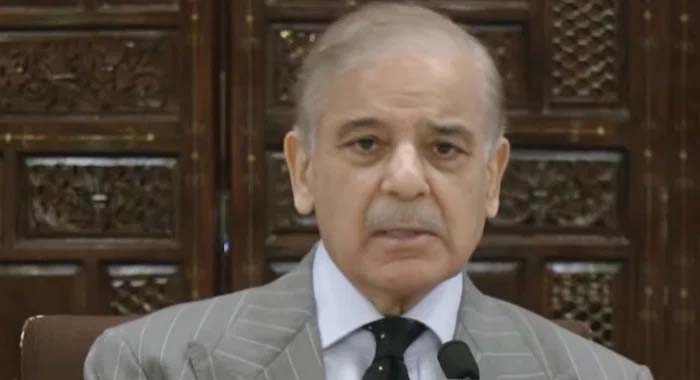
Prime Minister Shehbaz Sharif has highlighted the enormous human and economic costs of Pakistan’s war against terrorism, defending the government’s recent security decisions in Khyber Pakhtunkhwa and criticising the previous provincial administration over what he described as serious shortcomings in security, governance and public welfare.
Addressing a meeting of the Khyber Pakhtunkhwa Apex Committee at Governor House in Peshawar, the prime minister said the people of the province had made extraordinary sacrifices in the fight against terrorism, with approximately 80,000 people losing their lives nationwide and Pakistan suffering economic losses worth billions of dollars.
He stressed that the sacrifices of security personnel and ordinary citizens, including women and children, must be respected and protected through effective policies and sustained action against terrorism.
Prime Minister Shehbaz Sharif said Pakistan had achieved significant progress in restoring peace through the sacrifices of its security forces and civilians. He warned that failing to safeguard those gains would undermine the efforts and sacrifices made by generations of Pakistanis.
The prime minister emphasised that the security situation in Khyber Pakhtunkhwa demanded urgent attention and a coordinated response from the federal government, provincial authorities and security institutions.
He maintained that protecting citizens from further violence was a fundamental responsibility of the state and that the government could not remain passive while the province faced renewed security challenges. Referring to the 2010 National Finance Commission (NFC) Award, the prime minister said Khyber Pakhtunkhwa had received approximately Rs800 billion for counterterrorism-related measures.
He explained that all provinces had acknowledged Khyber Pakhtunkhwa’s frontline role in the fight against terrorism and agreed that additional financial resources were necessary to support its security requirements.
However, he expressed concern that terrorism had resurged despite the substantial funding and the sacrifices made by the province’s people. The prime minister stressed the importance of ensuring that resources allocated for security are effectively utilised to strengthen law enforcement, improve institutional capacity and prevent militant groups from regaining a foothold. The prime minister criticised the Pakistan Tehreek-e-Insaf (PTI)-led provincial administration, alleging that education, healthcare, public welfare and security had not received adequate attention during its tenure.
He claimed that approximately 5,000 police vacancies had remained unfilled, the Safe City project had not been completed, and insufficient attention had been given to strengthening the Counter Terrorism Department and improving police training.
According to Shehbaz Sharif, these alleged shortcomings weakened the province’s ability to respond effectively to security threats and contributed to the resurgence of terrorism in recent years. His remarks placed governance, police capacity and the effective utilisation of public resources at the centre of the debate over how to restore lasting peace in Khyber Pakhtunkhwa.
The prime minister said the federal government had worked intensively over the preceding two and a half years to stabilise Pakistan’s economy, with efforts by the political and military leadership contributing to improved economic conditions. He questioned whether the government could allow Khyber Pakhtunkhwa to continue experiencing insecurity and bloodshed without taking decisive action.
Shehbaz Sharif disclosed that the deteriorating situation had been discussed with the president on two occasions. He added that a political committee had also spent 48 hours in negotiations before the government proceeded with what he described as difficult decisions necessitated by the circumstances. He maintained that the government’s actions were aimed at addressing the worsening security situation and preventing further loss of life.
The prime minister reiterated that restoring peace in Khyber Pakhtunkhwa requires more than security operations alone. Effective policing, stronger counterterrorism institutions, responsible financial management and improved public services are also essential to sustainable stability.
He emphasised that the people of Khyber Pakhtunkhwa, having endured years of terrorism and its devastating consequences, deserve security, economic opportunities and access to essential services.
The Apex Committee meeting brought together senior political and security leadership to review the province’s challenges and discuss measures to strengthen the response to terrorism.
Prime Minister Shehbaz Sharif’s central message was clear: the sacrifices made in the fight against terrorism must not be squandered, and the resurgence of violence demands effective security measures, stronger institutions and accountability in governance.



